
Darin M. Dalmat is an Associate General Counsel at the AFL-CIO. The views expressed in his posts are his own and should not be attributed to his client.
Next month, the Supreme Court will hear Flowers Foods v. Brock and again address Federal Arbitration Act coverage. The case is important in its own right because it will determine whether last-mile drivers are exempt from the FAA — and can avoid forced employment arbitration. (More on that, below.) The case is also important because the AFL-CIO has unearthed statutory evidence showing that the last 25 years of FAA jurisprudence are badly mistaken.
Circuit City was Wrong: The FAA Doesn’t Apply to Employment Contracts
In 2001, the Court ruled in Circuit City v. Adams that the FAA requires courts to enforce mandatory arbitration agreements in employment contracts. The Court construed the FAA’s exemption for contracts involving “seamen, railroad employees, or any other class of workers engaged in foreign or interstate commerce” as applying only to transportation workers — not all workers that, under modern jurisprudence, engage in interstate commerce. In reaching that conclusion, the Court refused to give effect to the statute’s plain text (exempting “any other class of workers engaged in … interstate commerce”) and its history (which shows that Congress crafted the exemption to meet an objection by the Seamen’s Union that the original bill could interfere with collective bargaining agreements or employment contracts). See Circuit City, 532 U.S. 105, 126–27 (2001) (Stevens, J., dissenting).
Since Circuit City, the Court has held the FAA gives employers the right to require their employees to arbitrate individually without class actions or class arbitration (Lamps Plus), that this rule trumps § 7 of the NLRA (Epic Systems), that the FAA overrides state laws making class arbitration waivers unconscionable (AT&T), and that it tosses in the bin state rules and procedures that would restrict employers’ ability to insist on individual-only arbitration (Viking River).
These decisions elaborate the FAA’s effect on various enforcement mechanisms. But they all assume the FAA actually applies to most employees, exempting only transportation workers. That core assumption is wrong.
We know this because the FAA’s “session law” (the statute published at the close of the session when it was enacted) contains a marginal note explaining the statute’s exemption for “seamen, railroad employees, or any other class of workers engaged in foreign or interstate commerce.” The note succinctly explains effect of the exemption: the FAA is “Not applicable to employment contracts of workers.” FAA, Pub. L. 68-401, 43 Stat. 883, 883 (1925). Even if only a shorthand, the natural shorthand (if Circuit City’s reading were correct) would be “transportation workers,” not “workers.” This note thus provides clear evidence of § 1’s original, public meaning.
Session laws may be obscure today, but their legal relevance at the time the FAA was enacted was clear to all. Under federal law, session laws, as printed in the Statutes at Large, “shall be” and are “legal evidence of the laws and treaties therein contained, in all the courts of the United States … .” Publication Act, ch. 333, §§ 7–8, 18 Stat. 113, 114 (1874). From 1874 until 1950, moreover, the Statutes at Large had to “carry marginal notes indicating the subject-matter of the instruments which the notes accompany”—and the Secretary of State conducted a “long, painstaking, demanding” process to “make certain that no errors have crept in” to the printed session laws. E. Wilder Spaulding, Law Publications of the Department of State, 3 Dep’t St. Bull. 301, 304 (1940). Indeed, the Secretary ensured that the Statutes at Large were “as nearly perfect as editor and printer can make them for they are legal evidence of the laws in the courts of the United States … .” Id. It is this process that led to § 1’s marginal note, which made plain that the FAA doesn’t apply to employment agreements.
In short, the note was no mistake. It reflects the Secretary’s understanding of the scope of § 1’s exemption — an understanding he communicated, by law, publicly to every reader looking for official evidence of federal laws.
That evidence should be decisive — especially to a Court interested in original public meaning — that the FAA exempts all “employment contracts of workers,” not merely agreements with transportation workers, as Circuit City held. But none of the Court’s opinions in Circuit City even cited the session law, let alone the decisive marginal note. To be fair, neither did the parties.
Now that the marginal note is plainly in view, the Court should begin washing away the house of sand it built in case after case over the last quarter century blessing forced employment arbitration. If the Court declines to do so, Congress always has the power to make clear what the Secretary of State said at the start: the FAA does not apply to employment agreements. Period.
Even Under Circuit City, Last-Mile Drivers are Exempt from the FAA
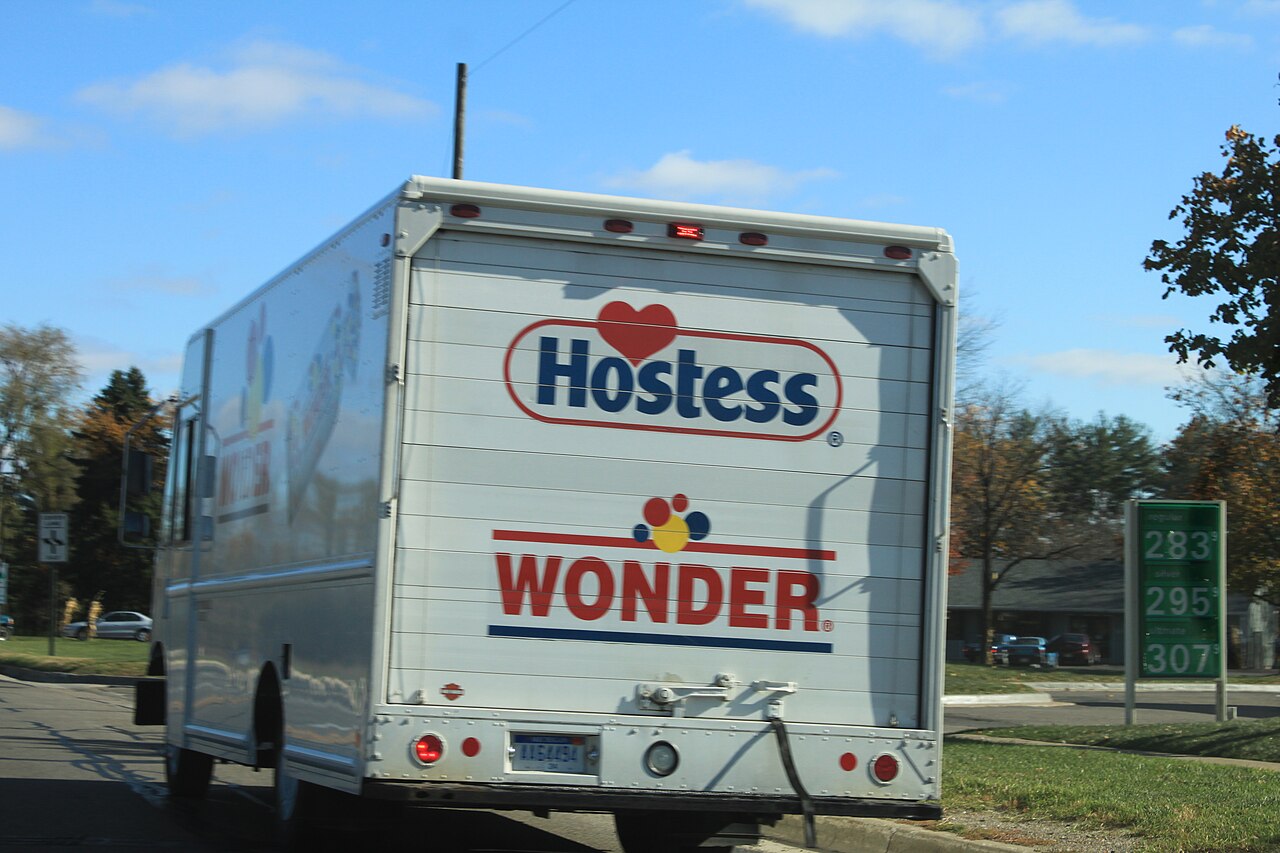
The specific question in Flowers is whether last-mile drivers are workers engaged in interstate transportation who fall within the statute’s exemption. Last-mile drivers are folks like Angelo Brock, a driver who delivers Flowers products, like Wonderbread, from a regional warehouse in Colorado to local grocery stores and other retail outlets in the Denver area. More generally, last-mile drivers haul goods on the last (intrastate) mile of the goods’ much longer journey from an out-of-state starting point — perhaps a bakery, manufacturing plant, or national warehouse — to a final in-state destination. Think of Amazon, UPS, and FedEx drivers. But think also of any number of manufacturing companies, like Flowers, that use their own in-house transportation network to get their products from production sites to their customers. Someone needs to carry those products on their first mile, from where the products are made or housed, to the primary transportation line, and someone (else usually) needs to carry them on their last mile, from the local distribution center to your door. Those are the first- and last-mile drivers at issue in this case.
As Brock and several amici supporting him show, this should be an easy case. For over two centuries, the Supreme Court has held that a segment of a continuous interstate shipment is part of interstate commerce, even if the segment itself is wholly within one state. There can be no serious question on the matter today, after the Court has reached that conclusion across so many areas of law: Congress’s commerce power, preemption of state taxes, appropriate rates under the Interstate Commerce Act, the Federal Employers’ Liability Act, the FLSA’s motor carrier exemption, various trade regulation statutes, and old labor cases under the Railway Labor Board — to name just a few.
In the face of all this precedent, Flowers insists workers are transportation workers only if they actively move goods across state borders — that is, only if they touch a truck crossing state lines. While touch-a-truck is a highlight of many kids’ summers, it’s not now, and never has been, the law of interstate transportation.
If the niceties of who qualifies as a transportation worker under the statute feel like so many angels dancing on pinheads, not statutory interpretation, it might just be because the actual text of the FAA says nothing about “transportation workers.” Rather, as the Secretary of State told us long ago, the statute plainly exempts all workers engaged in interstate commerce.




Daily News & Commentary
Start your day with our roundup of the latest labor developments. See all
September 28
The Protect College Sports Act nears passage in the Senate; San Francisco municipal workers agree to contract extensions.
September 27
The Trump Administration reaches a settlement with federal unions on reduction in force actions; the United Auto Workers file an en banc petition seeking review of a Second Circuit decision regarding labor arbitrations.
September 25
Healthcare workers rally to restore legal status for TPS holders; nurses at a Maine hospital overwhelmingly vote to form their union despite alleged aggressive union busting tactics.
September 24
NLRB abandons rule for offensive conduct during protected activity; New York home care workers seek a union election; maritime deck officers endure long fight for first contracts.
September 23
DoorDash settles delivery-worker pay claims; Philadelphia school workers win new contract; stock gains spur retirements.
September 22
Judge blocks ICE raids in Alabama; Chicago hotel workers vote to strike; AutoZone workers look to create first union