Ted Parker is a student at Harvard Law School and a member of the Labor and Employment Lab.
In today’s news and commentary, California farmworkers score a win against The Wonderful Company, New York City and Chicago consider requiring companies like Amazon to directly employ delivery drivers, and the Supreme Court takes a case on whether the FAA exempts last-mile drivers from arbitration agreements.
Last week, a three-judge panel of the California Court of Appeal threw out a case challenging the constitutionality of a state law allowing farmworkers to unionize via card check. The case originated in an effort by the United Farm Workers (UFW) to be certified as the bargaining representative of over 600 workers employed by The Wonderful Company (known for Wonderful Pistachios, Fiji Water, and POM juice) at a grape nursery in Wasco. After the UFW filed a Majority Support Petition with the state’s Agricultural Labor Relations Board (ALRB), Wonderful filed objections, claiming workers were tricked into signing cards. But before the ALRB could reach a decision, Wonderful filed a case in California state trial court attempting to preempt the agency. Last Tuesday, the decision of the trial court (favorable to Wonderful) was swatted down by the appeals court on the grounds that neither court had any jurisdiction until the ALRB concluded its work. The decision was thus a win for the UFW. However, in the meantime Wonderful has ended its operations at the Wasco nursery.
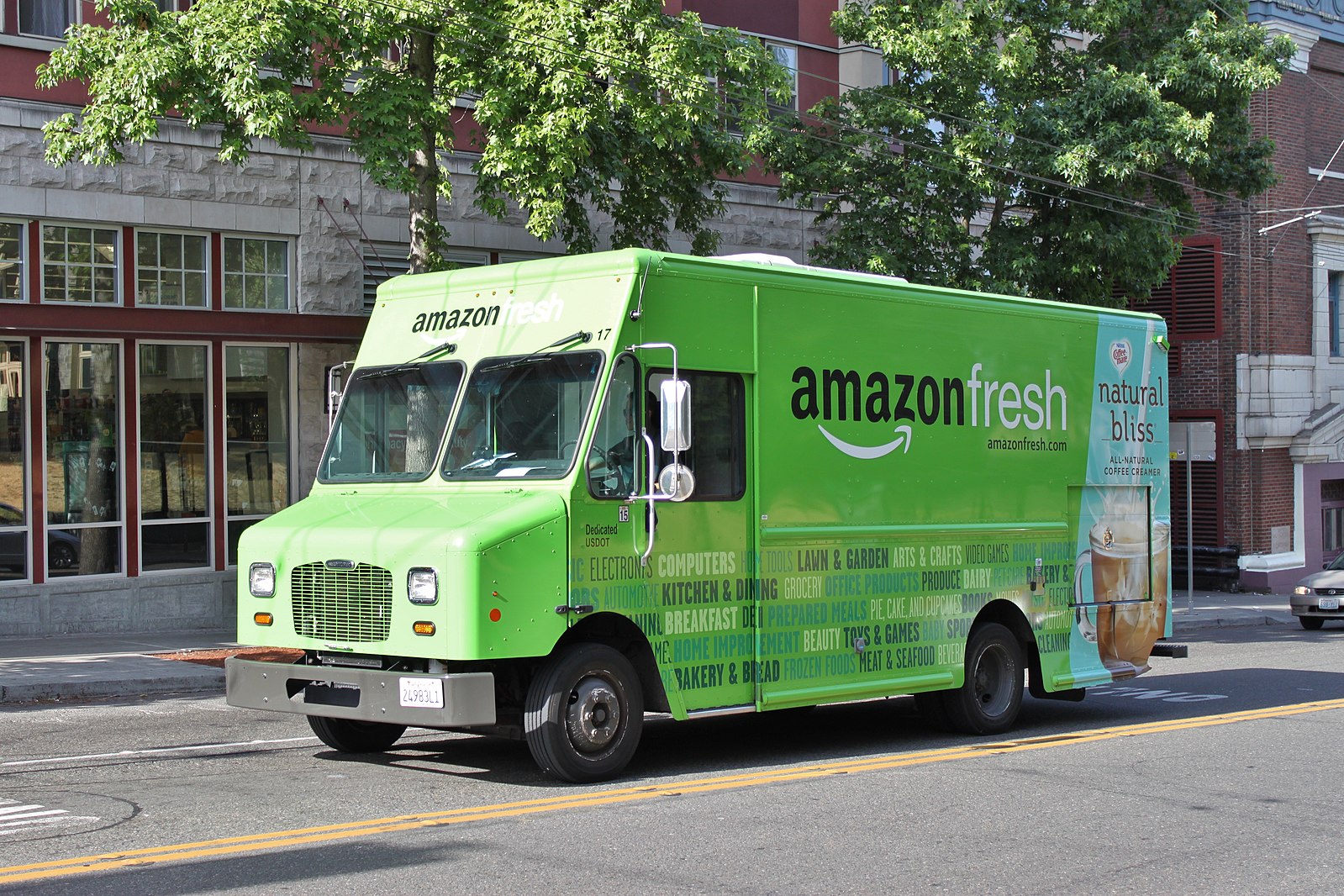
New York City and Chicago consider innovative new regulations that would require companies like Amazon to directly employ “last-mile” drivers—that is, the drivers who transport packages from Amazon fulfillment centers to their final destinations. Currently, Amazon outsources this work to independent contractors and small businesses, which has led to worse conditions for last-mile drivers and makes it harder for them to unionize (as the Battle-Tested Strategies saga shows). Until now, advocates have attempted to expose these arrangements as legal fictions, arguing that Amazon is better understood as the employer of these drivers (whether through independent contractor misclassification or a joint employer theory). The proposed legislation sidesteps this debate by simply requiring companies like Amazon to hire these drivers as its employees if it wants to operate within city limits. Chicago City Council member Julia Ramirez and New York City Council member Tiffany Cabán are championing the legislation, which could potentially be passed in a matter of months.
Finally, in other last-mile driver news, the Supreme Court agreed to hear a case, Flower Foods Inc. v. Brock, on whether those workers are exempt from the Federal Arbitration Act (FAA). The FAA exempts from arbitration agreements “seamen, railroad employees, or any other class of workers engaged in foreign or interstate commerce.” As Andrew has explained, that exception was fashioned by Congress in 1925 to exercise its Commerce Clause power as broadly as the Supreme Court would then allow. Below, the Tenth Circuit, aligning itself with the First and Ninth Circuits, found that last-mile drivers, even if they never themselves crossed state lines, were nevertheless part of the flow of interstate commerce and thus exempt from the FAA.



Daily News & Commentary
Start your day with our roundup of the latest labor developments. See all
October 13
Chicago hotel workers remain on strike; a coalition of Democratic states sues the Labor Department over canceled unemployment insurance grants; the Federal Labor Relations Authority establishes a new mediation framework for federal worker disputes.
October 12
Workers at the Obama Foundation begin organizing; MLB submits its latest collective bargaining agreement proposal; Brigham & Women's nurses postpone strike.
October 11
UAW President Shawn Fain succeeds in his reelection bid, and Spanish unions call for a general strike.
October 9
DHS proposes a $100k fee for the foreign grad employment program; Trump suspends tech company access to green card program; and private equity perpetuates poor working conditions for home care workers.
October 8
NLRB judge finds UPS unlawfully restricted union insignia; Harvard graduate workers authorize second strike; OSHA orders Union Pacific to pay $300,000 in damages in whistleblower case.
October 7
DOL scraps plan to remove decades-old wage-and-hour guidance from federal regulations; New York enacts personnel records access law; Starbucks loses bid to dismiss Workers United trademark suit.