

Miriam Li is a student at Harvard Law School and a member of the Labor and Employment Lab.
In today’s News and Commentary, the EEOC plans to close pending worker charges based solely on unintentional discrimination claims and the NLRB held that Starbucks violated federal labor law by firing baristas at a Madison, Wisconsin café.
According to an internal memo obtained by Bloomberg, the Equal Employment Opportunity Commission (EEOC) plans to close all pending charges that allege only unintentional discrimination—also known as “disparate impact” discrimination—with limited exceptions. The memo instructs staff to wrap up those cases by the end of September and issue right-to-sue letters by October 31, allowing workers to file their own federal lawsuits within 90 days of receipt. Federal employment law bars intentional discrimination as well as facially neutral policies that disproportionately harm protected groups. Under the recent memo, EEOC charges alleging both disparate impact and intentional discrimination may continue, but staff have been directed not to facilitate conciliation for charges based solely on disparate-impact liability. The move follows an April executive order from President Trump directing federal agencies to halt enforcement actions based on disparate-impact theory.
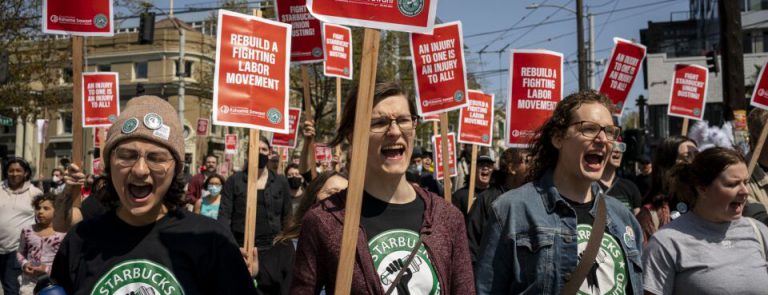
Meanwhile, on Monday, a National Labor Relations Board administrative law judge (ALJ) held that Starbucks violated federal labor law when it fired four baristas as part of what the judge called “a scorched-earth campaign” against unionizing workers in Madison, Wisconsin. The case began in 2022, when a union organizing meeting at a Madison café ran past closing. Starbucks then fired four employees for remaining in the café after hours. After finding “repeated and egregious violations” of the National Labor Relations Act, the ALJ issued a broad cease-and-desist order to deter further unlawful efforts to thwart union activity. As the ALJ noted, despite numerous findings in recent years that the company violated federal labor law, “Starbucks’ behavior continues unabated.”

Daily News & Commentary
Start your day with our roundup of the latest labor developments. See all
September 16
Trump nominates Catherine Eschbach as EEOC general counsel; NLRB declines to resolve union work-assignment dispute; Allina Health physicians begin four-day strike.
September 15
Documents reveal the inner workings of Amazon's union avoidance program; Washington state public sector unions reach tentative deals amid a difficult bargaining cycle; hundreds of Nevada Culinary Union members protest their union's health care changes.
September 14
NCAA and Big Ten file motion to dismiss in former star player's NIL suit; Seventh Circuit rules against former postal worker in discrimination suit.
September 13
Documents released on the 25th anniversary of the 9/11 attacks show that city officials encouraged workers to return to Ground Zero despite knowing the risks of asbestos exposure, and new polls demonstrate continued widespread support for labor unions.
September 10
Amazon workers allege pregnancy discrimination; federal unions challenge USDA reorganization; NYC warns of silicosis risks.
September 9
Wynn Las Vegas employees allege anti-union retaliation; Amazon faces a class action over pregnancy accommodations; H-1B demand plunges following a six-figure visa fee.