
Miriam Li is a student at Harvard Law School and a member of the Labor and Employment Lab.
In today’s news and commentary, the Ninth Circuit revives Trader Joe’s trademark suit against an employee union, House lawmakers introduce a bill to make striking workers eligible for unemployment benefits, and a former New Jersey Institute of Technology lecturer who praised Hitler gets another chance to bring First Amendment claims against the school.
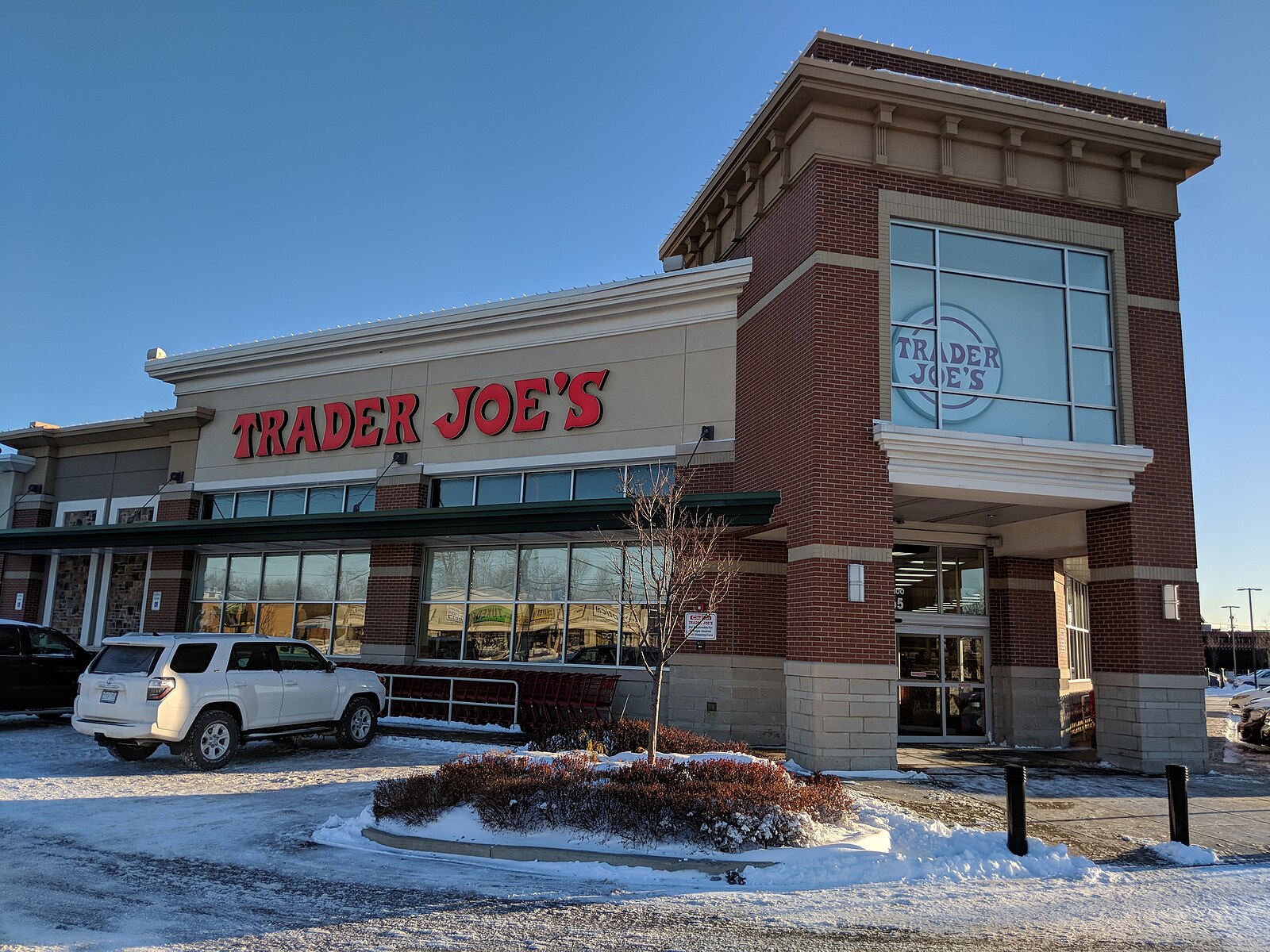
On Monday, the Ninth Circuit held that Trader Joe’s lawsuit against the fledgling Trader Joe’s Union (TJU) for alleged trademark infringement may proceed, reversing a district court’s dismissal of the suit. Trader Joe’s filed suit in 2023, alleging that apparel, home goods, and reusable tote bags sold on the union’s website used the company’s distinctive typeface, color, and design in violation of federal trademark law. In January 2024, U.S. District Judge Hernán Vera dismissed the case, finding no plausible likelihood of consumer confusion and characterizing the suit as an effort to “weaponize the legal system to gain an advantage in an ongoing labor dispute.” The Ninth Circuit, however, disagreed, concluding that the union’s sale of totes, mugs, and T-shirts was sufficiently likely to cause confusion, citing the “striking[] resemblance” between the TJU and Trader Joe’s logos and the use of the “same red color and similar stylized fonts.”
Meanwhile, House Democrats introduced a bill to make striking workers eligible for unemployment benefits, modeled on New Jersey and New York policies that provide benefits after a 14-day waiting period. Rep. Alexandria Ocasio-Cortez, a co-sponsor of the bill, emphasized the importance of the proposal: “because a majority of states do not allow workers to collect unemployment benefits while on strike, many low-income and hourly workers are forced to agree to poor terms just to keep food on the table.” Outside of New York, and New Jersey, several other states have attempted to pass similar legislation with mixed results. Although unions have long advocated for nationwide protections for striking workers, the new bill faces long odds in a Republican-led Congress.
Finally, a unanimous Third Circuit panel held that a public university lecturer’s First Amendment claims were improperly dismissed and remanded the case for further proceedings. Jason Jorjani, a lecturer in New Jersey Institute of Technology (NJIT) philosophy department, sued the university after it declined to renew his contract following a New York Times article about his “alt-right” views. The 2017 article was based in part on a recording of Jorjani in which he praised Hitler, predicting that Hitler would eventually be “seen as a great European leader.” Under the Pickering test, courts must weigh public employees’ First Amendment interests against competing government interests in efficiently providing public services. According to the court, there was “no support for NJIT’s contention that student disapproval of Jorjani’s speech disrupted the administration of the university,” and other faculty members’ statements denouncing Jorjani’s views were “precisely the sort of reasoned debate that distinguishes speech from distraction.” The court was also unpersuaded by NJIT’s appeals to its interest in providing a non-denigrating learning environment, noting that NJIT’s determination was not based on “competence or qualifications” and emphasizing the need to prevent universities from disciplining professors based on offensive speech.


Daily News & Commentary
Start your day with our roundup of the latest labor developments. See all
September 21
In today’s News and Commentary, the Seventh Circuit raises the bar for the NLRB to obtain preliminary injunctions, the California Primary Care Association sues SEIU-UHW for racketeering, and the Seventh Circuit finds that an employer group and think tank do not have standing to challenge an Illinois law banning captive audience meetings. On Friday, the […]
September 20
Culinary Workers Union members protests union leadership; lawsuit against OpenAI and Microsoft reveal internal concerns about the threat of AI training to human labor.
September 17
Unions push to block Google from buying Spirit Airlines employment records; U.S. Department of Labor sues Oklahoma coffee chain over alleged wage violations.
September 16
Trump nominates Catherine Eschbach as EEOC general counsel; NLRB declines to resolve union work-assignment dispute; Allina Health physicians begin four-day strike.
September 15
Documents reveal the inner workings of Amazon's union avoidance program; Washington state public sector unions reach tentative deals amid a difficult bargaining cycle; hundreds of Nevada Culinary Union members protest their union's health care changes.
September 14
NCAA and Big Ten file motion to dismiss in former star player's NIL suit; Seventh Circuit rules against former postal worker in discrimination suit.