
Anjali Katta is a student at Harvard Law School.
In today’s news and commentary, Senate Republicans push back against Project Labor Agreements and two rulings compelling arbitration for workers.
Senate Republicans are pushing back against President Trump’s decision to maintain a Biden-era rule requiring project labor agreements (PLAs) for federal construction contracts over $35 million. Supporters of PLAs argue that PLAs facilitate better wages for workers, more efficient projects, lower costs, and increased quality. Nearly two dozen GOP senators on the other hand, argue that the rule inflates costs, delays projects, and excludes non-union contractors. Despite their concerns, the Trump administration reaffirmed support for PLAs. The move comes after Defense Secretary Pete Hegseth said in February that he was directing the U.S. Defense Dept. to remove language requiring PLAs from contracts worth $35 million or more, and after the U.S. General Services Administration said that it was also removing PLA requirements from its land port of entry projects. Without further action, major conflict between Trump and Senate Republicans appears unlikely.
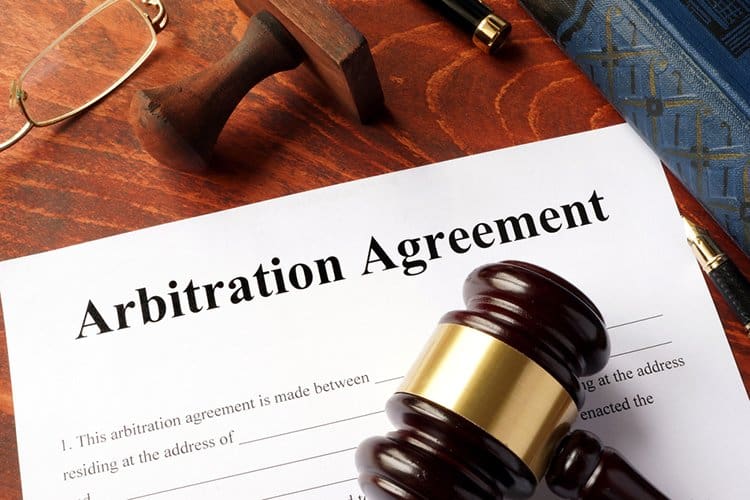
BNSF Railway won a legal battle against the Brotherhood of Maintenance of Way Employees, which sought to resolve a subcontracting dispute in federal court rather than through arbitration. The Eighth Circuit ruled the case involved a “minor” dispute under the Railway Labor Act, and thus, the matter must go to arbitration rather than to court. The union claimed BNSF violated the Act’s duty to make “every reasonable effort” to uphold labor agreements, but the Court rejected this argument, aligning with reasoning from Seventh and Eleventh Circuit rulings.
Amazon and its delivery partner Amplio Logistics successfully compelled two former delivery workers to individually arbitrate most of their claims that Amazon and Amplio violated California wage law. Although the workers qualify for an exemption from the Federal Arbitration Act’s (FAA) exemption, the Court ruled that California law allows enforcement of the workers’ arbitration agreements. Thus, the workers must arbitrate most of their claims. However, the workers’ claim for unpaid vacation at termination can proceed in court and may be pursued as a class action. The judge rejected the workers’ argument that the arbitration agreements were unconscionable but invalidated the agreement’s class action waiver.




Daily News & Commentary
Start your day with our roundup of the latest labor developments. See all
October 12
Workers at the Obama Foundation begin organizing; MLB submits its latest collective bargaining agreement proposal; Brigham & Women's nurses postpone strike.
October 11
UAW President Shawn Fain succeeds in his reelection bid, and Spanish unions call for a general strike.
October 9
DHS proposes a $100k fee for the foreign grad employment program; Trump suspends tech company access to green card program; and private equity perpetuates poor working conditions for home care workers.
October 8
NLRB judge finds UPS unlawfully restricted union insignia; Harvard graduate workers authorize second strike; OSHA orders Union Pacific to pay $300,000 in damages in whistleblower case.
October 7
DOL scraps plan to remove decades-old wage-and-hour guidance from federal regulations; New York enacts personnel records access law; Starbucks loses bid to dismiss Workers United trademark suit.
October 6
Protect College Sports Act dampens athlete unionization outlook; Stanford RA union decides to withdraw petition