
Ted Parker is a student at Harvard Law School and a member of the Labor and Employment Lab.
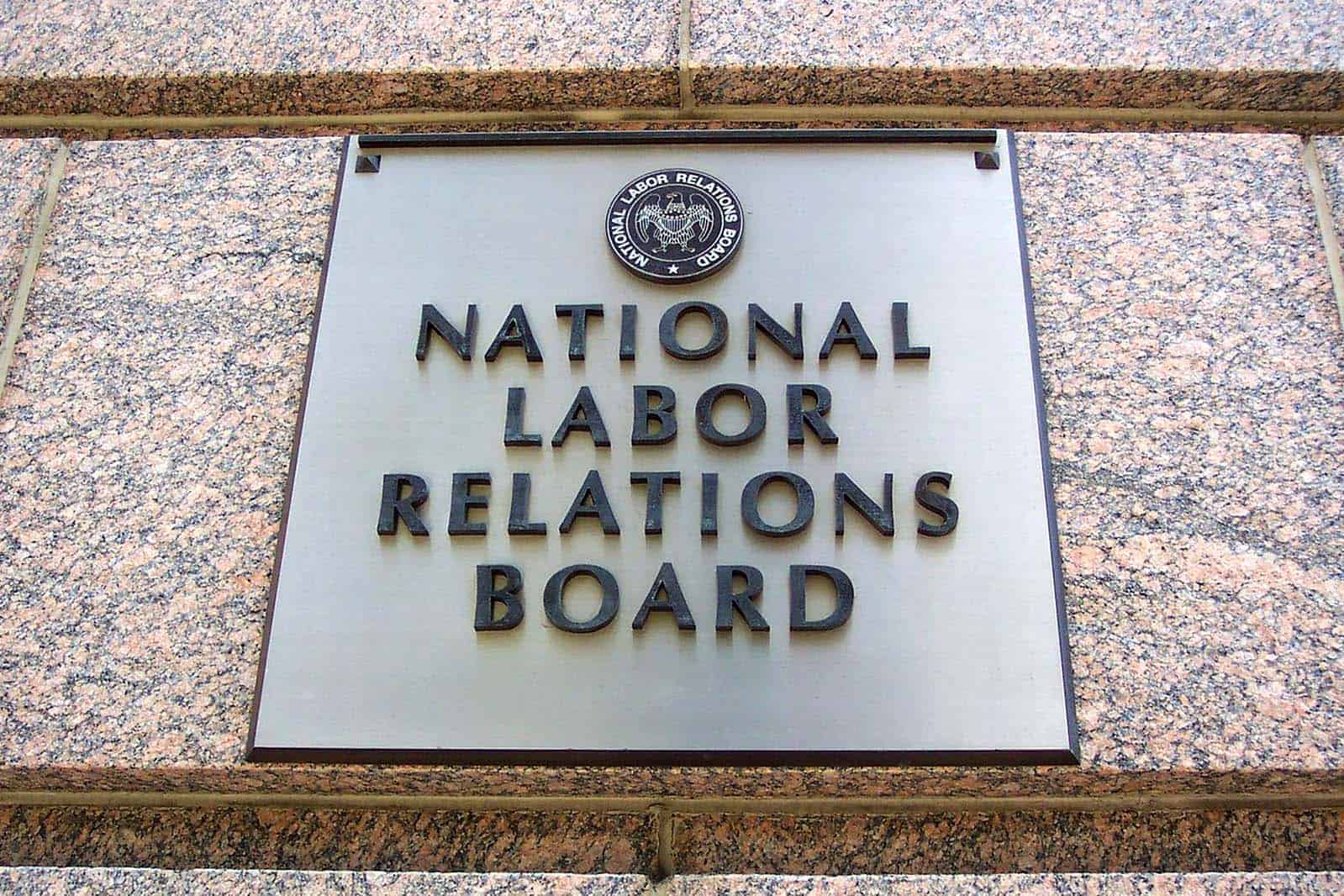
In today’s News and Commentary, internet celebrity Bryan Johnson’s saga before the National Labor Relations Board (NLRB) continues, while top law firms opt to appease the Equal Employment Opportunity Commission (EEOC) in its anti-DEI demands.
Bryan Johnson, once the owner of Venmo and now an anti-aging personality with his own Netflix documentary, faces ongoing controversy stemming from unfair labor practice (ULP) charges filed against him at the NLRB. The New York Times covered those charges, which concern his alleged practice of making employees sign “overly broad and unenforceable” non-disclosure and non-disparagement agreements. Under Stericycle, such agreements are illegal to the extent they are determined to “chill employees’ exercise of their rights” under Section 7 of the National Labor Relations Act (NLRA). According to the employees’ lawyer, Matt Bruenig, after the article in the Times came out, “Johnson’s lawyers began sending legal threats against individuals that participated in the story,” including one of the employees. Bruenig then filed another ULP charge against Johnson on the theory that the employees’ participation in the story was a “concerted activit[y] for the purpose of . . . mutual aid or protection” and therefore protected by Section 7 of the NLRA. This led to more publicity, this time in New York Magazine, where Johnson fired back that employees who object to the agreements “do not have to work here.” Bruenig responded by filing yet another ULP charge, quoting from a recent NLRB opinion: “[E]mployer suggestions, in response to employees’ . . . protected concerted activity, that if employees are unhappy they should seek employment elsewhere reasonably tend to coerce employees from exercising their rights under the Act.” Last Thursday, Johnson’s lawyers sent over another demand letter, which Bruenig characterizes as more “illegal retaliation.” It is unclear if Bruenig will file a fourth ULP charge.
Meanwhile, as the dust settles on the capitulation of several top law firms to the Trump administration (to the tune of nearly $1 billion in pro bono work), lingering questions remain about the EEOC’s role in those deals. In March, Acting Chair Andrea Lucas publicly sent letters to 20 firms requesting information about their diversity, equity, and inclusion (DEI) programs, including client and employee data. As seven former high-ranking EEOC officials pointed out in an open letter sent to those same firms, Acting Chair Lucas’ letters did not impose a legal duty on the firms to respond. (A properly filed Commissioner charge would have imposed such a duty, but those charges are confidential.) The officials also defended the established legality of DEI programs. Nevertheless, it appears that most of the probed firms retained high-powered outside counsel and responded to the letters, though without handing over the requested information. Some firms, including Kirkland & Ellis and Latham & Watkins, entered into settlement agreements with the EEOC, in which they “affirmed their commitment to lawful merit-based hiring, promotion, and retention” and “agreed to no longer categorize any lawful employment or [sic] practices. . . as DEI.” All this suggests that firms are looking to appease the EEOC, even though they don’t have to. This is in contrast to some of the law students working at those firms, who last week sued the EEOC over the letters.





Daily News & Commentary
Start your day with our roundup of the latest labor developments. See all
August 28
Calls for a “token tax” on AI consumption grow and the number of Amazon workers on federal aid explodes.
August 27
NLRB GC targets Biden-era precedent; Starbucks Workers United calls for boycott; Encore Boston Harbor workers authorize strike
August 26
Trump administration proposes $103,000 H-1B visa fee after court blocks earlier attempt; Illinois governor signs law enabling state investment in AFL-CIO housing trust; Deloitte pays $21.5 million to settle DOJ probe alleging DEI-related discrimination in federal contracts.
August 25
Hyundai workers reach a tentative agreement; Federal-sector unions sue the Trump Administration over OPM rule changes; Federal judge dismisses a teachers’ union free speech suit.
August 24
Boeing engineers and technicians reject contract proposals and authorize a strike; Ninth Circuit holds that unions charged under 8(b)(4)(D) cannot invoke the work-preservation defense to disregard 10(k) determination.
August 23
Hyundai Motors workers launch full-day strike; federal judge rules in favor of Vermont dairy plant in closure dispute