
Will Ebeler is a student at Harvard Law School.
In this weekend’s news and commentary, a new report highlights sexual harassment faced by real estate agents; heat waves have disproportionate impact on farmworkers; and New York City’s new minimum wage for delivery drivers is temporarily stayed.
A new report in the New York Times highlights the sexual harassment that real estate agents experience. Surveys report that most real estate agents have either experienced or witnessed sexual harassment in the workplace, and the Times tells the story of several real estate agents who have experienced workplace harassment. Rachel DiSalvo, who has been a real estate agent for 12 years, said that buyers have attempted to grope her and told a story of a seller who, angry she hadn’t secured a higher price for his home, took out an ax in front of her and attacked the lawn sign with her picture. Ninety percent of real estate agents are independent contractors who are not protected under Title VII, and real estate agencies do not feel required to offer workplace protections or training. That means it is up to individual realtors to take personal precautions. However, as Ms. DiSalvo explains, realtors face a difficult choice: if they adopt certain safety measures, such as asking a potential client for identification or refusing to set meetings at night, the client may choose another agent. And where an agent’s income is based on commissions, “if someone does harass you, and you complain about it, you basically lose the opportunity to make that commission.” In the past, when Ms. DiSalvo was verbally harassed by a client, her real estate company suggested that a male colleague close the deal—which meant she paid her colleague a referral fee out of her own commission.
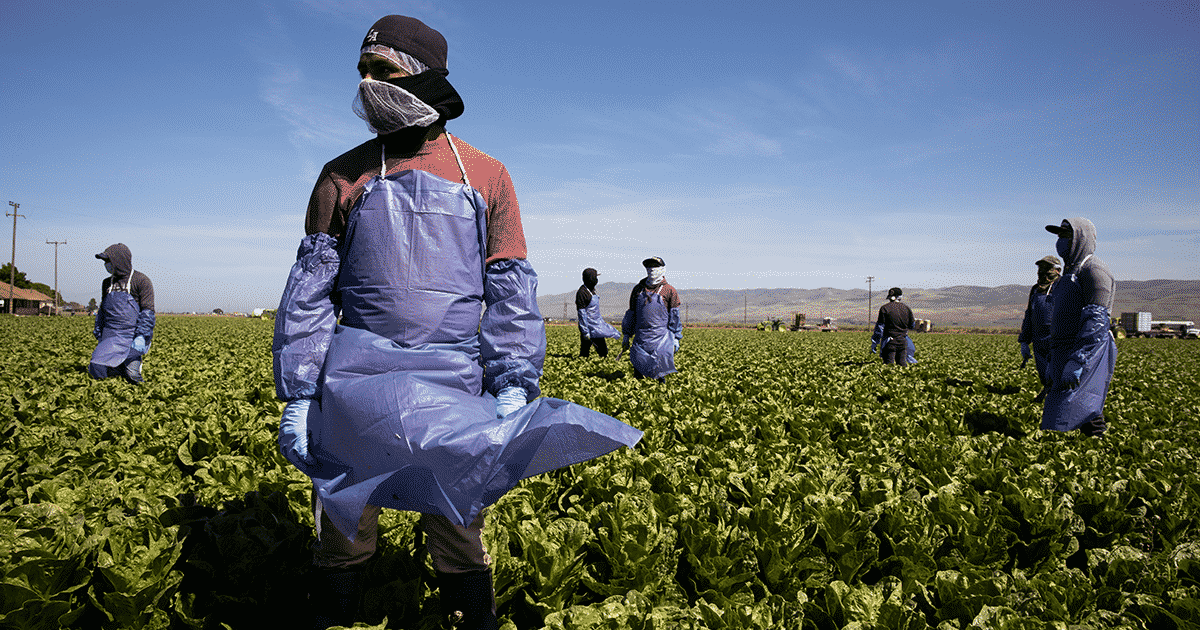
Next, recent heat waves have highlighted the need for federal heat protections for farmworkers. Last week set records for average global heat, and there were excessive heat advisories across the United States. Heat waves create unique dangers for workers who work outside, and Morgan reported last week that workers have died in recent heat waves. As the Los Angeles Times reports, heat waves have a disproportionate impact on farmworkers, who are 35 times more likely to die of heat exposure than workers in other industries. Farm work is particularly dangerous because the exertions increase workers’ internal body temperature at the same time they’re exposed to high heat and humidity. The Times reports that there are no federal standards to ensure farmworkers remain safe while working in the heat. And although a few states, including California, have adopted standards that can help protect farmworkers, a new Texas law—as Linh reported last month—will bar local governments from implementing worker protections. As climate change makes heat waves more common and more intense, and as some states’ deregulatory regimes eviscerate local workplace protections, there is an increasing need for tougher federal workplace protections for farmworkers.
Finally, on Friday, a New York state judge stayed New York City’s new minimum wage for delivery drivers. As Greg discussed last week, Uber, DoorDash, and Grubhub have sued New York City to block enforcement of a new law that would raise the minimum wage for app-based delivery drivers to almost $18 per hour. The law was scheduled to go into effect later this week, on July 12. The law will now be stayed until at least the end of the month. The judge is scheduled to hear oral arguments on a temporary injunction on July 31.




Daily News & Commentary
Start your day with our roundup of the latest labor developments. See all
October 5
Delaware bans captive audience meetings; EEOC settles remote work national origin discrimination claim; First Circuit stays enforcement order in VA's dispute with AFGE.
October 4
Boston nurses announce open-ended strike; federal judge restores federal prison workers' union protections; St. Louis workers form the first movie theater union in Missouri.
October 2
Gov. Newsom signs bill regulating AI in workplace; federal judge blocks Trump's $100,000 H-1B visa fee.
October 1
Senate confirms Keith Sonderling as Labor Secretary; Amazon warehouse workers launch an unfair labor practice strike.
September 30
Harvard grad union wins in First Circuit; AI data trainers initiate misclassification suits; Trader Joe’s found liable under ERISA.
September 29
Unions, AI companies, and private equity firms form a new coalition to shape data center policies; unions express support for the Paramount-Warner Bros. merger.