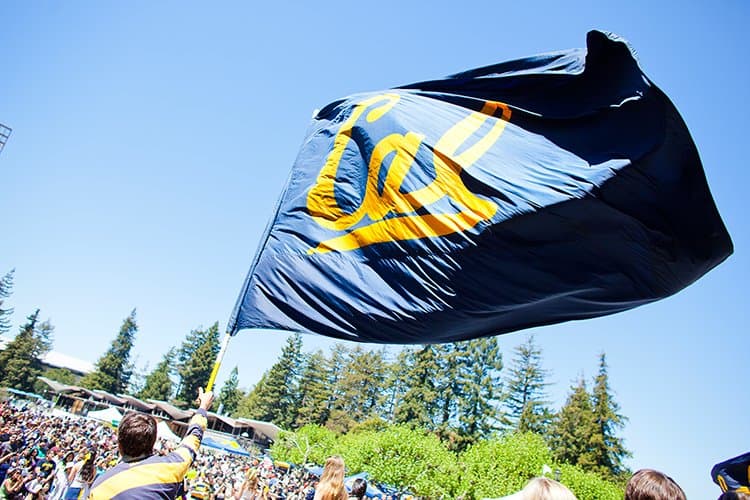

In a major win for the University of California, Berkeley, student union, the university must pay $5 million – 8 million in back pay. The United Auto Workers Local 2865, the union that includes teaching assistants, graduate student workers, graders and tutors, filed a complaint in 2017 against Berkeley, arguing that the school intentionally limited students’ working hours in order to avoid having to pay tuition remission. Under the union’s contract, students who work 10 hours or more per week are entitled to tuition and fee remission. Rather than allowing students to work at least 10 hours, the university simply hired more student workers and restricted their hours to below the threshold; from 2015 to 2019, the number of student workers with capped hours increased by six times. The university has affirmed its will to negotiate with the union on a precise back pay amount.
California lawmakers are voting on a newly proposed law that would impose higher taxes on large California companies with high pay gaps between CEOs and employees. The bill, SB 37, is the brainchild of Senator Nancy Skinner, a Democrat representing Berkeley. It was approved last week by the first committee hearing and is now headed for the Senate vote. The bill would only apply to companies with over $10 million in taxable income and the size of the tax would depend on the pay gap. Opponents of the bill claim it could hurt big business and push companies out of the state, which would ultimately hurt jobs. California is currently home to the some of the highest paid CEOs in the country, including the heads of Tesla, Cisco, Facebook, Oracle and Disney. The CEO of Disney, for example, earns more than 1,000 times the average Disney employee.
Labor organizers in New Jersey and New York advocate for the Healthy Terminal Act, a proposed bill that would require employers to contribute $4.54 an hour to the wages of subcontracted airport workers. In a charge led by the SEIU 32BJ, the bill is expected to benefit 40,000 workers who work as airport security personnel, baggage handlers, janitorial staff, wheelchair agents, etc. This pay increase would specifically address the rising health care costs employees incur. If successful, this bill would be the second gain for airport employers, who recently won the highest mandated minimum wage in the country of $19 per hour by 2023.
In an industry-wide effort to address the growing skills gap, nearly 70% of manufacturers are taking steps to upskill their workforce. Employers are set to spend $26.2 billion in 2020 on upskill efforts such as job training, high-tech skill initiatives, and professional development. According to the National Association of Manufacturers, the ability to attract and retain workers has been one of the industry’s top concerns; 80% of survey respondents admitted difficulties in filling positions.



Daily News & Commentary
Start your day with our roundup of the latest labor developments. See all
October 12
Workers at the Obama Foundation begin organizing; MLB submits its latest collective bargaining agreement proposal; Brigham & Women's nurses postpone strike.
October 11
UAW President Shawn Fain succeeds in his reelection bid, and Spanish unions call for a general strike.
October 9
DHS proposes a $100k fee for the foreign grad employment program; Trump suspends tech company access to green card program; and private equity perpetuates poor working conditions for home care workers.
October 8
NLRB judge finds UPS unlawfully restricted union insignia; Harvard graduate workers authorize second strike; OSHA orders Union Pacific to pay $300,000 in damages in whistleblower case.
October 7
DOL scraps plan to remove decades-old wage-and-hour guidance from federal regulations; New York enacts personnel records access law; Starbucks loses bid to dismiss Workers United trademark suit.
October 6
Protect College Sports Act dampens athlete unionization outlook; Stanford RA union decides to withdraw petition