
Brian J. Petruska is Of Counsel at the firm of Mooney, Green, Saindon, Murphy & Welch, P.C.
A hundred years ago, Clarence Darrow was both the greatest trial lawyer and labor lawyer in the country. Before the creation of labor-relations agencies, union cases played out in courts in front of juries. Darrow advised that a jury of one’s peers was the working man’s best recourse. A century later that insight may offer a path out of the current crisis in labor relations regulation.
The present difficulties stem from the Supreme Court’s embrace of the Unitary Executive Theory. Under this theory, the President may remove members of independent boards, including the NLRB, at will. This shift has profound consequences. It effectively authorizes presidents — and by extension, a president’s political donors — to influence regulatory outcomes.
When major economic actors can secure favorable regulatory decisions through political access, meaningful regulation becomes impossible. Under long-standing norms of agency independence, a president’s involvement in an independent agency’s operations would have been condemned as improper. Under a Unitary Executive Branch, presidential meddling — whether for lofty, venal, or corrupt purposes — is considered within the President’s constitutional role. The Unitary Executive Theory, therefore, operationalizes regulatory capture by giving insiders a formal channel for influencing the agencies intended to regulate them.
Absent a change in the Supreme Court’s composition, regulatory alternatives to independent agencies are needed. Professor Sam Estreicher suggests restructuring the NLRB to fit within the Unitary Executive framework, but he assumes the Court will permit some agency independence. Following the oral argument in Trump v. Slaughter, this seems doubtful, except in the case of the Federal Reserve. Even if feasible, a weakened Board would be less effective than the current system, which already is too slow.
The second problem is the Seventh Amendment. The Labor Movement has long sought authority for the NLRB to issue stronger penalties to increase deterrence. The power of federal agencies to issue fines without jury trials, however, hangs by the fraying thread of the “public rights” exception to the Seventh Amendment’s right to a jury trial. Given the Supreme Court’s unfavorable view of this doctrine, passing legislation that the Supreme Court may overturn would be risky and unwise.
Andrew Strom offers a more promising direction by advocating for judicial rather than administrative enforcement of labor rights. However, his proposal for specialized labor courts suffers from structural vulnerabilities: the same appointment powers used to create a labor‑friendly bench could quickly be used to stack the courts in the opposite direction. Furthermore, Congress could underfund or defund such courts altogether, as it has done with the Board.
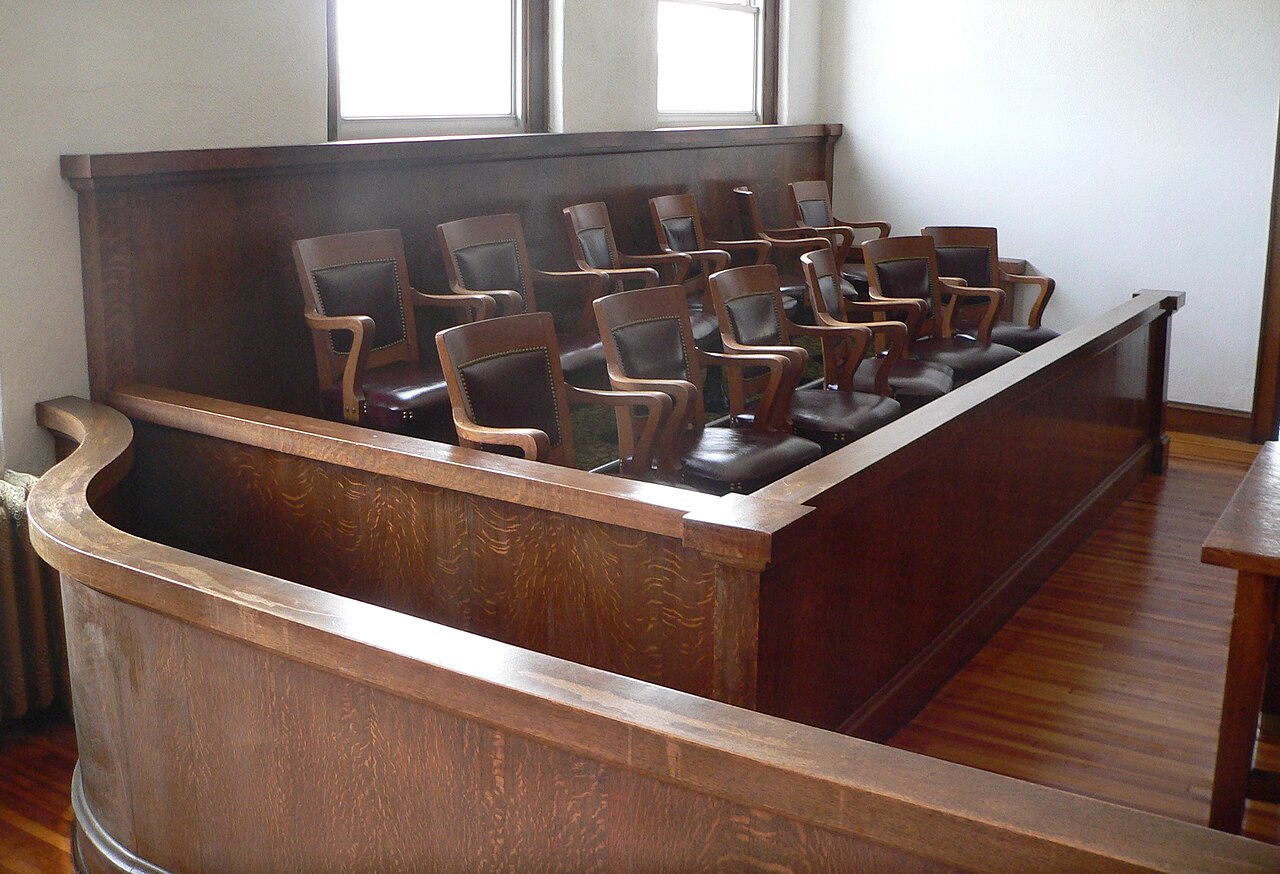
For labor, the better alternative is found with an institution that enjoys the favor of the current Supreme Court — the civil jury system.
Juries offer several advantages. They are democratic and representative, often including workers. Juries and courts of general jurisdiction are less vulnerable to defunding by Congress. Elections do not alter jury composition, making them more resilient guardians of labor rights.
Juries can award meaningful remedies, including compensatory and punitive damages — something the NLRA has long failed to provide. Allowing the NLRA to be enforced by jury trials with legal damages will ensure that most employers are deterred from violating the NLRA.
Labor has long been reluctant to trust federal judges with the enforcement of labor rights, but juries are not judges. Furthermore, the judge’s role can be minimized by establishing statutory standards that require fact‑intensive inquiries appropriate for jury determination. For example, rather than giving a complete defense to an employer who proffers a non-discriminatory motive for an action against an employee, a jury could be required to determine the degree to which an employer’s lawful and unlawful motives contributed to causing the harmful action.
Transitioning away from the current model presents challenges, but each is manageable:
1. Codifying Labor Law
Much of the NLRA’s substance is embedded in decades of NLRB decisions. These decisions should be codified legislatively to prevent federal judges from free-lancing their own preferred version of labor law. Although a substantial project, codification is feasible. The Federal Rules of Civil Procedure and Federal Rules Evidence are products of similar codification efforts.
2. Court-Administered Union Elections
Union elections can be conducted as court cases. This would streamline judicial review by integrating it into the process. The final order in an election case would be a declaration of exclusive representative status and a permanent injunction requiring immediate bargaining in good faith until impasse or agreement is reached. Such an order could not be violated until and unless an appellate court stays or overturns the order.
Neutrals will still be needed to act as special masters to verify showings of interest and to administer ballots. I would propose to retain a federal agency like the NLRB for this purpose, but it could be a DOL office. Also, state agencies and private services could be eligible to serve this role.
Furthermore, unfair labor practice claims could be filed with the same judge handling the election case to obtain immediate remedies to preserve fair election conditions. If an election needed to be rerun, the law could require that the court, in addition to awarding damages for ULPs committed, punish the offending party by requiring reimbursement for all parties’ expenses related to the first election, including attorney’s fees.
3. Flexible, Modular Bargaining Units
The process for determining appropriate bargaining units should be deregulated and simplified. A union should be able to petition for an election among one or more groups of employees sharing the same classification at one or more locations as a single bargaining unit, provided the petitioner demonstrates a showing of interest within each group. Follow‑up elections to expand existing units and place them under an extant contract should be freely permitted.
4. Effective Remedies for Bad‑Faith Bargaining
To address chronic failures to bargain in good faith, a new remedy is necessary. The remedy should have two components. First, damages should be available and measured as the economic benefit the bargaining unit would have received under whatever proposal from the non-breaching side was pending at the time of the violation, plus interest. Because determining bad faith and calculating damages are fact‑intensive, juries should make these findings.
Second, courts should issue injunctions requiring the breaching party to implement and maintain the terms of the non-breaching side’s proposal used by the jury to assess damages until a final contract is reached or the parties bargain to impasse.
This remedy would finally provide meaningful recompense and deterrence against bad faith bargaining—a feature the current NLRA has never attained.
A Strategic, Incremental Approach
This proposal does not overhaul the substance of the NLRA. Instead, it strengthens remedies and enforcement through constitutionally grounded mechanisms. Its modesty is intentional: in a post‑Trump political environment, Congress is more likely to adopt reforms that repair the structural damage wrought by the Unitary Executive Theory without rewriting labor law wholesale.
Additional reforms — such as banning permanent strike replacements or requiring interest arbitration — remain worthwhile but only if the structural foundation of labor law is repaired. Transitioning labor enforcement to civil actions adjudicated by juries is a crucial first step, strengthening labor law while placing it on a sounder constitutional footing.





Daily News & Commentary
Start your day with our roundup of the latest labor developments. See all
February 4
Lawsuit challenges Trump Gold Card; insurance coverage of fertility services; moratorium on layoffs for federal workers extended
February 3
In today’s news and commentary, Bloomberg reports on a drop in unionization, Starbucks challenges an NLRB ruling, and a federal judge blocks DHS termination of protections for Haitian migrants. Volatile economic conditions and a shifting political climate drove new union membership sharply lower in 2025, according to a Bloomberg Law report analyzing trends in labor […]
February 2
Amazon announces layoffs; Trump picks BLS commissioner; DOL authorizes supplemental H-2B visas.
February 1
The moratorium blocking the Trump Administration from implementing Reductions in Force (RIFs) against federal workers expires, and workers throughout the country protest to defund ICE.
January 30
Multiple unions endorse a national general strike, and tech companies spend millions on ad campaigns for data centers.
January 29
Texas pauses H-1B hiring; NLRB General Counsel announces new procedures and priorities; Fourth Circuit rejects a teacher's challenge to pronoun policies.