

Maia Usui is a student at Harvard Law School.
On the campaign trail, President Trump pledged that he would create 25 million jobs over the next decade. Will he keep his promise? The New York Times thinks not. The Editorial Board takes aim at the President’s “wheezing jobs effort,” pointing to his recently released budget proposal — which would cut the Department of Labor’s budget by 21% and eliminate several important jobs programs — and his neglect of important job markets, such as the clean energy sector.
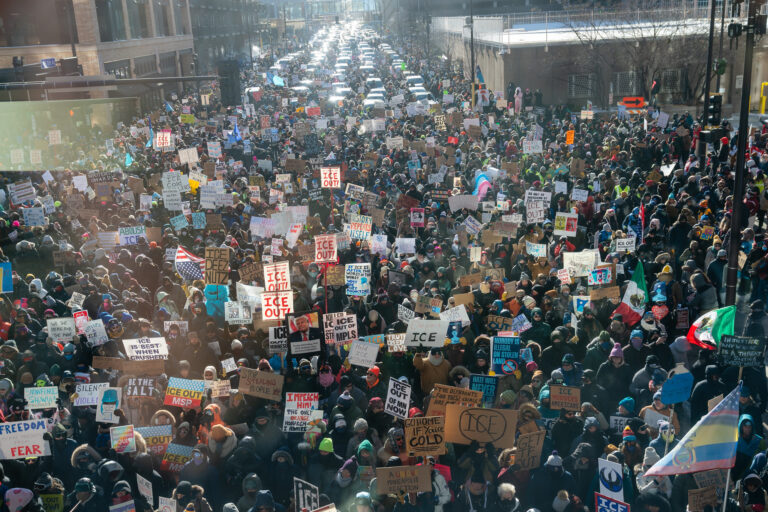
President Trump’s labor policies have also attracted the ire of unions and labor leaders. The SEIU and Food Chain Workers Alliance have announced a general strike on May 1 (#May1Strike), coinciding with International Workers’ Day. More than 300,000 food chain employees and 40,000 service workers are expected to turn out, The Hill reports, to protest the Trump administration and in particular its hardline stance on immigration.
Meanwhile, the administration’s immigration crackdown has worsened the farm labor shortage in California, The Los Angeles Times reports. Although farm wages have shot up, few Americans have been willing to accept those jobs — casting doubt on President Trump’s claim that tougher borders will help American-born workers.
Disney will be paying $3.8 million in back wages to 16,339 of its “cast members” as part of a settlement with the Department of Labor. The DOL’s investigation revealed that Disney resorts in Florida deducted a “costume” expense that caused some employees’ hourly rates to fall below the federal minimum wage. The Christian Science Monitor has more.
As reports spread of “rogue” federal employees using private communications channels — including encrypted messaging apps — to organize against the Trump administration, questions have been raised as to whether such incognito communications are legal under public records laws, such as the Federal Records Act. A recent decision from the California Supreme Court could offer some hints. In City of San Jose v. Superior Court (Smith), the state high court ruled that emails and text messages sent on public officials’ private devices are subject to disclosure under the California Public Records Act. JDSupra provides detailed analysis.
Finally, a new piece in The Harvard Business Review argues that the traditional workplace — the office — could be turning obsolete in today’s gig economy. As workers and businesses realize the value of independent and remote work, “office-bound” work might no longer be the most efficient option.

Daily News & Commentary
Start your day with our roundup of the latest labor developments. See all
April 6
Trump to shrink but not eliminate CFPB, 9th Circuit nixes use of issue preclusion to invalidate arbitration agreements.
April 5
Trump proposes DOL budget cuts; NLRB rules in favor of cannabis employees; Florida warehouse workers unanimously authorize strike.
April 3
NLRB says Amazon failed to bargain with union; Harvard graduate workers authorize strike, and states move to preempt local employment law.
April 2
Sheridan, Colorado educators go on strike; Maryland graduate student workers are one step closer to collective bargaining rights.
April 1
DOL proposes 401(k) rule; Starbucks investors reelect controversial board members; Washington passes workplace immigration warning requirement.
March 31
In today’s news and commentary, the Supreme Court hears a case about Federal Court jurisdiction over arbitration, a UPS heat inspection lawsuit against OSHA is dismissed, and federal worker unions and NGOs call on the EPA to cease laying off its environmental justice staffers. A majority of Supreme Court justices signaled support for allowing federal […]