

Maia Usui is a student at Harvard Law School.
Job growth is slowing. Although recent numbers have been strong — 287,000 new jobs were added in June, exceeding expectations — job growth in 2016 has been lower than in previous years. But economists, including U.S. Labor Secretary Tom Perez, believe that this is good news. In an interview with The Atlantic, Perez noted that job growth tends to slow the economy approaches full employment. He added that certain policy measures — such as mandating paid leave and raising the minimum wage — could help boost growth even more.
Many tech start-ups rely on the gig economy — which allows fast and flexible staffing at cheaper cost — to keep their businesses running. But some start-ups have gone another route. The New York Times reports on the recent success of Redfin, an online real estate start-up that eschews the gig economy model, hiring full-time employees instead of independent contractors.
The big headline in this week’s sports news was Kevin Durant’s decision to leave the Oklahoma City Thunder for the Golden State Warriors, making the strongest shooting team in the league even stronger. The New Yorker suggests that Durant’s move (and that of other superstar players) could be an unintended consequence of the N.B.A.’s collective-bargaining agreement with its players, which establishes relatively low salary caps and “diminishes the importance of money in the best players’ free-agency decisions” — sending talented players to already-talented teams, instead of leveling the playing field.
And lastly, in workplace innovations, Amazon has decided to help its employees relieve stress by giving them greenhouses in the office.




Daily News & Commentary
Start your day with our roundup of the latest labor developments. See all
January 30
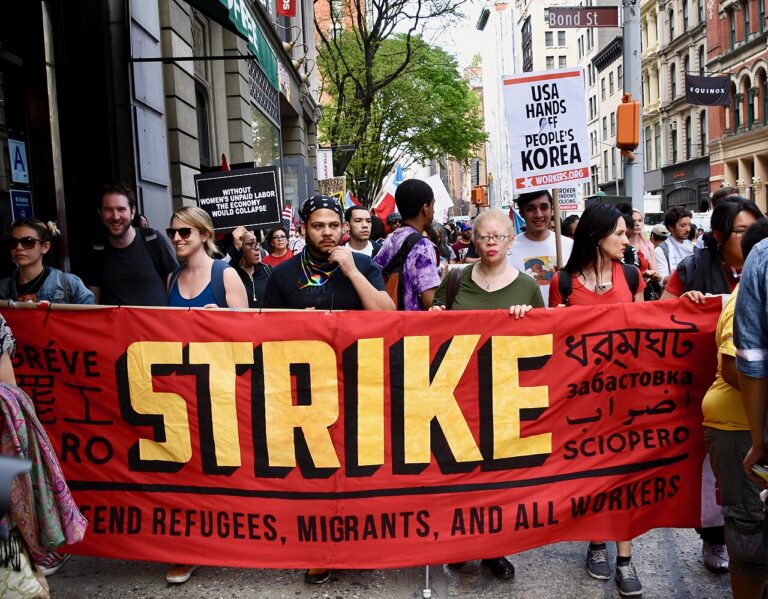
Multiple unions endorse a national general strike, and tech companies spend millions on ad campaigns for data centers.
January 29
Texas pauses H-1B hiring; NLRB General Counsel announces new procedures and priorities; Fourth Circuit rejects a teacher's challenge to pronoun policies.
January 28
Over 15,000 New York City nurses continue to strike with support from Mayor Mamdani; a judge grants a preliminary injunction that prevents DHS from ending family reunification parole programs for thousands of family members of U.S. citizens and green-card holders; and decisions in SDNY address whether employees may receive accommodations for telework due to potential exposure to COVID-19 when essential functions cannot be completed at home.
January 27
NYC's new delivery-app tipping law takes effect; 31,000 Kaiser Permanente nurses and healthcare workers go on strike; the NJ Appellate Division revives Atlantic City casino workers’ lawsuit challenging the state’s casino smoking exemption.
January 26
Unions mourn Alex Pretti, EEOC concentrates power, courts decide reach of EFAA.
January 25
Uber and Lyft face class actions against “women preference” matching, Virginia home healthcare workers push for a collective bargaining bill, and the NLRB launches a new intake protocol.