
Zachary Boullt is a student at Harvard Law School.
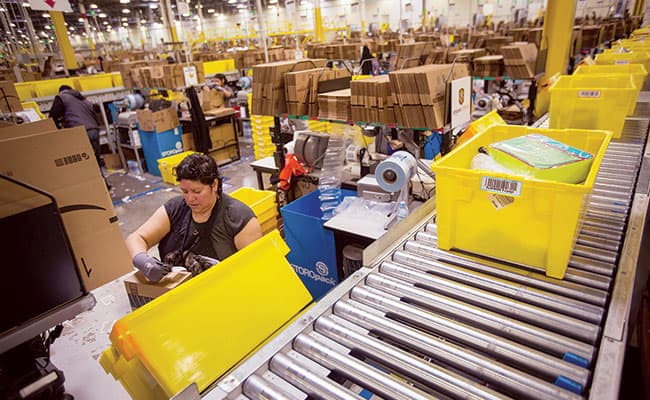
William recently wrote about unionization efforts at Amazon’s Staten Island distribution center and warehouses. The campaign has now hit a new milestone, as workers filed a petition with the National Labor Relations Board to request an election to unionize. The effort has been led by an organizing team including Chris Smalls, the former Amazon employee who was terminated early in the pandemic for protesting hazardous working conditions. The organizers so far have gathered over 2,000 authorization card signatures across four warehouses. In contrast to the Bessemer unionization that saw organizers teaming up with established union shop, these organizers are running an independent operation known as Amazon Labor Union. Organizers delivered the election petition to a Brooklyn NLRB regional office, with some dressed as characters from television show Money Heist. The unionization effort has been operated out of a tent set up outside the warehouse where Smalls used to work, running 24/7 and hosting worker events such as barbecues to recruit.
The Staten Island unionization effort has occurred amidst Amazon hiring more management-friendly labor lobbyists. Amazon has made at least five notable hires of labor lobbyists who have a history of pushing back against union-supported labor policies. The hires give Amazon one of the deepest labor lobbying arms of any individual organization, allowing individual lobbyists to specialize in particular categories of labor policy.
The U.S. Senate has confirmed Doug Parker as assistant secretary of labor for occupational safety and health. Parker is the first Senate-confirmed OSHA agency leader since the Obama administration. Parker worked as head of the California Division of Occupational Safety and Health and helped develop California’s pandemic workplace safety rules. He also previously worked in the Labor Department’s Mine Safety and Health Administration during the Obama presidency, as an attorney for United Mine Workers of America, and as the executive director of worker-safety nonprofit Worksafe Inc.
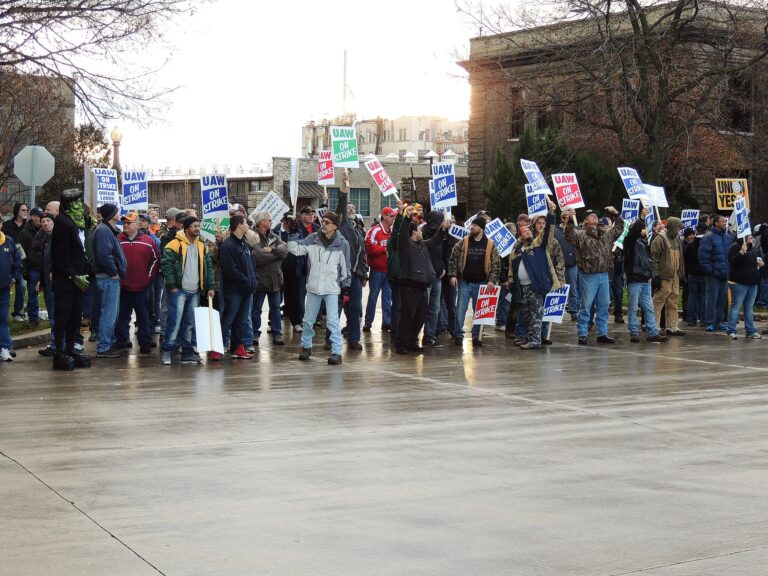
TIME has profiled shifting worker relations and strategies for established unions as recent labor activism has grown increasingly grassroots-oriented. Using the John Deere and Kellogg’s activism as examples, authors Abby Vesoulis and Julia Zorthian focus on rifts opening between union contract negotiation strategies and grassroots worker demands. Large unions are finding themselves playing “catch up” to grassroots efforts, such as individual workers increasingly using social media to publicize their striking motivations and garner additional support.
Southeastern Pennsylvania Transportation Authority, known as SEPTA, employees have authorized a strike for SEPTA’s largest union, TWU Local 234, if a new contract deal is not made by November 1. SEPTA employees have walked off the job nine times after failed contract negotiations since 1975, with the last strike happening in 2016. SEPTA workers are demanding raises, compensation for families of employees who died from COVID-19, enhanced maternity leave, and additional work safety measures. TWU Local 234 has about 5,000 members.



Daily News & Commentary
Start your day with our roundup of the latest labor developments. See all
March 20
Appeal to 9th Cir. over law allowing suit for impersonating union reps; Mass. judge denies motion to arbitrate drivers' claims; furloughed workers return to factory building MBTA trains.
March 19
WNBA and WNBPA reach verbal tentative agreement, United Teachers Los Angeles announce April 14 strike date, and the California Gig Workers Union file complaint against Waymo.
March 18
Meatpacking workers go on strike; SCOTUS grants cert on TPS cases; updates on litigation over DOL in-house agency adjudication
March 17
West Virginia passes a bill for gig drivers, the Tenth Circuit rejects an engineer's claims of race and age bias, and a discussion on the spread of judicial curtailment of NLRB authority.
March 16
Starbucks' union negotiations are resurrected; jobs data is released.
March 15
A U.S. District Court issues a preliminary injunction against the Department of Veterans Affairs for terminating its collective bargaining agreement, and SEIU files a lawsuit against DHS for effectively terminating immigrant workers at Boston Logan International Airport.