

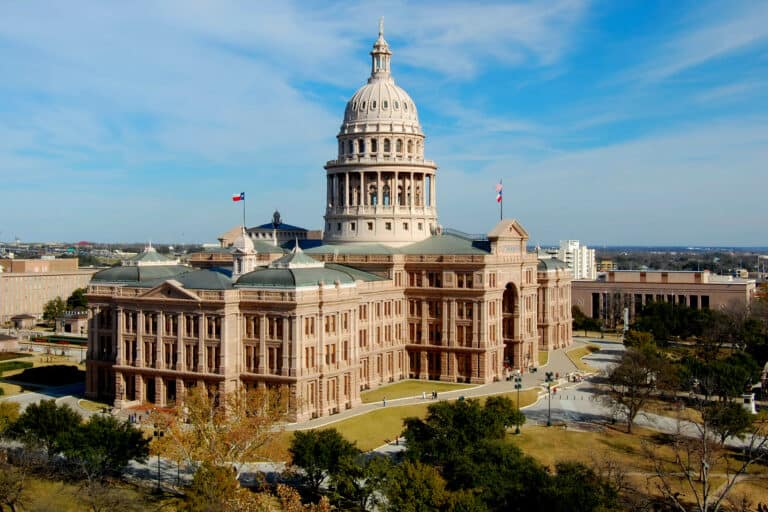
This week the U.S. Labor Department formally rescinded the Obama-era “persuader rule” that mandated employers to disclose information about their one-on-one communications with union-avoidance consultants. The rule was promulgated under the Labor-Management Reporting and Disclosure Act (LMRDA), but business groups long argued that it impinged on attorney-client privilege and exceeded the scope of the DOL’s authority under the LMRDA. In June 2016, a federal judge in Texas issued a nationwide preliminary injunction against the rule, which was made permanent in November of that year. With the rule now rescinded by the Trump administration, employers’ reporting requirements for third-party consultants return to the prior standard under which employers only had to report when anti-union consultants spoke directly to workers.
Jonathan F. Mitchell, President Trump’s nominee to be Chairman of the Administration Conference of the United States (ACUS), has been revealed as the lead counsel in a highly coordinated group of cases taking aim at labor unions. Noam Scheiber reports that Mitchell filed a number of cases this spring seeking retroactive refunds of agency fees from public sector unions to nonmembers they represent, months before the Janus v. AFSCME decision came down in June. In retroactive constitutional cases, many lower courts have accepted good-faith defenses by private parties that they were following valid state law at the time, but legal experts like Sharon Block and Will Baude expect that a Supreme Court especially hostile to organized labor will nonetheless embrace retroactive refunds. Unions could lose hundreds of millions of dollars as a result. Republicans on the Judiciary Committee endorsed Mitchell’s nomination in March, though he still needs approval by the full Senate.
The New York Times reports that Ann Hopkins, the plaintiff in the famous sex discrimination case Price Waterhouse v. Hopkins, passed away on June 23. In the 1980s, Hopkins was denied partnership at Price Waterhouse two years in a row despite consistently outperforming her all-male counterparts. Hopkins claimed that she was discriminated against on the basis of sex because she did not conform to female stereotypes, refusing to wear makeup or jewelry or style her hair in traditionally feminine ways. Partners at the firm also described her as “macho” and “aggressive.” After being passed up a second time, Hopkins left the firm and brought a claim of sex discrimination against Price Waterhouse under Title VII. In 1989, the Supreme Court ruled 6-3 for Hopkins. The plurality opinion recognized that sex stereotyping constituted sex discrimination, laying the groundwork for later suits by L.G.B.T.Q. plaintiffs. In Price Waterhouse, the Supreme Court also created the mixed-motive framework allowing plaintiffs to make a prima facie case of discrimination by showing membership in a protected category was “a motivating factor,” if not the only factor, in an employer’s adverse employment action. After the case, Hopkins returned to Price Waterhouse and worked there until she retired in 2002.
This week over 130 groups petitioned the Occupational Safety and Health Administration (OSHA) for an occupational heat standard. The petition coincided with the release of a report from Public Citizen detailing how an average of more than 2.2 million workers in the construction and agriculture industries alone worked in extreme heat conditions every day during the week of July 4. Data from the Bureau of Labor Statistics reveals that extreme heat exposure resulted in the deaths of at least 783 American workers from 1992 to 2016, with an additional 69,374 seriously injured. At a press conference announcing the petition, Congresswoman Judy Chu pledged to introduce legislation requiring OSHA to issue the heat standard called for by the participating groups. The petition explicitly linked the need for an occupational heat standard to the growing threat of climate change.



Daily News & Commentary
Start your day with our roundup of the latest labor developments. See all
October 25
Dallas Cowboys Cheerleaders unionize; Bureau of Prisons again pushes for union contract cancellation; CSU faculty votes on strike authorization.
October 23
Employers increasingly shift health care costs onto workers and NYC proposes placing restrictions on fully automated customer service.
October 22
SCOTUS declines Wilcox appeal; Penn State research assistants win bargaining rights; SEIU sued over military leave firing.
October 21
DOL withdraws tipped-worker rule; Instacart settles hiring-bias claims; Phillips 66 locks out New Jersey refinery workers.
October 20
Korean unions oppose labor exemption bill; Portland city workers prepare for strike; UPenn grad student union looks to dismiss university filing
October 19
FDA reverses course on policy prohibiting off-duty union activity; FAA and NATCA reach deal to secure pay increase for air traffic controllers.