

Zachary Boullt is a student at Harvard Law School.
Jeanna Smialek of The New York Times recently analyzed the changing economic philosophy underlying Biden administration plans to return the job market back to low unemployment. Smialek looked at Biden’s appointments and statements from upcoming Biden administration officials and Fed officials to demonstrate a new willingness to engage in government spending and borrowing without past concerns of inflation or taking on too much debt. The economic conditions of the pandemic have led to potentially years of low interest rates, making taking on public debt a more attractive option. This had led to expectations and predictions of more aggressive government spending toward the goal of returning the country to as close to full employment as possible. It remains to be seen what level of timidity the Biden administration will have as it pushes for pandemic relief.
Amidst chaotic rollout of vaccine distribution, both meatpacking worker unions and industry leaders are pushing for vaccine prioritization for their industry. The meatpacking industry has been notorious for COVID outbreaks during the pandemic, with several OSHA citations and over 200 deaths in the industry. Due to an executive order from President Trump compelling meatpacking plants to remain open, the industry is pushing for rapid vaccination. The campaign has had success in some states: Iowa plans to begin vaccinating meatpacking workers on February 1, while other states including California and Colorado have announced a commitment to prioritizing these workers. However, the seeds of conflict are brewing in states like Nebraska, whose governor wants to prioritize only citizens and legal residents for vaccination.
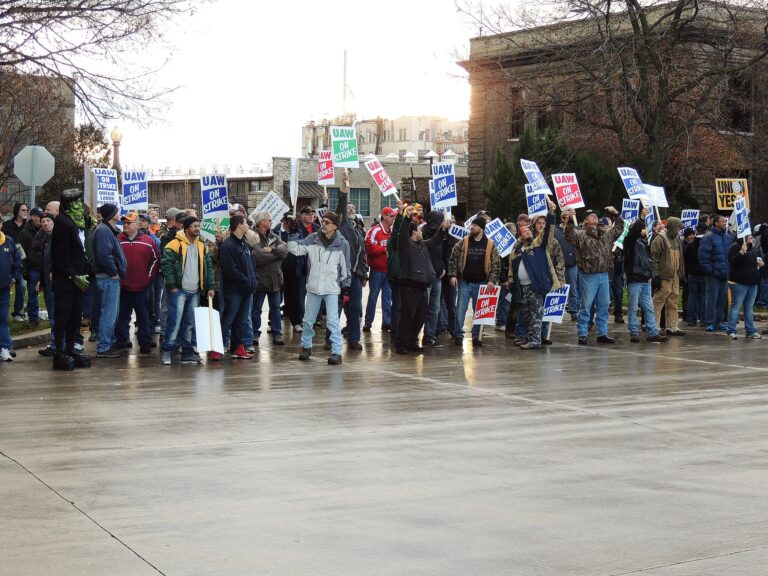
Workers at the Hunts Point Produce Market in the Bronx are on strike for the first time in almost 35 years. The unit of Teamsters workers consists of 1400 employees, with reportedly all of the members on strike for wage increases. About 500 members voted to strike. The union had asked for a $1 per hour wage increase, and Hunts Point had offered only 32 cents. Union leaders say the strike is motivated by the workers at the market who have gotten sick during the pandemic and the increased risks they have had to endure while working.
Members of the nation’s largest firefighters’ union, the International Association of Fire Fighters, or IAFF, are pushing for resolutions to stop accepting money from the chemical industry and textile and PPE manufacturers and to test gear for chemicals. Chemicals known as per- and polyfluoroalkyl substances, or PFAS, are found in firefighting turnout gear and firefighting foams and are linked to ailments such as increased likelihood of kidney and testicular cancer and increased cholesterol, among other conditions. There are no alternatives to PFAS-laden gear on the market. Manufacturers have donated over $400,000 to the IAFF since 2016, but supporters of the resolutions say that this money is not necessary to the IAFF’s operations. The resolutions were drafted by firefighters alarmed by the rate of cancer deaths from fellow firefighters and the young age that firefighters were contracting cancer and dying of it.



Daily News & Commentary
Start your day with our roundup of the latest labor developments. See all
March 24
The WNBPA unanimously votes to ratify the league’s new CBA; NYU professors begin striking; and a district court judge denies the government’s motion to dismiss a case challenging the Trump administration’s mass revocation of international student visas.
March 23
MSPB finds immigration judges removal protections unconstitutional, ICE deployed to airports.
March 22
Resurgence in salting among young activists; Michigan nurses strike; states experiment with policies supporting workers experiencing menopause.
March 20
Appeal to 9th Cir. over law allowing suit for impersonating union reps; Mass. judge denies motion to arbitrate drivers' claims; furloughed workers return to factory building MBTA trains.
March 19
WNBA and WNBPA reach verbal tentative agreement, United Teachers Los Angeles announce April 14 strike date, and the California Gig Workers Union file complaint against Waymo.
March 18
Meatpacking workers go on strike; SCOTUS grants cert on TPS cases; updates on litigation over DOL in-house agency adjudication