

Jon Weinberg is a student at Harvard Law School.
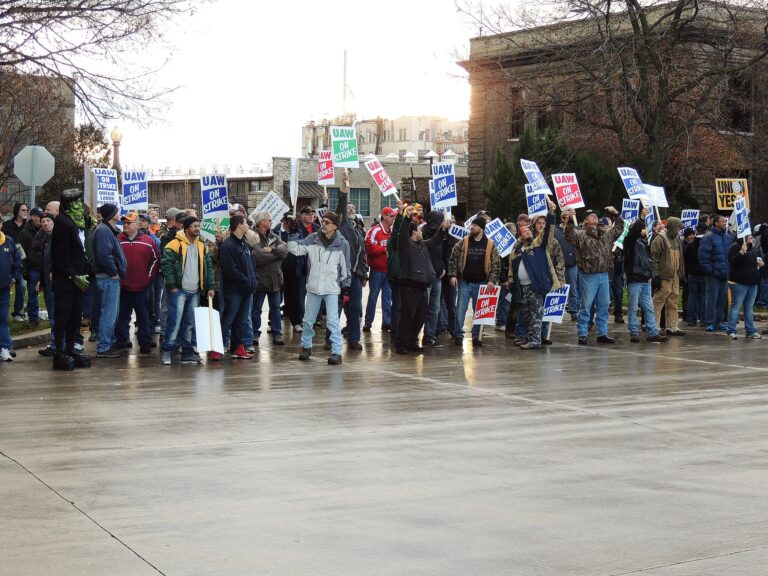
Once a friend of the United Auto Workers, Volkwagen has truly become a foe. The New York Times reports that yesterday “Volkswagen announced that it would go to federal court to appeal a recent victory by the U.A.W. Late last year, a majority of the Chattanooga plant’s 160 maintenance workers voted to accept representation by the union.” While Volkswagen had previously been committed to bringing German-style councils to the plan, management turnover and company troubles have resulted in a changed strategy. The NLRB has called on Volkswagen to begin bargaining with the workers, but the company wants all 1,500 plant workers to vote on unionization.
The court battle over right-to-work continues in Wisconsin. According to the Milwaukee Journal Sentinel, “a Dane County judge declined Monday to put on hold his ruling that found unconstitutional a Wisconsin law barring unions and businesses from reaching labor deals requiring workers to pay union fees,” and attention will now turn to the state’s Court of Appeals. Notably, Wisconsin’s Supreme Court is “controlled 5-2 by conservatives.”
Not all gig economy firms are fighting organized labor. Skift notes that Airbnb has been negotiating with the SEIU over the use of organized housekeeping services by hosts. No agreement was reached, but representatives from the SEIU and UNITE HERE did meet with Airbnb. The American Prospect has more on how the Uber settlement and “the SEIU-Unite Here brouhaha has created more questions than answers to how unions—and the labor movement more broadly—can effectively combat the harmful consequences of Silicon Valley’s disruption of the employer-employee relationship.”
Finally, in reporting on workers and politics, The New York Times highlights how “disenchantment with the political mainstream is no surprise. But research to be unveiled this week by four leading academic economists suggests that the damage to manufacturing jobs from a sharp acceleration in globalization since the turn of the century has contributed heavily to the nation’s bitter political divide.”



Daily News & Commentary
Start your day with our roundup of the latest labor developments. See all
March 12
EPA terminates contract with second-largest union; Florida advances bill restricting public sector unions; Trump administration seeks Supreme Court assistance in TPS termination.
March 11
The partial government shutdown results in TSA agents losing their first full paycheck; the Fifth Circuit upholds the certification of a class of former United Airline workers who were placed on unpaid leave for declining to receive the COVID-19 vaccine for religious reasons during the pandemic; and an academic group files a lawsuit against the State Department over a policy that revokes and denies visas to noncitizens for their work in fact-checking and content moderation.
March 10
Court rules Kari Lake unlawfully led USAGM, voiding mass layoffs; Florida Senate passes bill tightening union recertification rules; Fifth Circuit revives whistleblower suit against Lockheed Martin.
March 9
6th Circuit rejects Cemex, Board may overrule precedents with two members.
March 8
In today’s news and commentary, a weak jobs report, the NIH decides it will no longer recognize a research fellows’ union, and WNBA contract talks continue to stall as season approaches. On Friday, the Labor Department reported that employers cut 92,000 jobs in February while the unemployment rate rose slightly to 4.4 percent. A loss […]
March 6
The Harvard Graduate Students Union announces a strike authorization vote.