

Following a yearlong search for a second home, Amazon has finalized plans to split its new headquarters, “Amazon HQ2,” between Arlington, VA and Long Island City, in Queens. States and cities across the country offered Amazon billions of dollars in tax breaks to entice the company to build its second headquarters in their city. While HQ2 is expected to split about 50,000 new jobs between the two cities, residents and community activists in New York and Washington, D.C., expressed concern that Amazon’s plans would exacerbate inequality and increase housing instability for low income people and communities of color in the region. In June, the Seattle City Council repealed a corporate tax plan to address the city’s growing homelessness crisis after Amazon threatened to halt ongoing expansion projects.
Michigan’s Republican-led state legislature is expected to use the lame duck session to scale back minimum wage and paid sick leave laws, the Detroit News reported on Monday. In September, the state legislature adopted citizen-led legislation that raised the minimum wage to $12 per hour and and required paid sick leave. The legislature’s adoption of the measures kept the proposals off of the November ballot, meaning that amendments would require a simple majority rather than a two-thirds vote. Ahead of the election, campaigners for Michigan One Fair Wage warned that Republican legislators would gut the legislation during the lame duck session. In the week since the election, Republican Senator Dave Hildenbrand introduced a bill that would reinstitute a lower wage for tipped employees, while Republican Senator Mike Shirkey introduced a bill that would eliminate a “rebuttable presumption” in favor of employees if an employer took adverse action against them within 90 days of alleging violations of Michigan’s paid sick leave law. Michigan Republicans have used recent lame-duck sessions to pass contentious legislation including the state’s 2012 right-to-work law and a 2014 law requiring drug testing for welfare recipients.
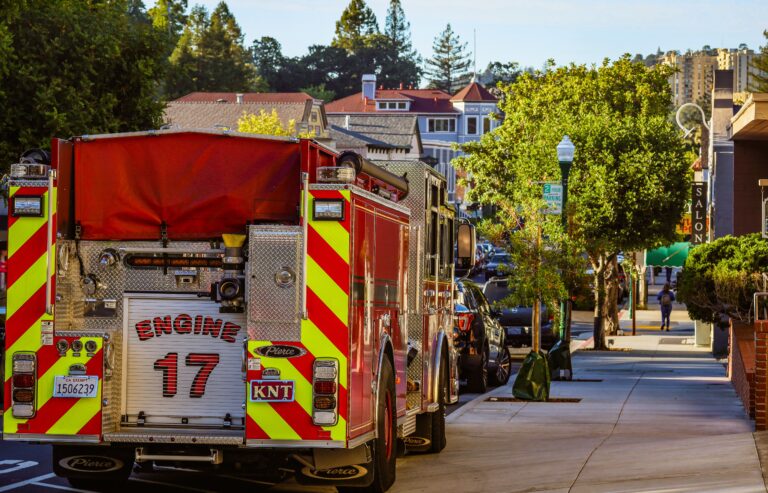
As wildfires ravage much of California, the state continues to rely on prison labor to battle the blazes. This week, two California prisoners were injured fighting Butte County’s Camp Fire. With 42 deaths confirmed, the Camp Fire has become the most destructive and deadliest fire in state history. In September, the Sacramento Bee reported that inmates made up nearly one fifth of the force battling California’s wildfires this past summer. California typically has about 3,000 inmate volunteer firefighters who often work for up to 24 hours straight and earn just $1 an hour to fight fires. The injustices they face are not limited to meager pay; upon reentry, those who worked as volunteer firefighters when they were incarcerated are typically unable to get hired as firefighters. Although prisoners volunteer to be selected to battle fires, inmate workers are a uniquely vulnerable segment of the workforce—prisoners are not paid the minimum wage, cannot unionize, and are not entitled to workers’ compensation if they are injured or killed on the job. In October, a California prison inmate suffered from smoke inhalation while working as a volunteer firefighter in Santa Cruz.
In China, student organizers and factory workers were detained in at least three cities as part of a crackdown against labor protests, the Financial Times reported on Monday. This July, about 30 workers at Shenzhen’s Jasic Technology were detained for protesting against their company’s decision to prevent them from forming a union. A month later, police raided a student dormitory and arrested nearly 40 students who had supported the workers. In October, Cornell University halted two exchange programs with China’s Renmin University after Renmin students reported that they had been punished for advocating worker rights.




Daily News & Commentary
Start your day with our roundup of the latest labor developments. See all
October 8
NLRB judge finds UPS unlawfully restricted union insignia; Harvard graduate workers authorize second strike; OSHA orders Union Pacific to pay $300,000 in damages in whistleblower case.
October 7
DOL scraps plan to remove decades-old wage-and-hour guidance from federal regulations; New York enacts personnel records access law; Starbucks loses bid to dismiss Workers United trademark suit.
October 6
Protect College Sports Act dampens athlete unionization outlook; Stanford RA union decides to withdraw petition
October 5
Delaware bans captive audience meetings; EEOC settles remote work national origin discrimination claim; First Circuit stays enforcement order in VA's dispute with AFGE.
October 4
Boston nurses announce open-ended strike; federal judge restores federal prison workers' union protections; St. Louis workers form the first movie theater union in Missouri.
October 2
Gov. Newsom signs bill regulating AI in workplace; federal judge blocks Trump's $100,000 H-1B visa fee.