

New York City’s Mayor Bill de Blasio has signed legislation giving unpaid interns the right to sue if they’re harassed or discriminated against by their employer. As the New York Times explains, the bill is the latest chapter in the ongoing debate over the implications, both legal and moral, of unpaid and low-paid internships.
Sally Jenkins at the Washington Post argues that unionization of college athletes is the wrong tool to fix inequities in college sports. Her core concern is that the gains that collective bargaining might yield for athletes participating in revenue-generating sports would merely be redistribution from other quarters of the college community.
Detroit has reached a tentative deal with its two pension systems that could be an important breakthrough in bringing its historic bankruptcy to a close. As both the New York Times and Wall Street Journal report, workers are facing far less severe cuts than had been tabled in the past.
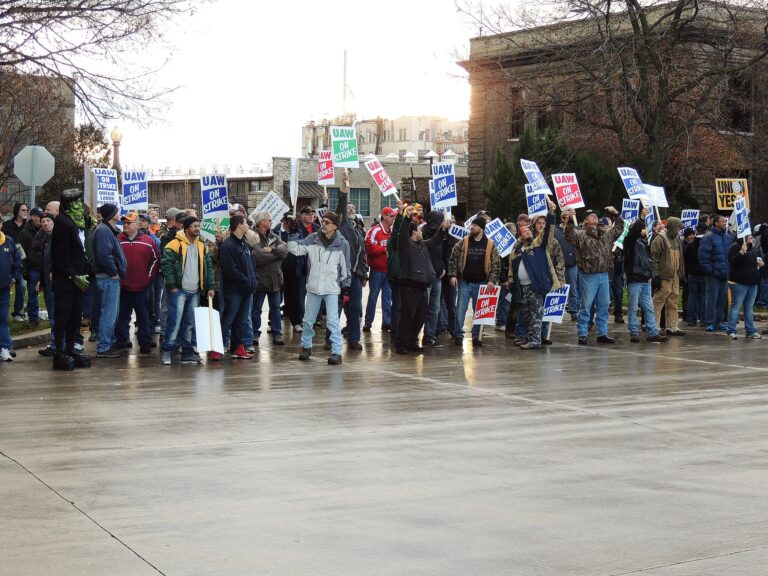
The Wall Street Journal’s editorial board explores the contrasting economic policies that have been pursued by states in the Great Lakes region. The piece focuses on how tax policy and the role of public sector unions in governance have yielded differing economic outcomes.
In international news, the New York Times is reporting on China’s recent economic woes. The article attributes the slowdown partly to rising Chinese wages and increased labor competition from countries such as Vietnam.



Daily News & Commentary
Start your day with our roundup of the latest labor developments. See all
March 17
West Virginia passes a bill for gig drivers, the Tenth Circuit rejects an engineer's claims of race and age bias, and a discussion on the spread of judicial curtailment of NLRB authority.
March 16
Starbucks' union negotiations are resurrected; jobs data is released.
March 15
A U.S. District Court issues a preliminary injunction against the Department of Veterans Affairs for terminating its collective bargaining agreement, and SEIU files a lawsuit against DHS for effectively terminating immigrant workers at Boston Logan International Airport.
March 13
Republican Senators urge changes on OSHA heat standard; OpenAI and building trades announce partnership on data center construction; forced labor investigations could lead to new tariffs
March 12
EPA terminates contract with second-largest union; Florida advances bill restricting public sector unions; Trump administration seeks Supreme Court assistance in TPS termination.
March 11
The partial government shutdown results in TSA agents losing their first full paycheck; the Fifth Circuit upholds the certification of a class of former United Airline workers who were placed on unpaid leave for declining to receive the COVID-19 vaccine for religious reasons during the pandemic; and an academic group files a lawsuit against the State Department over a policy that revokes and denies visas to noncitizens for their work in fact-checking and content moderation.