
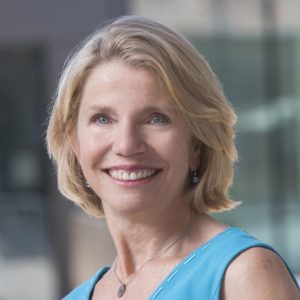
Catherine Fisk is the Barbara Nachtrieb Armstrong Professor of Law at UC Berkeley Law, where she teaches and writes on the law of the workplace, legal history, civil rights and the legal profession. She is the author of dozens of articles and four books, including the prize-winning Working Knowledge: Employee Innovation and the Rise of the Corporate Intellectual Property, 1800-1930, and Labor Law in the Contemporary Workplace. Her research focuses on workers at both the high end and the low end of the wage spectrum. She has written on union organizing among low-wage and immigrant workers as well as on labor issues in the entertainment industry, employee mobility in technology sectors, employer-employee disputes over attribution and ownership of intellectual property, the rights of employees and unions to engage in political activity, and labor law reform. She is the co-author, with UCI Law Professor Ann Southworth, of an innovative interdisciplinary casebook, The Legal Profession. Her current public service includes membership on the SEIU Ethics Review Board, the Board of Directors of the Wage Justice Center, and committees of the Law & Society Association. Prior to joining the founding faculty of UC Irvine School of Law, Fisk was a chaired professor at Duke Law School, and was on the faculty of the University of Southern California Gould School of Law and Loyola Law School in Los Angeles. She practiced law at a boutique Washington, D.C. firm and at the U.S. Department of Justice. She received her J.D. at UC Berkeley, and an A.B., summa cum laude, from Princeton University.
President Trump’s first afternoon in office was short on major developments for labor rights. The big news was that shortly after noon, a U.S. Department of Labor webpage about LGBT rights suddenly disappeared from the government’s website. You can read the deleted report here.
Now, a Google search on the DOL.gov site for LGBT produces the following item on the list of search results:

But clicking on the link produces this:

The other labor news from the new Trump Administration comes from his Inaugural Address. In dark tones, he hit on his populist campaign themes about the decline of American manufacturing and American jobs. The annotated transcript of his address is on the New York Times website.
President Trump said:
“Politicians prospered, but the jobs left, and the factories closed.”
“For many decades we’ve enriched foreign industry at the expense of American industry ….”
He said that the U.S. has:
“spent trillions and trillions of dollars overseas while America’s infrastructure has fallen into disrepair and decay. […] One by one, the factories shuttered and left our shores, with not even a thought about the millions and millions of American workers that were left behind. The wealth of our middle class has been ripped from their homes and then redistributed all across the world. But that is the past, and now we are looking only to the future.”
While President Trump was on the steps of the capitol suggesting the Administration cares about good middle class jobs, some staffer had been tasked, in the first moments of his administration, with removing from the government website the DOL statement on LGBT workplace rights.



Daily News & Commentary
Start your day with our roundup of the latest labor developments. See all
November 16
FMCSA ordered to disburse $73 million in withheld highway funds to New York; Department of Labor final rule regarding large union financial disclosures issued six years after initial withdrawal is upheld; Department of Labor issues enforcement alert for physician ghost networks maintained by health plans.
November 15
Unions oppose Chuck Schumer for Senate Majority Leader; Rockstar staff vote on unionization ahead of Grand Theft Auto VI’s release; New Jersey Education Association faces federal investigation.
November 12
Harvard graduate students go on strike; New York city mayor prepares to negotiate with the city's largest public union; the Trump administration proposes stringent rules for workers seeking benefits.
November 11
MIT grad union avoids strike, Colombian union clashes with Nestlé, and DOL proposes stricter UI requirements.
November 10
The White House nominates new EEOC and FTC commissioners; casino workers at Encore Boston Harbor ratify a new contract ending a two-month strike.
November 9
Democratic gains in Congress likely spell the end of the Protect College Sports Act; IBEW endorses the Bipartisan American Affordability and Jobs Act.