
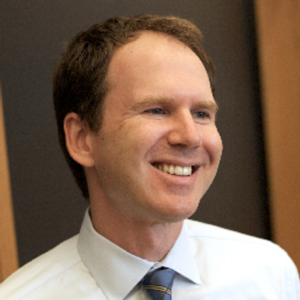
Benjamin Sachs is the Kestnbaum Professor of Labor and Industry at Harvard Law School and a leading expert in the field of labor law and labor relations. He is also faculty director of the Center for Labor and a Just Economy. Professor Sachs teaches courses in labor law, employment law, and law and social change, and his writing focuses on union organizing and unions in American politics. Prior to joining the Harvard faculty in 2008, Professor Sachs was the Joseph Goldstein Fellow at Yale Law School. From 2002-2006, he served as Assistant General Counsel of the Service Employees International Union (SEIU) in Washington, D.C. Professor Sachs graduated from Yale Law School in 1998, and served as a judicial law clerk to the Honorable Stephen Reinhardt of the United States Court of Appeals for the Ninth Circuit. His writing has appeared in the Harvard Law Review, the Yale Law Journal, the Columbia Law Review, the New York Times and elsewhere. Professor Sachs received the Yale Law School teaching award in 2007 and in 2013 received the Sacks-Freund Award for Teaching Excellence at Harvard Law School. He can be reached at [email protected].
In a major development for the future of labor law and the U.S. labor movement, the Supreme Court has granted certiorari in Friedrichs v. California Teachers Association. At stake is the Abood line of precedent and the constitutional permissibility of fair share agreements for public sector workers. To put it simply, the Court may well hold in Friedrichs that a right-to-work regime is constitutionally required in the public sector.
We will have extensive coverage in the months ahead. For relevant past posts see here and here.



Daily News & Commentary
Start your day with our roundup of the latest labor developments. See all
March 16
Starbucks' union negotiations are resurrected; jobs data is released.
March 15
A U.S. District Court issues a preliminary injunction against the Department of Veterans Affairs for terminating its collective bargaining agreement, and SEIU files a lawsuit against DHS for effectively terminating immigrant workers at Boston Logan International Airport.
March 13
Republican Senators urge changes on OSHA heat standard; OpenAI and building trades announce partnership on data center construction; forced labor investigations could lead to new tariffs
March 12
EPA terminates contract with second-largest union; Florida advances bill restricting public sector unions; Trump administration seeks Supreme Court assistance in TPS termination.
March 11
The partial government shutdown results in TSA agents losing their first full paycheck; the Fifth Circuit upholds the certification of a class of former United Airline workers who were placed on unpaid leave for declining to receive the COVID-19 vaccine for religious reasons during the pandemic; and an academic group files a lawsuit against the State Department over a policy that revokes and denies visas to noncitizens for their work in fact-checking and content moderation.
March 10
Court rules Kari Lake unlawfully led USAGM, voiding mass layoffs; Florida Senate passes bill tightening union recertification rules; Fifth Circuit revives whistleblower suit against Lockheed Martin.