
Niki Rubin is a student at Harvard Law School.

Jason Salgado is a student at Harvard Law School and a member of the Labor and Employment Lab.
Last week, a record 3.3 million Americans applied for unemployment insurance (UI) benefits to make ends meet as the COVID-19 pandemic spurs mass layoffs. In Pennsylvania, 70,000 people filed for unemployment insurance in a single day, and Minnesota received 2,000 claims per hour. These numbers will likely only worsen in the weeks to come.
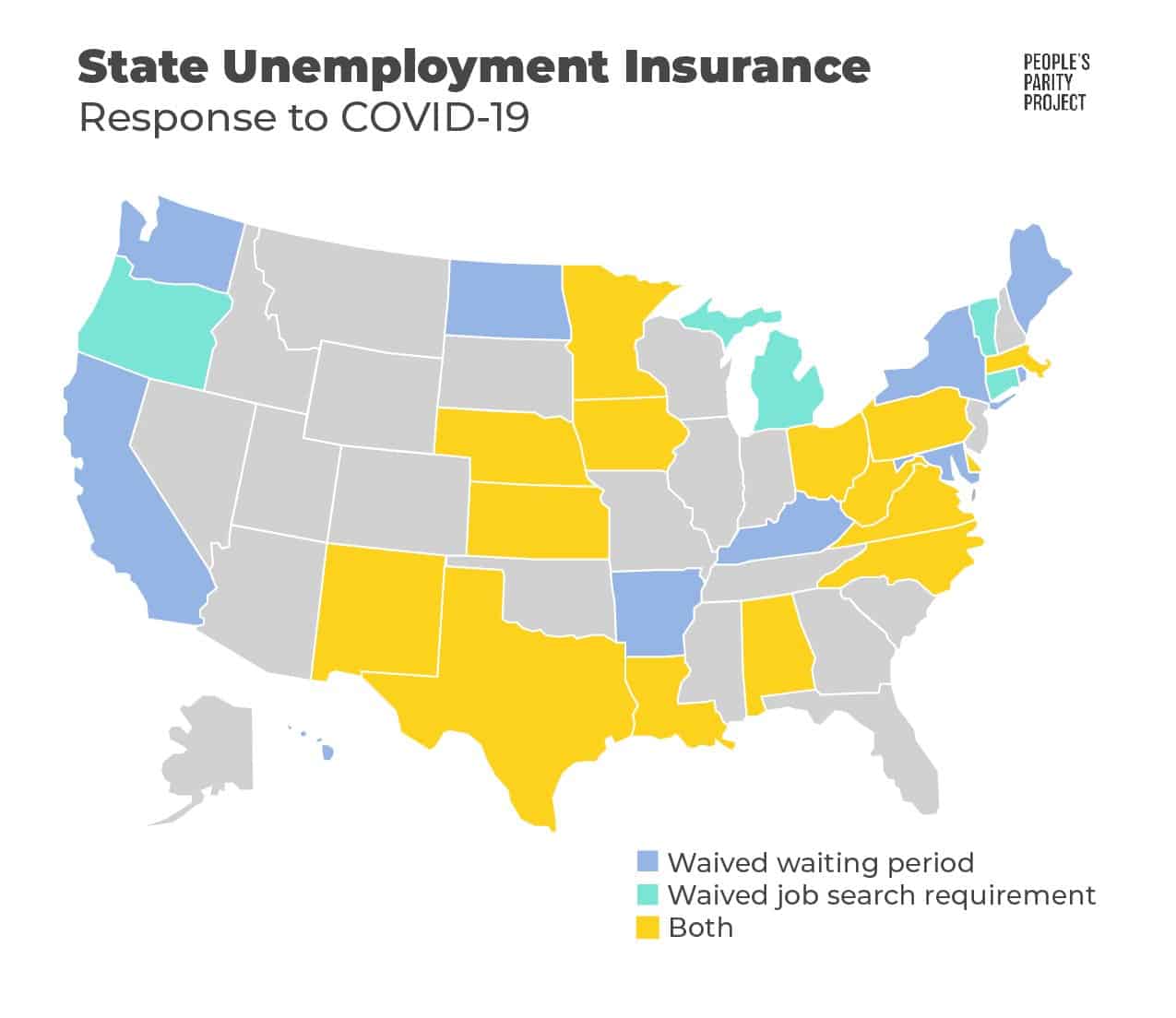
Yet in the midst of this crisis, only a minority of states have embraced all available opportunities to expand unemployment benefits for workers. The People’s Parity Project, in conjunction with the Harvard Labor and Worklife Program, conducted a survey of the unemployment insurance websites of all 50 states and the District of Columbia. We found that as of March 21, most states’ unemployment insurance websites were still providing incomplete or even misleading information about filing for unemployment during this period. Worse, many states’ unemployment websites have crashed under the avalanche of new applications.
Our report uncovered an urgent need for states to ensure that potential applicants have access to accurate, up-to-date information about their state’s policies. For instance, even though some states have responded to the crisis by waiving job search and waiting period requirements, their websites often do not reflect these policy changes.
Further, the survey found that states’ websites are often inaccessible to non-English speakers. Only 28 states’ websites provide some form of accessibility for individuals with limited English proficiency, but most of those provide translation only to Spanish. While some of these states do have a Google Translate option at the top of the page, it only applies to the webpage. This leaves COVID-19 updates and press releases only in English, and therefore inaccessible to many potential applicants.
One particularly concerning finding is that almost all state UI websites do not currently instruct workers potentially misclassified as independent contractors that they can still apply for UI benefits, while some even provide misleading information to potential claimants. As of this writing, for instance, the Massachusetts unemployment website provides that “self-employed individuals and 1099 contract employees are not eligible for unemployment benefits” even though millions of workers across the country are misclassified as independent contractors and being paid by 1099 is not on its own a bar to receiving UI benefits.
Since the survey was published, the Senate passed the CARES Act, which would provide workers classified as independent contractors access to unemployment benefits through a new “Pandemic Unemployment Assistance” program. As NELP explains, however, under the broad definitions of “employee” used in many state UI laws, so-called “gig-workers” should be eligible for regular unemployment benefits. Yesterday, for example, the New York Court of Appeals held that Postmates couriers are employees under New York’s unemployment law.
States should streamline their application procedures to ensure potentially misclassified workers can apply for regular unemployment benefits, and gather data from companies which misclassify their workers. As the California Legislative Analyst’s Office suggested, states can then seek to recoup unpaid UI tax contributions from these companies, and ensure that these misclassified categories of workers can continue to access unemployment benefits after the Pandemic Unemployment Assistance program expires.
States should also seek to better communicate their policies and expand UI benefits for all workers. California released an easily understandable chart detailing available employment benefits, including unemployment insurance. Alaska increased its weekly “dependent” allowance from $24 to $75 per week per dependent, and removed its cap on the number of dependents each worker can claim. Georgia extended the time workers can receive unemployment insurance under state law from 14 weeks to 26 weeks.
At this critical moment, it is essential that state governments ensure all workers can quickly and easily apply for UI benefits so they can care for themselves and their families. Unemployment insurance has always been a critical lifeline for working families, and the current public health crisis has only made that more clear. More than ever, states have a responsibility not only to communicate with the public about their unemployment insurance policies, but also expand access to UI in every permissible way.






Daily News & Commentary
Start your day with our roundup of the latest labor developments. See all
October 11
UAW President Shawn Fain succeeds in his reelection bid, and Spanish unions call for a general strike.
October 9
DHS proposes a $100k fee for the foreign grad employment program; Trump suspends tech company access to green card program; and private equity perpetuates poor working conditions for home care workers.
October 8
NLRB judge finds UPS unlawfully restricted union insignia; Harvard graduate workers authorize second strike; OSHA orders Union Pacific to pay $300,000 in damages in whistleblower case.
October 7
DOL scraps plan to remove decades-old wage-and-hour guidance from federal regulations; New York enacts personnel records access law; Starbucks loses bid to dismiss Workers United trademark suit.
October 6
Protect College Sports Act dampens athlete unionization outlook; Stanford RA union decides to withdraw petition
October 5
Delaware bans captive audience meetings; EEOC settles remote work national origin discrimination claim; First Circuit stays enforcement order in VA's dispute with AFGE.