
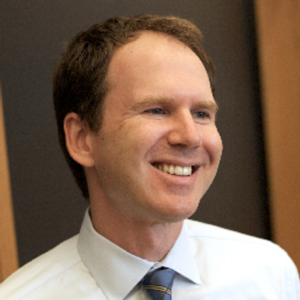
Benjamin Sachs is the Kestnbaum Professor of Labor and Industry at Harvard Law School and a leading expert in the field of labor law and labor relations. He is also faculty director of the Center for Labor and a Just Economy. Professor Sachs teaches courses in labor law, employment law, and law and social change, and his writing focuses on union organizing and unions in American politics. Prior to joining the Harvard faculty in 2008, Professor Sachs was the Joseph Goldstein Fellow at Yale Law School. From 2002-2006, he served as Assistant General Counsel of the Service Employees International Union (SEIU) in Washington, D.C. Professor Sachs graduated from Yale Law School in 1998, and served as a judicial law clerk to the Honorable Stephen Reinhardt of the United States Court of Appeals for the Ninth Circuit. His writing has appeared in the Harvard Law Review, the Yale Law Journal, the Columbia Law Review, the New York Times and elsewhere. Professor Sachs received the Yale Law School teaching award in 2007 and in 2013 received the Sacks-Freund Award for Teaching Excellence at Harvard Law School. He can be reached at [email protected].
Thanks to the many readers who have responded to my post (just now) on the University of Washington minimum wage study. The original post is now updated to include a link to the EPI paper that responds to the UW study and makes a series of important methodological criticisms of that study.
Noam Scheiber also has a good story on the UW paper which lays out a critique worth mentioning here. In sum, the employment effects identified by the UW study might be due, not to Seattle’s minimum wage increase, but to a booming job market in which high-wage jobs are replacing low-wage jobs. On this theory, the employment “losses” in the low-wage sector that the UW study reports would actually just be people moving from low- to high-wage employment. Here’s how Scheiber reports it:
[E]xperts on the minimum wage questioned the methods of the University of Washington researchers.
Most seriously, skeptics argue that the researchers confused the effects of a minimum-wage increase with the effects of a hot labor market. During a boom, which Seattle has experienced in recent years, employers bid up wages, effectively replacing low-wage jobs with higher-paying ones.
Under such a scenario, one would expect to see a decline in the overall number of hours worked in low-wage jobs. In their place would be a significant increase in hours worked at somewhat higher-paying jobs.
Mark Long, one of the authors of the UW study, called this alternative explanation possible.
More to come.






Daily News & Commentary
Start your day with our roundup of the latest labor developments. See all
September 24
NLRB abandons rule for offensive conduct during protected activity; New York home care workers seek a union election; maritime deck officers endure long fight for first contracts.
September 23
DoorDash settles delivery-worker pay claims; Philadelphia school workers win new contract; stock gains spur retirements.
September 22
Judge blocks ICE raids in Alabama; Chicago hotel workers vote to strike; AutoZone workers look to create first union
September 21
In today’s News and Commentary, the Seventh Circuit raises the bar for the NLRB to obtain preliminary injunctions, the California Primary Care Association sues SEIU-UHW for racketeering, and the Seventh Circuit finds that an employer group and think tank do not have standing to challenge an Illinois law banning captive audience meetings. On Friday, the […]
September 20
Culinary Workers Union members protests union leadership; lawsuit against OpenAI and Microsoft reveal internal concerns about the threat of AI training to human labor.
September 17
Unions push to block Google from buying Spirit Airlines employment records; U.S. Department of Labor sues Oklahoma coffee chain over alleged wage violations.