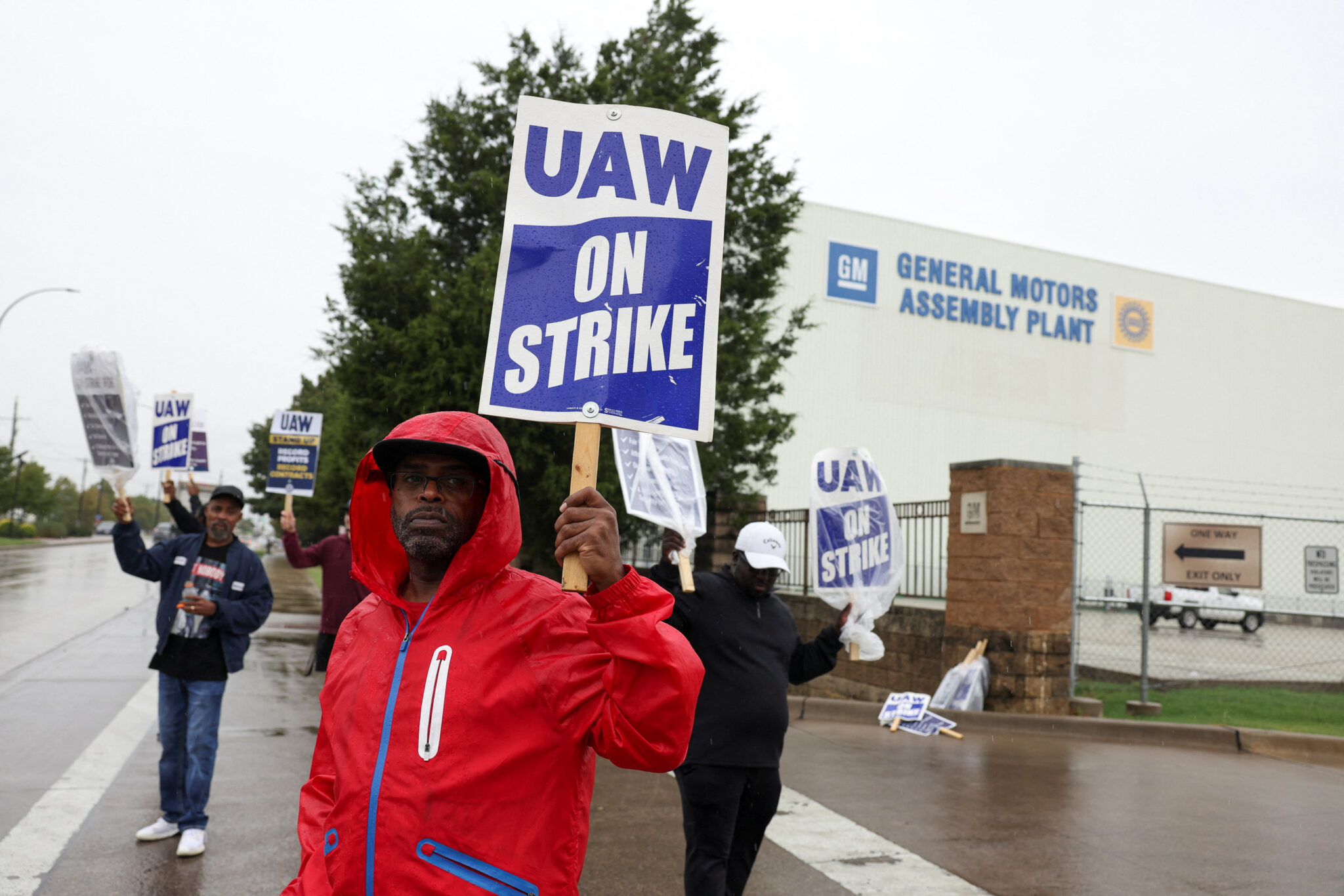

In today’s News and Commentary, UAW reaches a tentative new contract with Stellantis, and undergraduate student workers at Harvard and University of Oregon voted to form a union.
On the heels of last Wednesday’s success with Ford, the United Auto Workers secured a tentative agreement with Stellantis this weekend. The union will now be solely focused on negotiating a contract with the last of the Big 3 – GM. The Stellantis agreement mirrors much of the Ford agreement, including 25% general wage increases over the life of the contract, cost-of-living adjustments, and the elimination of tiered wages across plants. Stellantis agreed to add 5,000 new jobs and to reopen a Belvidere, Illinois assembly plant that has been idled since February. Ford’s agreement allows the company to offer an unlimited number of $50,000 buyouts to older workers earning top wages, though the new workers hired can only earn below the top wage for three years – it used to take new workers eight years to reach the top wage. The tentative agreements pause the six-week strike for 2 of the Big 3 until UAW membership votes on whether to ratify. The strike remains in effect and is expanding against GM, with UAW President Shawn Fain ordering a walkout at a Tennessee engine and assembly plant. The Spring Hill, Tennessee plant is GM’s largest in North America, employing nearly 4,000 workers. Retiree pension costs may be causing the hold up in finalizing a contract with GM, as the company has more retirees eligible for an increase than either Ford or Stellantis. This morning, several news outlets have indicated that General Motors and UAW may have reached a tentative agreement. At the time of this post, this news had yet to be confirmed by the company or the union. As it attempts to wrap up the last of the Big 3, the UAW has set its sights on organizing nonunion automakers, particularly in California and the South. Recent organizing efforts in Tennessee, Mississippi and Alabama have proven unsuccessful, but these historic contract victories may drive southern autoworkers into the arms of the union.
Undergraduate student workers are unionizing from coast to coast. Last Wednesday, undergraduate workers at Harvard and the University of Oregon voted overwhelmingly in favor of unionization. With 99.7% of the vote, the Harvard Undergraduate Workers Union (HGWU) must now elect a bargaining committee and coalesce around top priorities. Their organizing campaign called for greater job stability and improved compensation. At the University of Oregon, 97% of participating student workers voted in favor of union certification. UO administration has already issued a statement recognizing the union and agreeing to cooperate in negotiations. The University of Oregon Student Workers (UOSW) claims it will be the first and largest “wall-to-wall” student worker union in the country, connecting student workers across all workplaces on campus. Similar efforts are ongoing amongst student workers across the California State University’s 23-campus system, the nation’s largest university system.




Daily News & Commentary
Start your day with our roundup of the latest labor developments. See all
October 14
Eleventh Circuit overturns ERISA exhaustion rule; DHS finalizes removal of automatic renewal for work permits; AFGE challenges SSA over flexible scheduling policy.
October 13
Chicago hotel workers remain on strike; a coalition of Democratic states sues the Labor Department over canceled unemployment insurance grants; the Federal Labor Relations Authority establishes a new mediation framework for federal worker disputes.
October 12
Workers at the Obama Foundation begin organizing; MLB submits its latest collective bargaining agreement proposal; Brigham & Women's nurses postpone strike.
October 11
UAW President Shawn Fain succeeds in his reelection bid, and Spanish unions call for a general strike.
October 9
DHS proposes a $100k fee for the foreign grad employment program; Trump suspends tech company access to green card program; and private equity perpetuates poor working conditions for home care workers.
October 8
NLRB judge finds UPS unlawfully restricted union insignia; Harvard graduate workers authorize second strike; OSHA orders Union Pacific to pay $300,000 in damages in whistleblower case.