Mila Rostain is a student at Harvard Law School.
In today’s News and Commentary, AFGE and AFSCME sue in response to the threat of mass firings, a judge issues another preliminary injunction preventing Trump from stripping some federal workers of collective bargaining rights, and challenges to state laws banning captive audience meetings have inconsistent results.
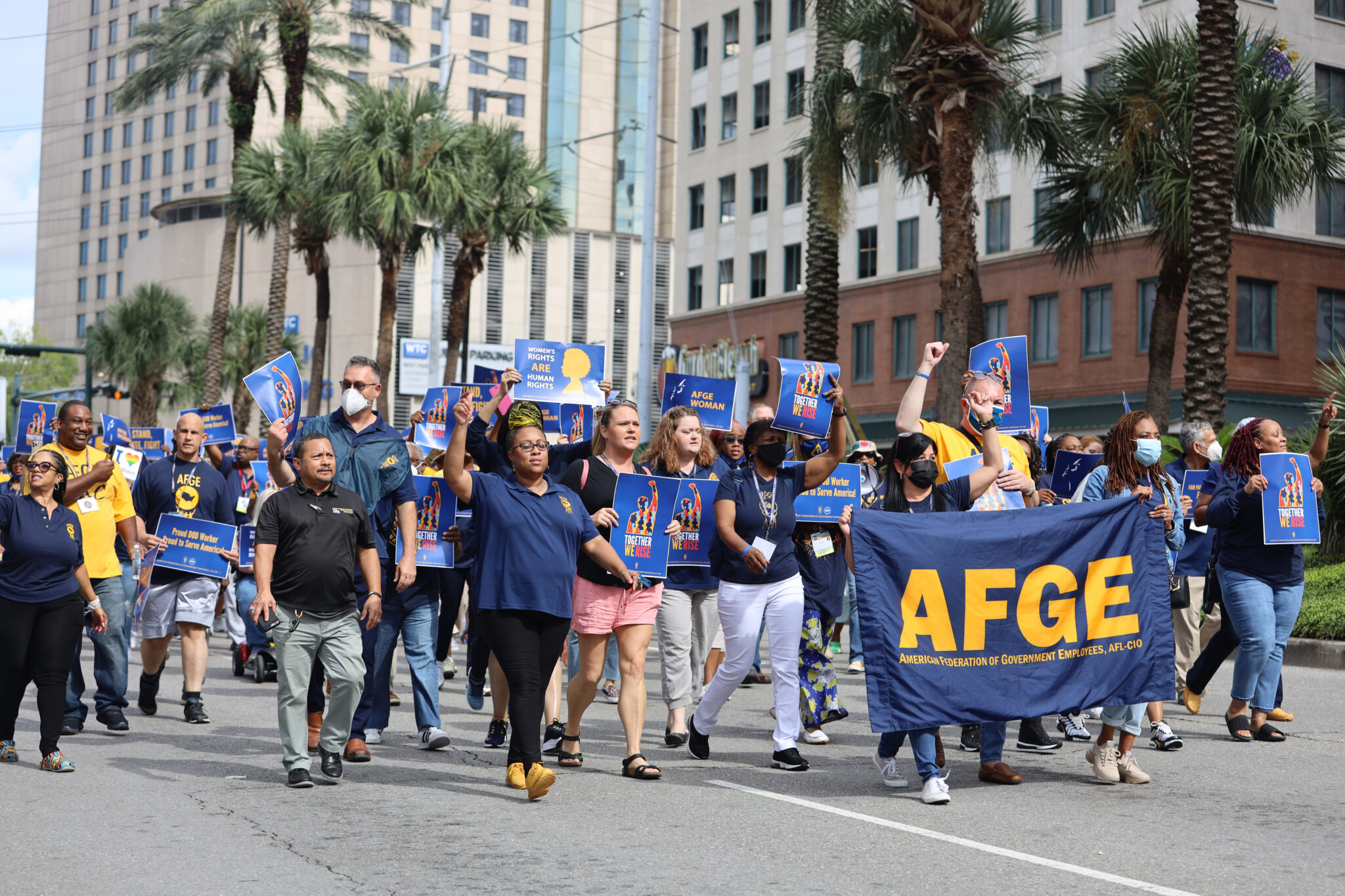
On Tuesday, AFGE and AFSCME filed suit in the District Court for the Northern District of California in response to the Office of Management and Budget’s threat of firing government employees as part of the government shutdown. According to their complaint, OMB issued a memorandum prior to the shutdown directing agencies to prepare to engage in reductions in force. The unions allege that OMB lacks the statutory authority to undertake the reductions in force during a shutdown. AFSCME President Lee Saunders stated that the Trump administration is “illegally targeting federal workers with threats of mass firings due to the federal government shutdown,” jeopardizing the livelihoods of federal workers. Yesterday, the Trump administration reiterated its plans to use the shutdown to fire federal workers.
Also on Tuesday, Judge Paul Friedman issued a preliminary injunction from the bench following oral arguments in AFL-CIO v. Trump, the most recent case challenging Trump’s attempt to strip federal workers of collective bargaining rights. Judge Friedman enjoined the administration from disregarding collective bargaining agreements covering workers represented by several AFL-CIO unions during the litigation. IFPTE, AFT, and Machinists workers, among others, would continue to have collective bargaining rights under the preliminary injunction. Prior similar preliminary injunctions issued by Judge Friedman, however, have been stayed by the Court of Appeals for the DC Circuit.
Earlier this week, Judge Daniel Calabretta of the District Court for the Eastern District of California granted a preliminary injunction that blocks California from implementing its law banning captive audience meetings, SB 399. Judge Calabretta concluded that the law likely infringed on the first amendment free speech rights of employers and was likely both Garmon and Machinists preempted. And while California had argued that the law restricted conduct, rather than content, Judge Calabretta found that the law was a content-based restriction requiring strict scrutiny. Groups challenging Illinois’ law banning captive audience meetings, on the other hand, had their case dismissed Tuesday after Judge Franklin Valderrama concluded that the court lacked subject matter jurisdiction. According to Judge Valderrama, the plaintiffs’ suit challenging Illinois’ law was barred by sovereign immunity.



Daily News & Commentary
Start your day with our roundup of the latest labor developments. See all
March 27
“Cesar Chavez Day” renamed “Farmworkers Day” in California after investigation finds Chavez engaged in rampant sexual abuse.
March 26
Supreme Court hears oral argument in an FAA case; NLRB rules that Cemex does not impose an enforceable deadline for requesting an election; DOL proposes raising wage standards for H-1B workers.
March 25
UPS rescinded its driver buyout program; California court dismissed a whistleblower retaliation suit against Meta; EEOC announced $15 million settlement to resolve vaccine-related religious discrimination case.
March 24
The WNBPA unanimously votes to ratify the league’s new CBA; NYU professors begin striking; and a district court judge denies the government’s motion to dismiss a case challenging the Trump administration’s mass revocation of international student visas.
March 23
MSPB finds immigration judges removal protections unconstitutional, ICE deployed to airports.
March 22
Resurgence in salting among young activists; Michigan nurses strike; states experiment with policies supporting workers experiencing menopause.