Ajayan Williamson is a student at Harvard Law School.
In today’s news and commentary, the MSPB issues its first precedential ruling since regaining a quorum; Amazon workers lead strikes and demonstrations in multiple countries; and Starbucks workers expand their indefinite strike to additional locations.
Last week, the Merit Systems Protection Board (MSPB) released its first precedential decision in eight months. The MSPB had been without a quorum since the Supreme Court allowed President Trump to fire Cathy Harris in May, but it regained the quorum after the Senate confirmed one of President Trump’s nominees during the government shutdown last month. In this decision, the Board found that an IRS employee was not entitled to receive a “Kalkines warning” — an order by a manager to answer questions with the promise that answers will not be used in a future prosecution. The employee lacked a reasonable belief that the questioning could implicate criminal liability, so warnings were not required. Narrowly, this ruling may make it harder for federal employees to protect themselves from self-incrimination to their managers. More broadly, the return of the MSPB may practically moot some of the preemption arguments Ben wrote about earlier this year.
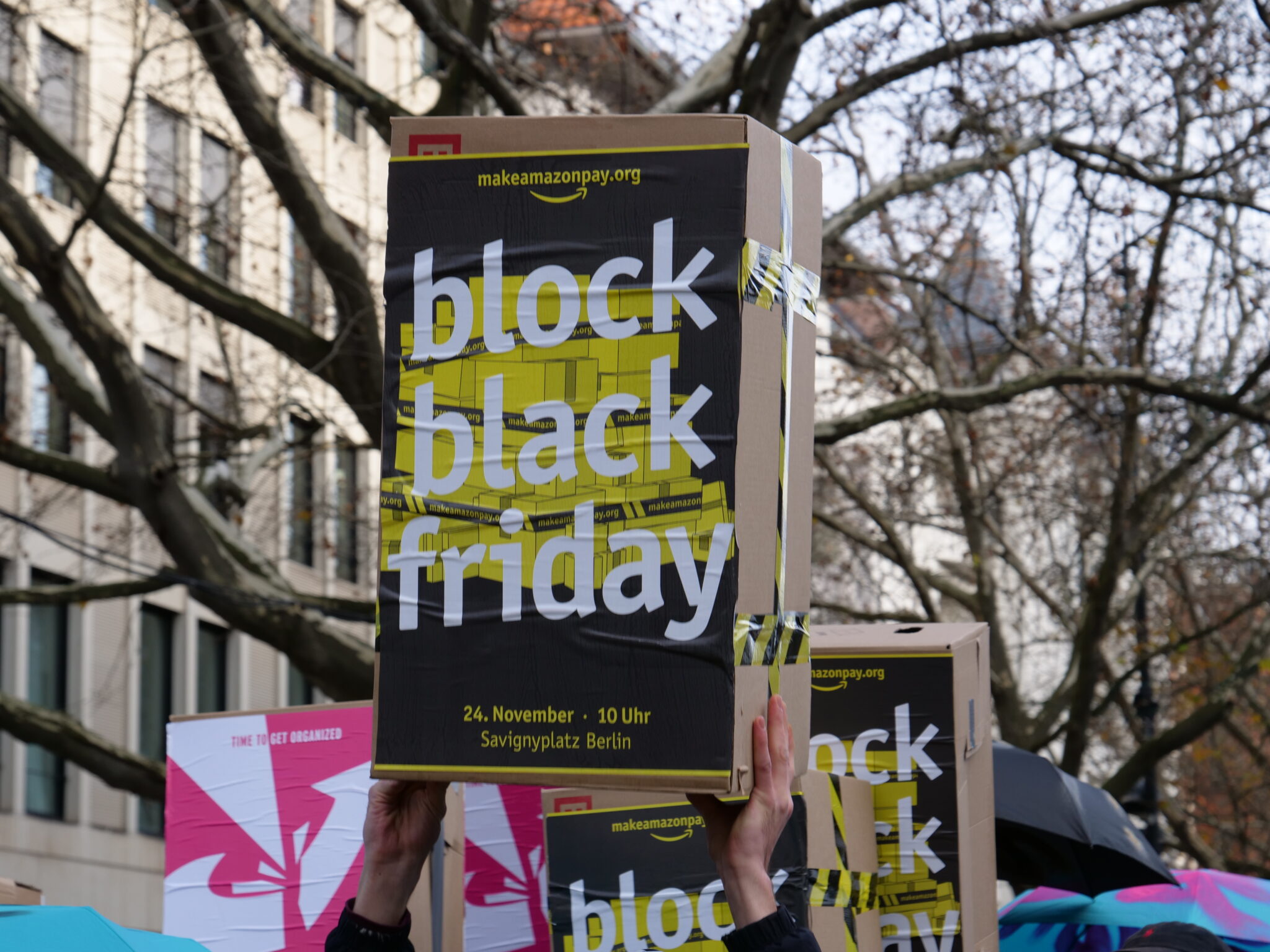
On Friday, Amazon workers in multiple countries led strikes and protests as part of the “Make Amazon Pay” campaign. The campaign is organized by a coalition of unions and advocacy groups, and this year marks their sixth annual demonstration on Black Friday. Business Insider reports that workers in over 30 countries participated this year, including the United States, India, Germany, Colombia, and South Africa. Organizers emphasized Amazon’s role in what they described as a “techno-authoritarian future,” with U.S. organizers highlighting Amazon’s ties to the Trump administration and ICE. Elsewhere, workers had other demands: In Germany, striking workers pushed for a collective bargaining agreement, while workers in India sought fair wages and protections from extreme heat.
Friday also saw an expansion of the ongoing Starbucks strike. Workers voted to authorize an open-ended strike on November 13th, demanding higher wages, better hours, and the resolution of outstanding unfair labor practice charges. On November 20th, the strike expanded to 25 additional cities; it expanded again on Friday to more stores across the country, including locations in New York, Maryland, Utah, and Wisconsin. Starbucks Workers United says this is the longest ULP strike in Starbucks history. The company, however, continues to characterize the strike as minimally disruptive, noting that the vast majority of Starbucks stores remain open.
Daily News & Commentary
Start your day with our roundup of the latest labor developments. See all
April 13
Starbucks' union files new complaint with NLRB; FAA targets video gamers in new recruiting pitch; and Apple announces closure of unionized store.
April 12
The Office of Personnel Management seeks the medical records of millions of federal workers, and ProPublica journalists engage in a one-day strike.
April 10
Maryland passes a state ban on captive audience meetings and Elon Musk’s AI company sues to block Colorado's algorithmic bias law.
April 9
California labor backs state antitrust reform; USMCA Panel finds labor rights violations in Mexican Mine, and UPS agrees to cap driver buyout offers in settlement with Teamsters.
April 8
The Writers Guild of America reaches a tentative deal with the Alliance of Motion Picture and Television Producers; the EEOC recovers almost $660 million in compensation for employment discrimination in 2025; and highly-skilled foreign workers consider leaving the United States in light of changes to the H-1B visa program.
April 7
WGA reaches deal with studios; meatpacking strike brings employer back to table; union leaders take on AI.