
Meredith Gudesblatt is a student at Harvard Law School and a member of the Labor and Employment Lab.
In Today’s News and Commentary, a Department of Transportation rule blocking certain immigrants from driving commercial trucks is temporarily blocked, unions challenge the Loyalty Question for civil servant job applications, and Indiana casino dealers are blocked from resuming their recognition strike.
Yesterday, a three-judge panel on the D.C. Circuit granted a stay in Jorge Lujan et al. v. Federal Motor Carrier Safety Administration, temporarily blocking a Department of Transportation rule that prohibits certain immigrants from driving commercial trucks or buses. The rule is framed as a safety measure and spotlights recent, fatal crashes involving immigrant drivers before directing states to stop issuing nondomiciled commercial drivers licenses to asylum-seekers, refugees, and DACA recipients, even if they have valid employment authorization documents. Overall, the rule threatens the livelihood of approximately 200,000 immigrant workers and, if allowed to proceed, will have untold ripple effects across the U.S. trucking industry. The industry already faces driver shortages estimated to be between 60,000 and 80,000 drivers. The Department of Transportation issued the interim final rule in September without soliciting public comment, stating it would be contrary to the public interest if the targeted drivers were given a chance to renew their licenses. The unions and immigrant drivers challenging this rule have argued that the “minuscule percentage” of fatal crashes involving immigrant drivers does not justify the good-cause exception to the public comment requirement. The lawsuit alleges the rule is arbitrary and capricious under the Administrative Procedure Act as the Department of Transportation has provided insufficient evidence for its claim that these drivers pose a danger. Moreover, these drivers account for only a fraction of the accidents the rule aims to prevent.
Last week, the American Federation of Government Employees, the American Federation of State, County and Municipal Employees, and the National Association of Government Employees filed a lawsuit in the District Court for the District of Massachusetts challenging the inclusion of a Loyalty Question on federal job applications for civil servant positions. The question has already appeared on over 5,800 federal job listings for career civil service positions. It elicits the political views of applicants for jobs as varied and ostensibly apolitical as Research Biologist to Traffic Control specialist by asking: “How would you help advance the President’s Executive Orders and policy priorities in this role? Identify one or two relevant Executive Orders or policy initiatives that are significant to you, and explain how you would help implement them if hired.” The unions allege the imposition of the Loyalty Question violates the First Amendment because it conditions federal employment on espousal of political viewpoints favorable to President Trump, compels speech from job applicants who may disagree with President Trump or prefer not to share their political views, and chills speech that is critical of President Trump’s agenda. The suit also challenges the Loyalty Question is not in accordance with the law, contrary to constitutional right, and arbitrary and capricious under the Administrative Procedure Act. The case is captioned American Federation of Government Employees, AFL-CIO et al. v. Scott Kupor et al. and has been assigned to Judge George A. O’Toole Jr.
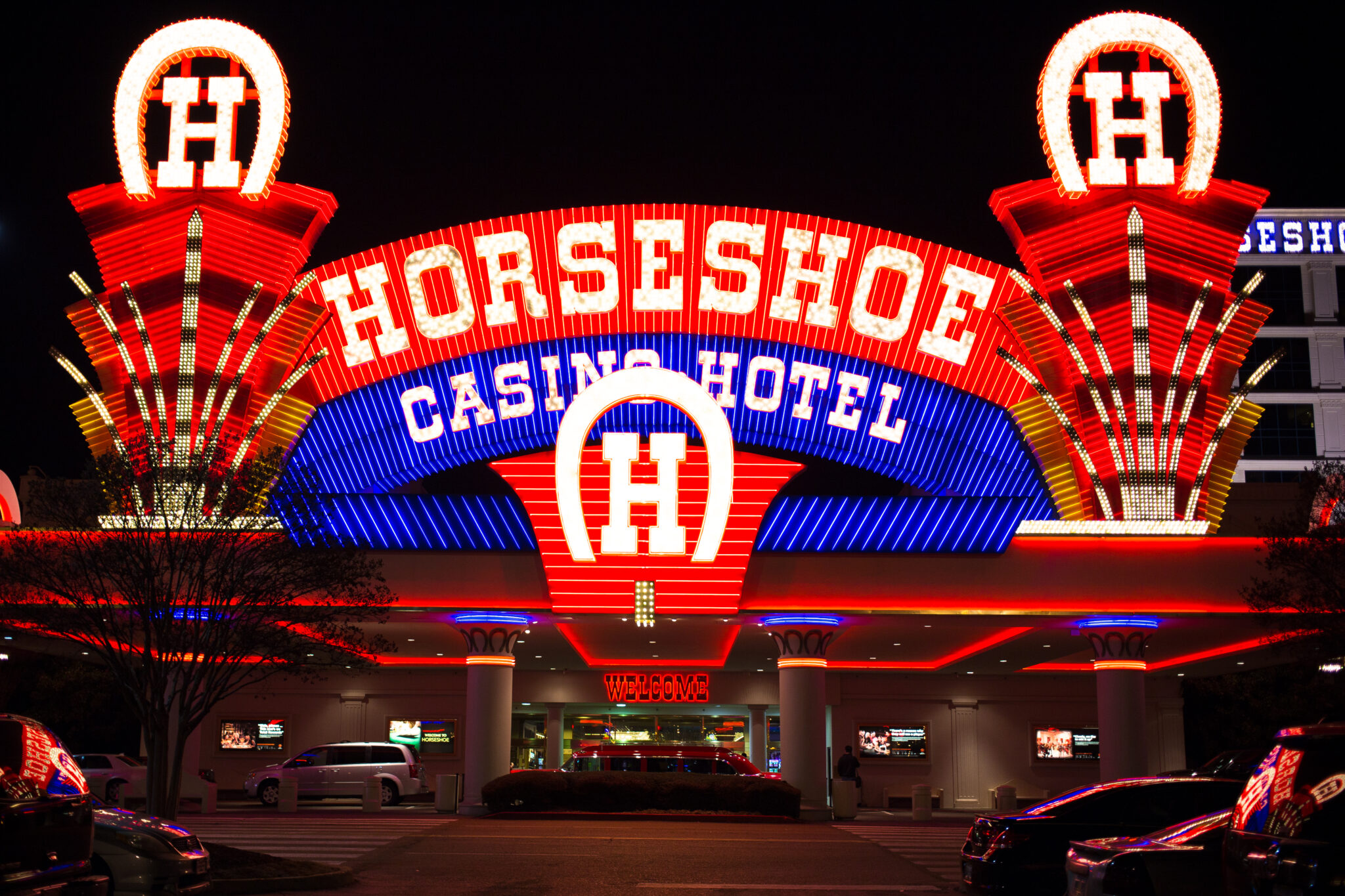
Finally, Judge Patrick Hanlon of the United States District Court for the Southern District of Indiana denied the Teamsters Local 135 request for a temporary restraining order to resume picketing as part of their recognition strike. In September, 200 dealers employed at the Horseshoe Indianapolis Casino presented proof of super-majority support to join Teamsters Local 135 and obtained an election date for mid-October. Though the government shutdown caused the election to be postponed indefinitely, the union proposed bringing in a neutral party to conduct the vote—but Horseshoe refused. Rather than risk losing momentum, the union organized a strike, and workers began picketing on the day for which the union representation vote was initially scheduled. Last week, Horseshoe called the police, who accused the picketers of trespassing. The Teamsters then sought a temporary restraining order in order to resume picketing. Judge Hanlon ultimately sided with the city in Teamsters Local 135 v. City of Shelbyville, Indiana, et al., reasoning that the picketing site appears to be “integrated into Horseshoe Casino’s operations, making it less like traditional public sidewalks or similar examples of traditional public fora.”

Daily News & Commentary
Start your day with our roundup of the latest labor developments. See all
April 14
Meatpacking workers ratify new contract; NLRB proposes Amazon settlement; NLRB's new docketing system leading to case dismissals.
April 13
Starbucks' union files new complaint with NLRB; FAA targets video gamers in new recruiting pitch; and Apple announces closure of unionized store.
April 12
The Office of Personnel Management seeks the medical records of millions of federal workers, and ProPublica journalists engage in a one-day strike.
April 10
Maryland passes a state ban on captive audience meetings and Elon Musk’s AI company sues to block Colorado's algorithmic bias law.
April 9
California labor backs state antitrust reform; USMCA Panel finds labor rights violations in Mexican Mine, and UPS agrees to cap driver buyout offers in settlement with Teamsters.
April 8
The Writers Guild of America reaches a tentative deal with the Alliance of Motion Picture and Television Producers; the EEOC recovers almost $660 million in compensation for employment discrimination in 2025; and highly-skilled foreign workers consider leaving the United States in light of changes to the H-1B visa program.