
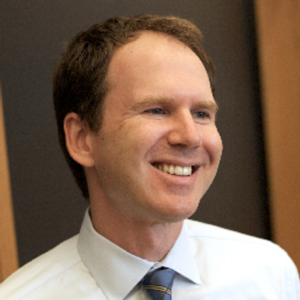
Benjamin Sachs is the Kestnbaum Professor of Labor and Industry at Harvard Law School and a leading expert in the field of labor law and labor relations. He is also faculty director of the Center for Labor and a Just Economy. Professor Sachs teaches courses in labor law, employment law, and law and social change, and his writing focuses on union organizing and unions in American politics. Prior to joining the Harvard faculty in 2008, Professor Sachs was the Joseph Goldstein Fellow at Yale Law School. From 2002-2006, he served as Assistant General Counsel of the Service Employees International Union (SEIU) in Washington, D.C. Professor Sachs graduated from Yale Law School in 1998, and served as a judicial law clerk to the Honorable Stephen Reinhardt of the United States Court of Appeals for the Ninth Circuit. His writing has appeared in the Harvard Law Review, the Yale Law Journal, the Columbia Law Review, the New York Times and elsewhere. Professor Sachs received the Yale Law School teaching award in 2007 and in 2013 received the Sacks-Freund Award for Teaching Excellence at Harvard Law School. He can be reached at [email protected].
Volkswagen has a new policy governing labor-management relations at its Chattanooga, TN facility. The “Community Organization Engagement” policy, available here, establishes that VW will “allow eligible organizations the opportunity to engage in constructive dialogue with Volkswagen and its employees.” Under the policy, “organizations” are those that “exist for the primary purpose of representing employees and their interests to employers consistent with the National Labor Relations Act.” Substantively, the policy establishes three tiers of representational rights. For organizations that represent more than 15% of the workforce, the policy grants the right to use company space for meetings and the right to “[m]eet monthly with Volkswagen Human Resources to present topics that are of general interest to their membership.” When an organization garners support from more than 30% of the workforce, it gains the right to meet quarterly with “a member of the Volkswagen Chattanooga Executive Committee.” At representational levels of more than 45%, the organization meets bi-weekly with Human Resources and monthly with the Executive Committee.
The policy thus commits VW to some regular interactions with employee representatives and it grants these employee groups some potentially important rights to use company property for organizational activity. This strikes me as an important development. In the NLRB election held this spring, the UAW got 46% of the vote and, assuming that support level has stayed stable, the new policy would put the UAW in the top tier of representational rights.
But note that the policy does not commit VW to bargain with any organizational representatives, even at the 45% level. The only obligation on VW is to “meet” with organizations and allow them to “present topics.” In this sense, the new policy – at least by its terms – does not establish true minority unionism at Volkswagen. In a true minority union setting, management has actual bargaining obligations to employee representatives. Of course, it is entirely possible that, in practice, the right to “meet” with VW management will translate into something quite meaningful and closer to actual bargaining. That will be an important development to watch.





Daily News & Commentary
Start your day with our roundup of the latest labor developments. See all
September 17
Unions push to block Google from buying Spirit Airlines employment records; U.S. Department of Labor sues Oklahoma coffee chain over alleged wage violations.
September 16
Trump nominates Catherine Eschbach as EEOC general counsel; NLRB declines to resolve union work-assignment dispute; Allina Health physicians begin four-day strike.
September 15
Documents reveal the inner workings of Amazon's union avoidance program; Washington state public sector unions reach tentative deals amid a difficult bargaining cycle; hundreds of Nevada Culinary Union members protest their union's health care changes.
September 14
NCAA and Big Ten file motion to dismiss in former star player's NIL suit; Seventh Circuit rules against former postal worker in discrimination suit.
September 13
Documents released on the 25th anniversary of the 9/11 attacks show that city officials encouraged workers to return to Ground Zero despite knowing the risks of asbestos exposure, and new polls demonstrate continued widespread support for labor unions.
September 10
Amazon workers allege pregnancy discrimination; federal unions challenge USDA reorganization; NYC warns of silicosis risks.