
Henry Green is a student at Harvard Law School.
In today’s News and Commentary, Gwynne Wilcox seeks en banc review at the DC Circuit and the 9th Circuit rules that a religious organization can refuse employment to non-ministerial applicants based on their sexual orientation.
Former NLRB member Gwynne Wilcox filed a petition on Monday for the DC Circuit to review her case en banc. In a decision last month, two of three judges on a DC Circuit panel said the President could remove Wilcox from office, though Judge Florence Pan dissented, according to Law360.
The panel decision held that because the NLRB exercises “substantial executive power,” Humphrey’s Executor does not permit removal protection at the agency. Wilcox’s petition says the panel erred on this point, arguing that because the NLRB is an adjudicatory body not wielding executive power, its members can be protected from removal under Humphrey’s. Wilcox appears to distinguish members of the adjudicatory Board from the NLRB’s General Counsel (who has a prosecutorial function, but can be removed at will). Wilcox argues that Trump v. Slaughter (a pending Supreme Court case involving removal protections at the Federal Trade Commission) is likely to leave “adjudicatory agencies unaffected,” carving out a potential path for the NLRB to keep removal protections after that decision. The petition asks the DC Circuit to grant review now but to hold the case for pending the Slaughter decision so that the Circuit “can apply whatever test the Supreme Court adopts to this case.”
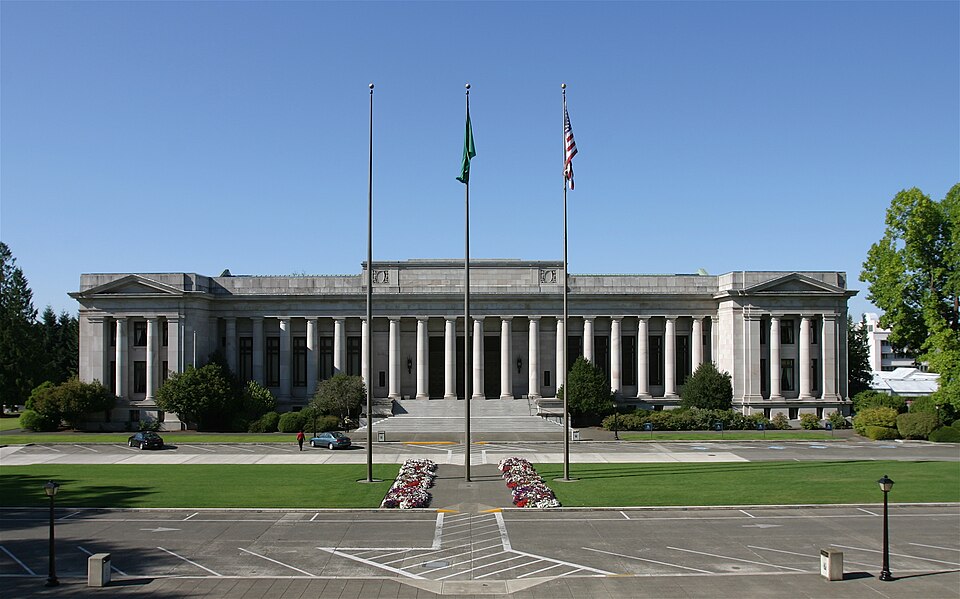
The 9th Circuit ruled Tuesday that a Christian ministry can refuse employment to candidates based on their sexual orientation, even for “non-ministerial” roles, per Law360. The case arose out of a 2021 decision by Washington’s state supreme court. In Woods v. Seattle’s Union Gospel Mission (2021), the state supreme court held that religious organizations’ hiring practices were exempt from liability under state anti-discrimination law only if the employees being hired were ministers. Following Woods, the Union Gospel Mission of Yakima filed a lawsuit in federal court seeking an injunction, leading to Tuesday’s opinion. Judge Patrick Bumatay writes for the majority that “this is a narrow ruling,” noting that only hiring decisions “based on religious beliefs” are protected from liability, and that the decision is limited to “religious organizations like Union Gospel.” The opinion declines to consider whether “other types of entities run by religious institutions, such as businesses or hospitals,” could be implicated.


Daily News & Commentary
Start your day with our roundup of the latest labor developments. See all
March 31
In today’s news and commentary, the Supreme Court hears a case about Federal Court jurisdiction over arbitration, a UPS heat inspection lawsuit against OSHA is dismissed, and federal worker unions and NGOs call on the EPA to cease laying off its environmental justice staffers. A majority of Supreme Court justices signaled support for allowing federal […]
March 30
Trump orders payment to TSA agents; NYC doormen look to authorize a strike; and KPMG positions for mass layoffs.
March 29
The Department of Veterans Affairs re-terminates its collective bargaining agreement despite a preliminary injunction, and the Federal Labor Relations Authority announces new rules increasing the influence of political appointees over federal labor relations.
March 27
“Cesar Chavez Day” renamed “Farmworkers Day” in California after investigation finds Chavez engaged in rampant sexual abuse.
March 26
Supreme Court hears oral argument in an FAA case; NLRB rules that Cemex does not impose an enforceable deadline for requesting an election; DOL proposes raising wage standards for H-1B workers.
March 25
UPS rescinded its driver buyout program; California court dismissed a whistleblower retaliation suit against Meta; EEOC announced $15 million settlement to resolve vaccine-related religious discrimination case.