
Jacqueline Rayfield is a student at Harvard Law School.
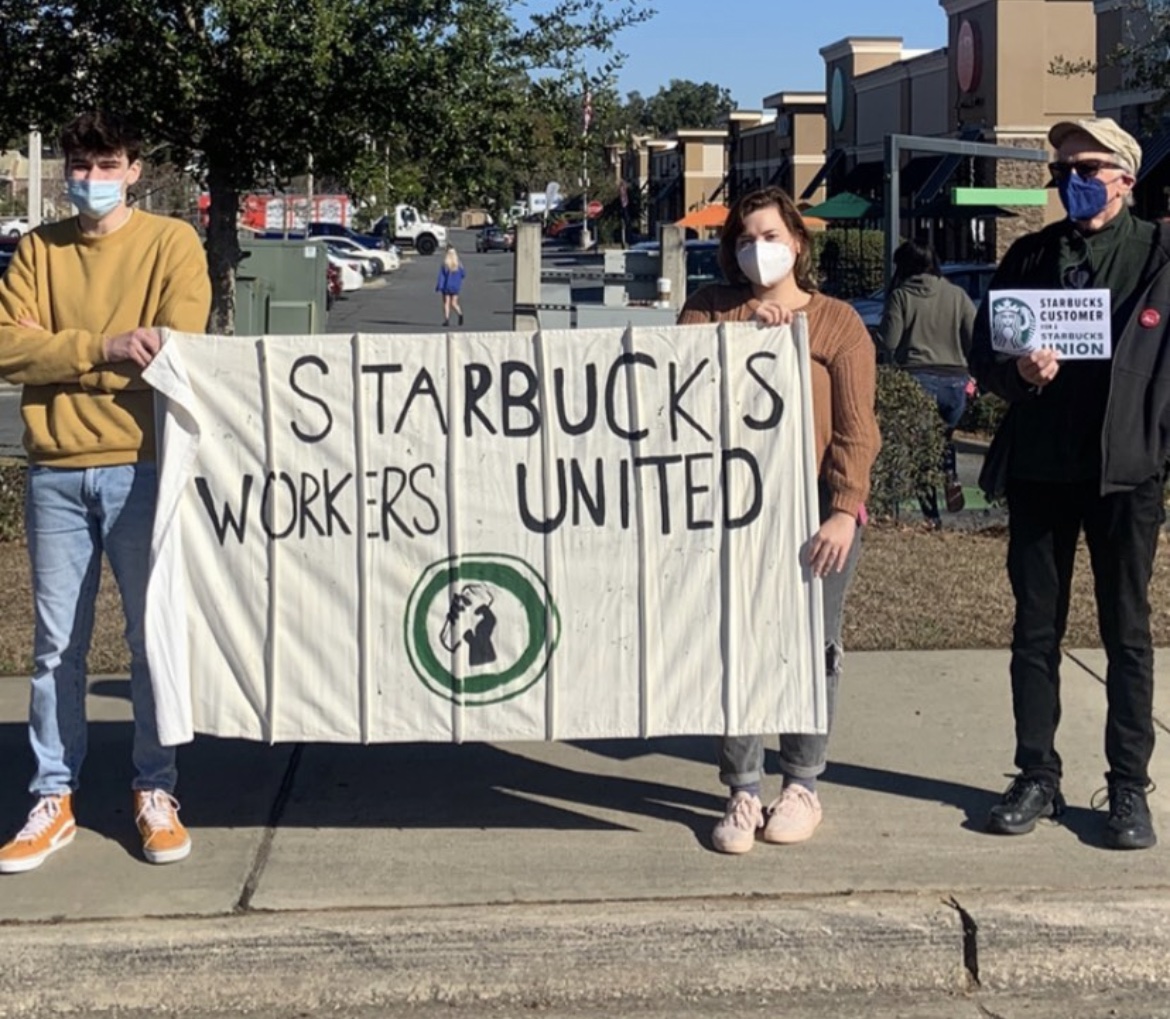
In today’s News and Commentary, U.S. union membership drops to a record low, despite growing interest in unionization, and seven former Starbucks employees were arrested outside a Starbucks store in New York.
According to the Bureau of Labor and Statistics (BLS) annual report, only 9.9% of workers, or 14 million total workers, were represented by unions in 2024. Among private sector employees, union density is even lower, reaching only 5.9% in 2024. These numbers represent a record low since their peak in 1983. Despite low union membership, however, research shows that interest in joining a union is on the rise. Petitions for union elections at the National Labor Relations Board have doubled since 2021, and 60 million workers say they would join a union if they could. Commentators suggest that the discrepancy between union membership and union interest is due to strong opposition from employers and weak labor protections. The BLS’s yearly report also highlights that Black workers continue to have the highest unionization rates at 13.2% and that the unionization rate for women has increased in 2024.
Seven union workers were arrested at a peaceful sit-in outside a Starbucks store in Park Slope, New York. Starbucks announced plans to close this unionized store just months after its workers formed a union. The store was set to close later this week. The arrested workers claim that Starbucks has refused to bargain with them or to provide any raise in their first contract.





Daily News & Commentary
Start your day with our roundup of the latest labor developments. See all
October 16
Department of Labor reduces wage-and-hour enforcement at unionized workplaces; Fain's victory poses question of federal monitor's extension.
October 15
New reporting examines the rollback of child labor protections; California tries to block a strike; NLRB charges Wisconsin mental health provider with firing workers during union drive.
October 14
Eleventh Circuit overturns ERISA exhaustion rule; DHS finalizes removal of automatic renewal for work permits; AFGE challenges SSA over flexible scheduling policy.
October 13
Chicago hotel workers remain on strike; a coalition of Democratic states sues the Labor Department over canceled unemployment insurance grants; the Federal Labor Relations Authority establishes a new mediation framework for federal worker disputes.
October 12
Workers at the Obama Foundation begin organizing; MLB submits its latest collective bargaining agreement proposal; Brigham & Women's nurses postpone strike.
October 11
UAW President Shawn Fain succeeds in his reelection bid, and Spanish unions call for a general strike.