
Andrew Strom is the Legal and Policy Director for the American Guild of Musical Artists (AGMA), and has been contributing to OnLabor since 2014. The views he expresses on this blog are his personal opinions and should not be attributed to AGMA.
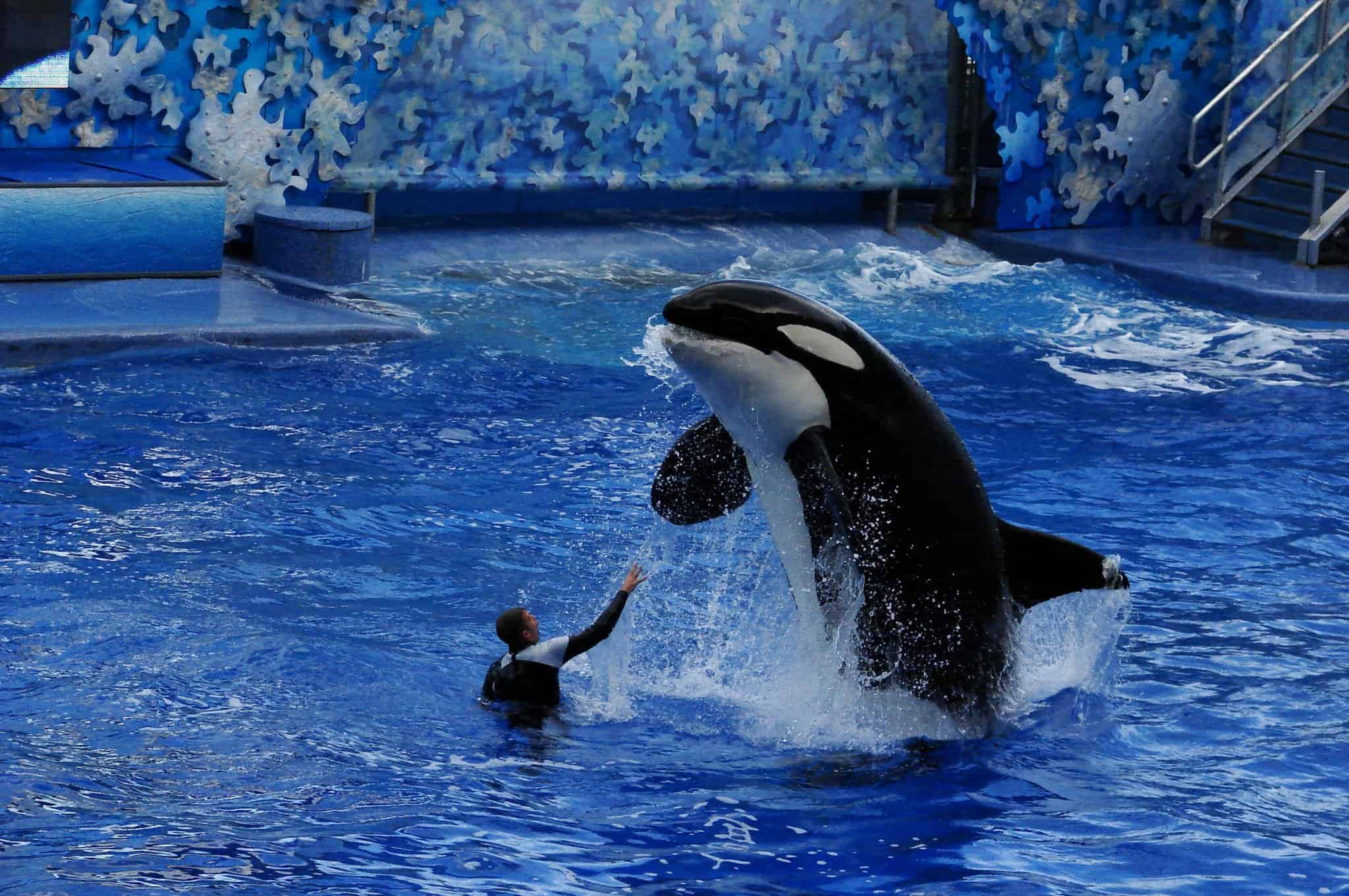
I wrote about the now-infamous case where Brett Kavanaugh dissented from an opinion upholding a fine by the Occupational Safety and Health Administration (OSHA) against SeaWorld after a killer whale lived up to its name by killing a trainer. As a result of that blog post, it caught my attention when the SEC announced a settlement with SeaWorld for misleading investors about the impact of a documentary film, Blackfish, about the same killer whale. What jumped out at me was the amount of the SEC settlement—$5 million, and the contrast to the OSHA fine—$7,000.
The Blackfish documentary, which was released in July 2013, criticized SeaWorld for its treatment of orcas. The SEC alleges that in the months after the movie came out, it should have been apparent to SeaWorld and its CEO that the film “was having a negative effect on the company’s reputation and/or business relationships.” Yet, SeaWorld and its then-CEO, James Atchison, failed to disclose that effect to investors until August 2014. At the same time that it was failing to disclose the impact of the film, Atchison was making public statements that the film was having no impact on its business. When SeaWorld finally did disclose that the film was harming its business, its stock price quickly fell by 33%. The SEC settlement requires SeaWorld to pay a $4 million penalty, and further requires Atchison to pay over $1 million, including both disgorgement of profits and a penalty.
Our capital markets can’t work if corporations are allowed to make false or misleading statements to potential investors. And, given the size of publicly traded companies, a lot of money is at stake. For instance, when SeaWorld’s stock price dropped following its acknowledgment that the film was hurting its business, its market capitalization decreased by approximately $830 million. Placed in that light, SeaWorld and Atchison probably got off cheap.
But, that brings us to the OSHA fine. While OSHA had originally proposed a $70,000 penalty, an Administrative Law Judge found that SeaWorld’s conduct was not “willful,” and he reduced the fine to $7,000. Without understating the harm to investors from the false and misleading statements by SeaWorld and Atchison, the contrast between the $5 million SEC settlement and the $7,000 OSHA fine pretty much sums up the contrast between how we view investors versus workers in this country.
Every day the media is saturated with stories about corporate profits and the latest fluctuations of the stock market. By contrast, here is OSHA’s listing of recent workplace fatalities. A worker in Tennessee was “crushed by a rolling truck,” a worker in Texas “died in a fall from [the] bucket of [a] front end loader,” a worker in Ohio was crushed by an attachment to an industrial mower, workers in Virginia and Indiana were fatally struck by trees, another worker in Tennessee “died after becoming caught in a machine,” another worker in Texas was “crushed by a fire truck cab,” a worker in Iowa “died in a fall from a wall opening,” and a worker in Hawaii was killed after a golf cart struck a wall.
All of those incidents happened over the course of 17 days in May. How many of those deaths made national news? According to a report put out by the AFL-CIO, in 2016, 5,190 workers lost their lives on the job as a result of traumatic injuries. And an estimated 50,000 to 60,000 die each year as a result of occupational diseases. We could drastically reduce these numbers, as well as the 3.7 million work-related injuries and illnesses that occur each year. And one way to start would be to create an enforcement scheme that values workers at least as much as we value investors.





Daily News & Commentary
Start your day with our roundup of the latest labor developments. See all
October 23
Employers increasingly shift health care costs onto workers and NYC proposes placing restrictions on fully automated customer service.
October 22
SCOTUS declines Wilcox appeal; Penn State research assistants win bargaining rights; SEIU sued over military leave firing.
October 21
DOL withdraws tipped-worker rule; Instacart settles hiring-bias claims; Phillips 66 locks out New Jersey refinery workers.
October 20
Korean unions oppose labor exemption bill; Portland city workers prepare for strike; UPenn grad student union looks to dismiss university filing
October 19
FDA reverses course on policy prohibiting off-duty union activity; FAA and NATCA reach deal to secure pay increase for air traffic controllers.
October 18
Federal judge again halts cancellation of the Bureau of Prisons’ CBA; tabletop gaming workers face roadblocks in union recognition.