Mila Rostain is a student at Harvard Law School.
In today’s News and Commentary, Minnesota school districts and the state’s teachers union sue to limit immigration enforcement actions near schools, California labor leaders call on Governor Newsom to protect workers from AI, and UAW and Volkswagen reach a tentative agreement.
Yesterday, Minnesota school districts and the state’s teachers union filed a suit in the U.S. District Court, District of Minnesota requesting the court enjoin a policy that has led to increased immigration enforcement actions at or near schools. Prior to the second Trump Administration, longstanding policy restricted enforcement near schools and other “sensitive locations.” In January 2025, the Administration rescinded that policy and gave discretion to individual federal agents to determine when to carry out enforcement actions at or near sensitive locations, including schools. The school districts and union claim that since Trump’s “Operation Metro Surge,” numerous enforcement actions have occurred near or at schools causing attendance rates to drop significantly. That attendance decrease then impacts the revenue of Minnesota’s schools, since the state uses daily attendance numbers to calculate funding. Schools have also spent money to plan new security measures in response to the enforcement actions. Their suit alleges that the agency policy change is arbitrary and capricious and was implemented without notice-and-comment rulemaking in violation of the Administrative Procedure Act.
Also on Wednesday, labor leaders in California urged Governor Newsom to protect workers from artificial intelligence related job loss and surveillance. The California Federation of Labor Unions is sponsoring a package of new bills that would protect workers and introduce safeguards against surveillance. The bills would require human oversight before discipline of a worker, require a 90-day advance notice to workers and state and local governments prior to AI related layoffs, and allow workers the ability to remove surveillance devices when entering areas such as bathrooms or employee-only spaces. Together with the AFL-CIO, the California Federation stated: “There is dignity in human work that is the foundation of a healthy, productive democracy. The future of our economy and our society cannot be left to the unchecked whims of profit driven technology corporations and billionaires.”
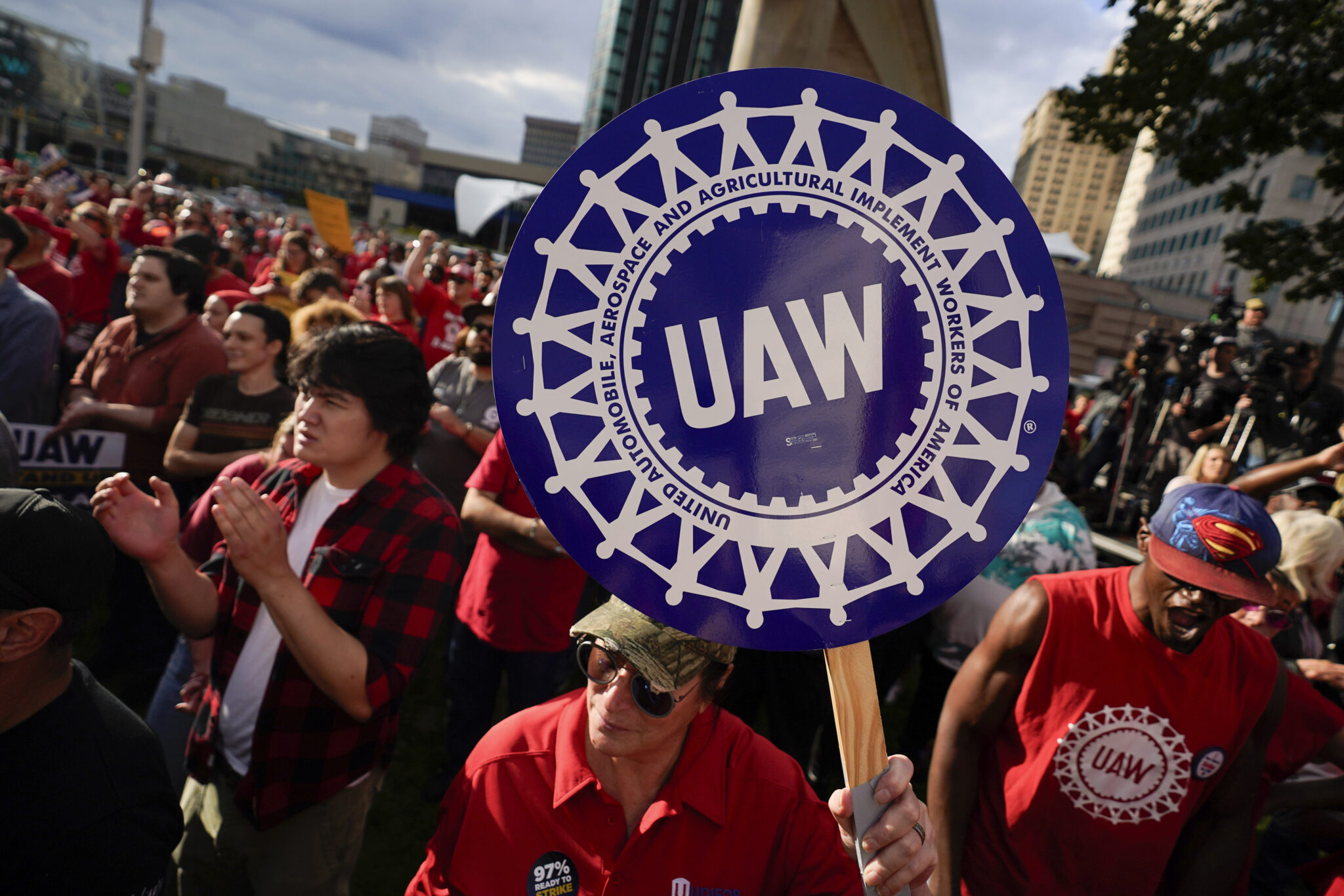
Finally, UAW and Volkswagen reached a tentative agreement yesterday, nearly two years after workers formed their union at the Tennessee plant. UAW members at the plant had previously voted to authorize a strike if necessary. The agreement provides for a 20% across the board wage increase, contract ratification and yearly bonuses, and stronger job protections. The plant is the first in the South outside the Big Three automakers to unionize.



Daily News & Commentary
Start your day with our roundup of the latest labor developments. See all
February 25
OSHA workplace inspections significantly drop in 2025; the Court denies a petition for certiorari to review a Minnesota law banning mandatory anti-union meetings at work; and the Court declines two petitions to determine whether Air Force service members should receive backpay as a result of religious challenges to the now-revoked COVID-19 vaccine mandate.
February 24
In today’s news and commentary, the NLRB uses the Obama-era Browning-Ferris standard, a fired National Park ranger sues the Department of Interior and the National Park Service, the NLRB closes out Amazon’s labor dispute on Staten Island, and OIRA signals changes to the Biden-era independent contractor rule. The NLRB ruled that Browning-Ferris Industries jointly employed […]
February 23
In today’s news and commentary, the Trump administration proposes a rule limiting employment authorization for asylum seekers and Matt Bruenig introduces a new LLM tool analyzing employer rules under Stericycle. Law360 reports that the Trump administration proposed a rule on Friday that would change the employment authorization process for asylum seekers. Under the proposed rule, […]
February 22
A petition for certiorari in Bivens v. Zep, New York nurses end their historic six-week-strike, and Professor Block argues for just cause protections in New York City.
February 20
An analysis of the Board's decisions since regaining a quorum; 5th Circuit dissent criticizes Wright Line, Thryv.
February 19
Union membership increases slightly; Washington farmworker bill fails to make it out of committee; and unions in Argentina are on strike protesting President Milei’s labor reform bill.