
Benjamin Sachs is the Kestnbaum Professor of Labor and Industry at Harvard Law School and a leading expert in the field of labor law and labor relations. He is also faculty director of the Center for Labor and a Just Economy. Professor Sachs teaches courses in labor law, employment law, and law and social change, and his writing focuses on union organizing and unions in American politics. Prior to joining the Harvard faculty in 2008, Professor Sachs was the Joseph Goldstein Fellow at Yale Law School. From 2002-2006, he served as Assistant General Counsel of the Service Employees International Union (SEIU) in Washington, D.C. Professor Sachs graduated from Yale Law School in 1998, and served as a judicial law clerk to the Honorable Stephen Reinhardt of the United States Court of Appeals for the Ninth Circuit. His writing has appeared in the Harvard Law Review, the Yale Law Journal, the Columbia Law Review, the New York Times and elsewhere. Professor Sachs received the Yale Law School teaching award in 2007 and in 2013 received the Sacks-Freund Award for Teaching Excellence at Harvard Law School. He can be reached at [email protected].
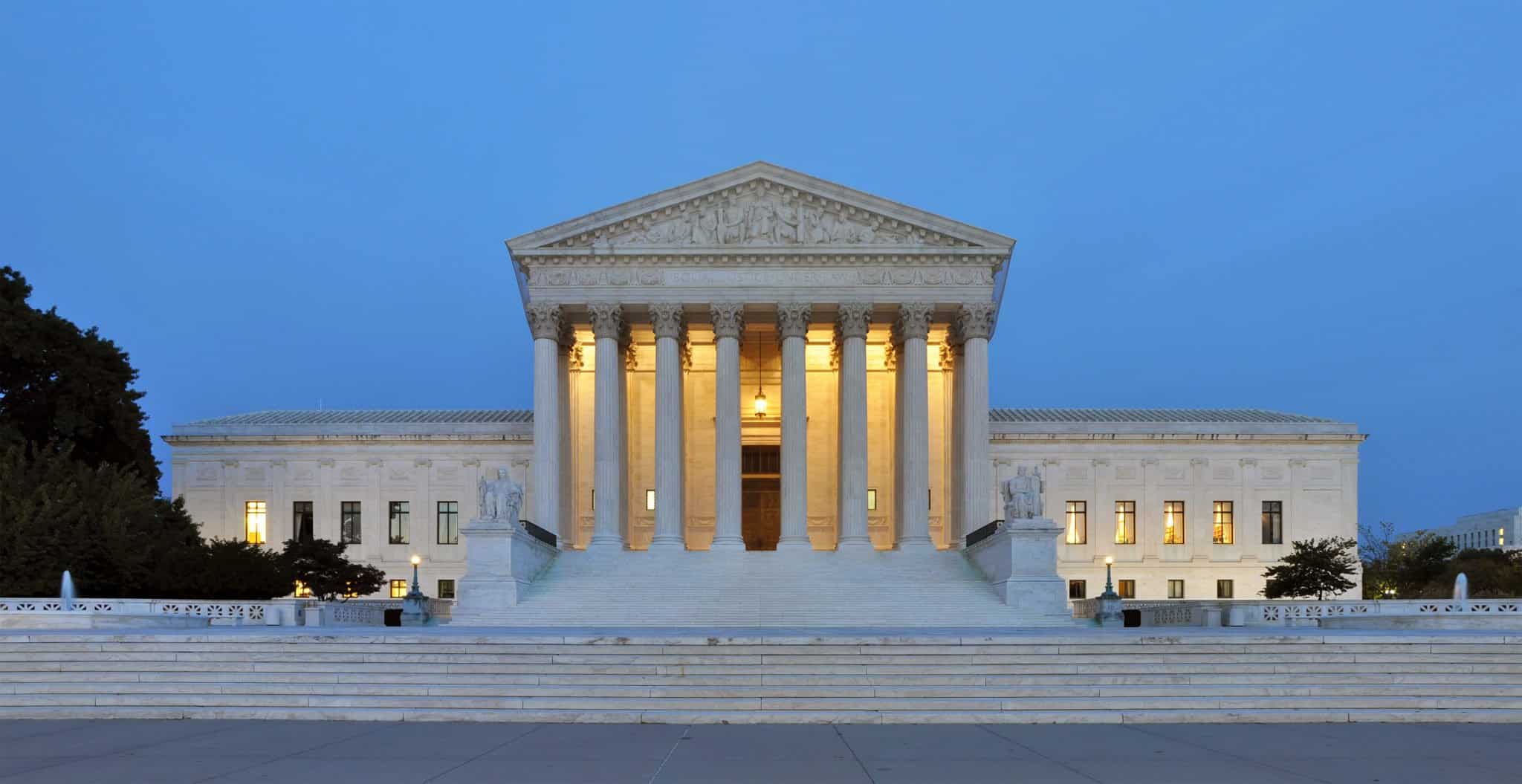
In Janus, the Supreme Court held that the First Amendment prohibits mandatory agency fees in the public sector. Although Janus had nothing to do with the constitutional status of exclusive representation, the majority’s opinion mentions exclusive representation several times. For example, Justice Alito writes for the Court:
Designating a union as the employees’ exclusive representative substantially restricts the rights of individual employees. Among other things, this designation means that individual employees may not be represented by any agent other than the designated union. . . .
And, most pointedly, the majority states:
It is [] not disputed that the State may require that a union serve as exclusive bargaining agent for its employees – itself a significant impingement on associational freedoms that would not be tolerated in other contexts. We simply draw the line at allowing the government to go further still and require all employees to support the union irrespective of whether they share its views.
This language is unmistakably similar to the phrasing Justice Alito used in Knox v. SEIU. There, in a case where the constitutionality of agency fees was not at issue, Alito repeatedly called agency fees an “impingement” on First Amendment rights. He also named Abood an anomaly that would not be tolerated in other contexts. These gestures in Knox were widely understood as presaging the Court’s overruling of Abood, which it did in Janus. Hence, the denigration of exclusive representation in Janus’s dicta has raised alarms about the future First Amendment status of this core principle American unionism – at least in the public sector.
The alarm bells got slightly louder when, in late January, the Court called for a response to the cert petition filed in Uradnik v. Inter Faculty Organization. That case involved a direct challenge to the constitutionality of exclusive representation in the public sector. In Uradnik, as in Bierman v. Dayton, the 8th Circuit rejected the constitutional challenge to exclusive representation, relying primarily on the Supreme Court’s opinion in Minnesota State Board for Community Colleges v. Knight. (On February 1, the Court also called for a response to the cert petition filed in Bierman.)
Should the Supreme Court overrule Knight (a precedent of 35 years) and declare exclusive representation unconstitutional, it would confirm again what Justice Kagan decried in Janus: that the First Amendment has been weaponized in a manner that “unleashes judges” to implement their favored labor policy – a policy that seems to mirror what the National Right to Work Committee would like to legislate. There may be much more to say about all this.
For now, I will just report what we know about the significance of the Court’s call for response in Uradnik. According to a 2009 empirical study by David Thompson and Melanie Wachtell (the merits of which I am not equipped to evaluate), the Court issues about 200 calls for response (CFRs) per term. So, this is far from an uncommon practice. But the rates of certiorari in cases where the Court has issued a CFR are significantly higher than in cases without a CFR. As Thompson and Wachtell put it:
Looking at only the paid docket, a grant is about 4 times greater following a CFR; the grant rate increases from 4.2% to 16.9% (i.e., 57 grants out of 338 cases with a CFR).
So, assuming things have not changed much since 2009, the fact that the Court has issued a CFR in Uradnik means that the likelihood of the Court taking the case has gone from about 4% to about 17%. This means that the odds are still heavily against certiorari, but not as heavily as they were a few weeks ago.



Daily News & Commentary
Start your day with our roundup of the latest labor developments. See all
May 6
Trump Administration exempts foreign doctors from travel ban; job openings hold steady at 6.9 million; 30,000 healthcare workers prepare to strike across University of California hospitals.
May 5
SAG-AFTRA strikes tentative deal; DOL set to decide on Biden overtime rule; IATSE files unfair labor practice charges against the Kennedy Center
May 4
Trump signs order to expand retirement plan access; Eleventh Circuit upholds NLRB determination that security guard lieutenants can unionize; REI workers launch consumer boycott.
May 3
Florida further restricts public employee unions; Yale begins negotiations with postdoc union, and online tabletop game developers seek to unionize.
May 1
Workers and unions organize May Day; and Volkswagen challenges NLRB regional directors.
April 30
US Circuit Court of Appeals renders decision on Jefferson Standard test; construction subcontractors settle over wage theft in Minnesota; union and immigrant groups urge walkout.