
Andrew Strom is a union lawyer based in New York City. He is also an adjunct professor at Brooklyn Law School.
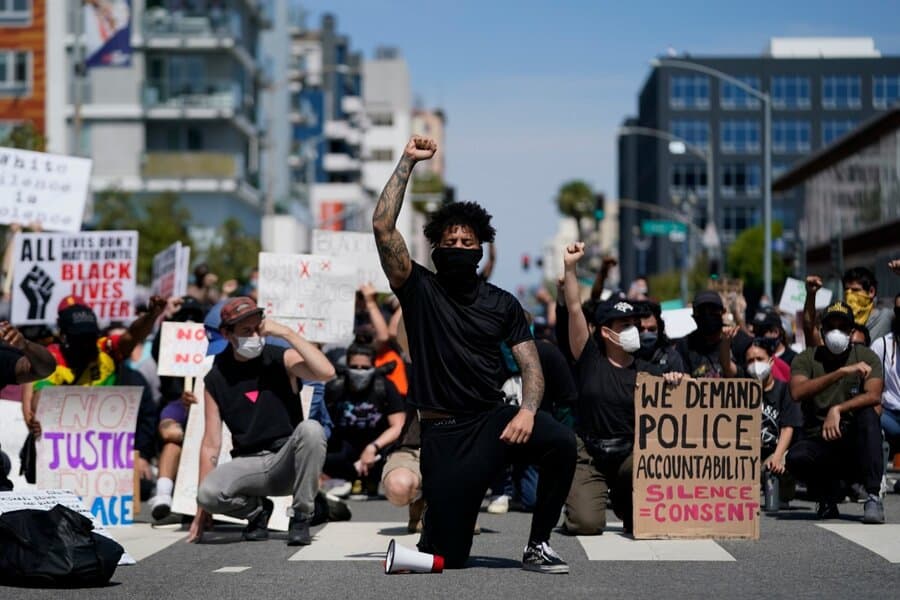
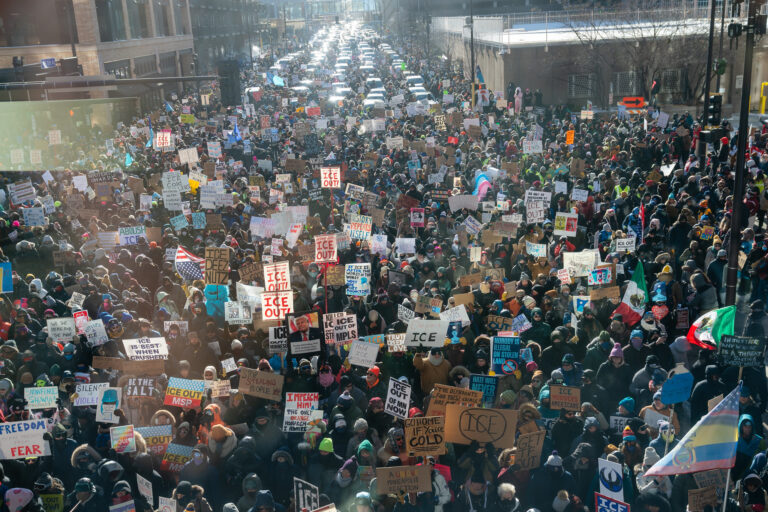
When the news of former FBI Director Robert Mueller’s death broke, Donald Trump wrote, “Good, I’m glad he’s dead.” Just a few months ago, workers across the country were fired for making similar remarks related to Charlie Kirk’s assassination. Reuters found more than 600 instances of individuals who were punished for criticizing Kirk after he was killed. Public sector workers generally have First Amendment rights that protect them from being fired when they speak out on matters of public interest. But, in most states, private sector workers can be fired for stating an opinion that their boss doesn’t like, or for joining a “No Kings” rally or an anti-ICE protest. Elizabeth Anderson, a University of Michigan professor, wrote a terrific book called “Private Government,” with the sub-title, “How Employers Rule Our Lives (and Why We Don’t Talk About It),” that addresses how we take for granted the authoritarian control employers hold over workers. But does it have to be this way?
Transposing First Amendment rights to the workplace does present some challenges. For instance, the First Amendment protects our right to use the most offensive slurs, including ones so offensive that I wouldn’t even write them here. But, surely employers don’t have to allow workers to hurl invectives at each other. That’s true, but even under the First Amendment we recognize the notion of the captive audience, and that your right to free speech does not include a right to force me to listen to that speech. And employers have an obligation to protect workers from a hostile work environment, though employers can often take corrective measures short of firing workers for a first offense, since, sadly, too many people say offensive things without intending to offend.
One reason (or possibly excuse) businesses may give for firing a worker over controversial remarks is that customers have complained. But, we don’t typically let customer complaints override workers’ rights. For instance, an employer cannot refuse to hire a woman because its client prefers dealing with men. At any rate, the public should be able to understand, and even celebrate, that at a company with thousands of workers, the employees do not have a uniform set of political views. Moreover, it might actually be helpful for everyone if the law ties an employer’s hands. That way, if people on social media demand the discharge of an employee who has posted something they don’t like, the employer can explain that even if it wanted to fire the worker, it can’t.
Back in 1981, on the day Ronald Reagan was shot, Ardith McPherson, a clerical worker at a Texas law enforcement agency told a co-worker, “if they go for him again, I hope they get him.” McPherson was fired, and she sued, alleging a violation of her First Amendment rights. The Supreme Court agreed with McPherson, noting that “debate on public issues should be uninhibited, robust, and wide-open,” and finding her remarks did not endanger the successful functioning of the office. If you think McPherson didn’t deserve to keep her job because her remarks condoned violence, would you come out differently if she had just said, “the country would be better off if Reagan wasn’t the President,” because that’s arguably all she meant? McPherson, like most workers, didn’t have a speech writer or an editor, and the remarks that get workers fired are often made in haste. And, whatever you think of the McPherson decision, there’s no compelling reason why public employees should be freer to engage in uninhibited discussions in the workplace than private sector workers.
There is a large body of case law interpreting the extent of First Amendment protections for public sector employees. The Supreme Court has held that in each case, courts must balance the interest of the employee, as a citizen, in commenting on matters of public concern against the interest of the government, as an employer, in promoting the efficiency of the public services it provides. McPherson’s remarks were made privately to a co-worker, rather than on social media, so the Court didn’t need to balance her rights against the possibility that her statements might discredit the office. But even if the balancing may come out differently when government employees make controversial comments in public settings, the Court correctly explained in McPherson that “[v]igilance is necessary to ensure that public employers do not use authority over employees to silence discourse, not because it hampers public functions but simply because superiors disagree with the content of employees’ speech.”
Workers who are protected by a union contract already enjoy something comparable to First Amendment rights on the job because they can only be fired for “just cause.” Unfortunately, the vast majority of private sector workers in the U.S. are subject to “employment-at-will,” which means that they can be fired for no reason. At least one state, Connecticut, already provides free speech protections to all workers. The Connecticut law prohibits employers from disciplining or discharging employees for exercising First Amendment rights provided “such activity does not substantially or materially interfere with the employee’s bona fide job performance or the working relationship between the employee and the employer.” One case under this statute involved an employer that directed its employees to display American flags at their work stations. One worker objected, and alleged he was fired for giving “his opinion on the propriety of coercing . . . employees to display the American flag.” The Connecticut Supreme Court held that the worker failed to state a claim because there was no danger that any message given by the flag would be attributed to the plaintiff personally, and thus, the worker’s actions were not a matter of public concern. Even though I think the court reached the wrong result, at least it acknowledged that workers are entitled to protection when they speak out on matters of public concern.
Just as the Supreme Court recognized the need to ensure “that public employers do not use authority over employees to silence discourse,” we also should not give large corporations the power to silence their employees. When Barack Obama was President, he spoke in such measured words, that Keegan-Michael Key invented a character who acted as Obama’s “anger translator.” I think most of us, regardless of our political views, long for the days when the President had a filter. We can lament that the current President has coarsened our discourse, but in the meantime, workers should have the same freedom that the President has to voice unpopular opinions on issues of the day. Freedom of speech doesn’t count for much if workers have to worry about being fired just for expressing a point of view that their boss doesn’t like.



Daily News & Commentary
Start your day with our roundup of the latest labor developments. See all
March 29
The Department of Veterans Affairs re-terminates its collective bargaining agreement despite a preliminary injunction, and the Federal Labor Relations Authority announces new rules increasing the influence of political appointees over federal labor relations.
March 27
“Cesar Chavez Day” renamed “Farmworkers Day” in California after investigation finds Chavez engaged in rampant sexual abuse.
March 26
Supreme Court hears oral argument in an FAA case; NLRB rules that Cemex does not impose an enforceable deadline for requesting an election; DOL proposes raising wage standards for H-1B workers.
March 25
UPS rescinded its driver buyout program; California court dismissed a whistleblower retaliation suit against Meta; EEOC announced $15 million settlement to resolve vaccine-related religious discrimination case.
March 24
The WNBPA unanimously votes to ratify the league’s new CBA; NYU professors begin striking; and a district court judge denies the government’s motion to dismiss a case challenging the Trump administration’s mass revocation of international student visas.
March 23
MSPB finds immigration judges removal protections unconstitutional, ICE deployed to airports.