
Liana Wang is a student at Harvard Law School.
In today’s news and commentary, a second consecutive weak jobs report, the Trump Administration refuses to arbitrate with federal workers, and a district court rules that mandatory detention under the Laken Riley Act violates due process.
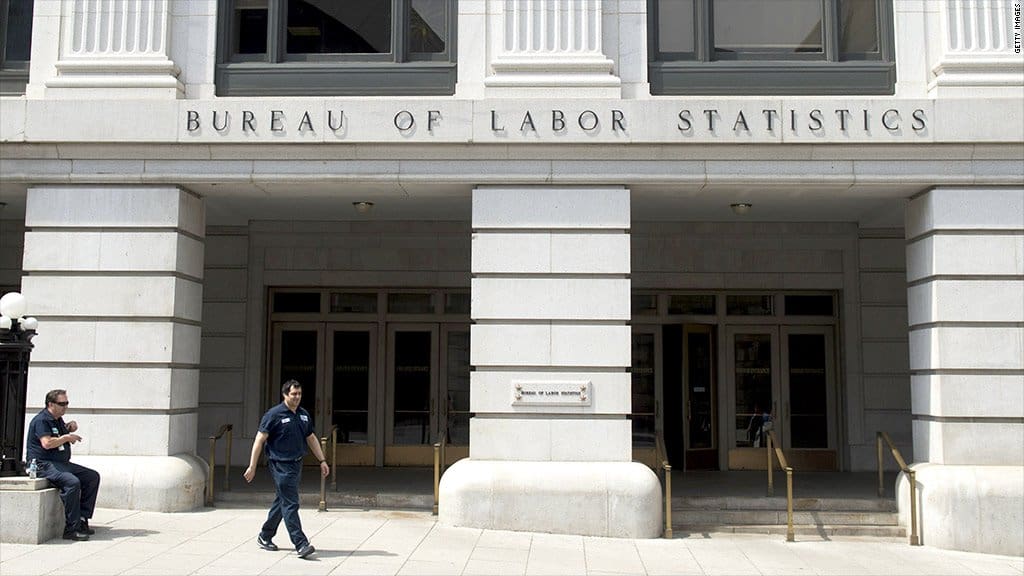
On Friday, the Bureau of Labor Statistics released its August job report. Last month, the U.S. economy added around 22,000 jobs, following two weak months of job growth in June and July. Thus far, the country has added around 598,000 jobs this year, compared to 1.14 million jobs by the same time last year. The unemployment rate also rose to 4.3%, and over 25% of unemployed workers have been jobless for over 6 months, the highest level since June 2016. The numbers appear to reflect the impact of the administration’s tariffs, which have driven up prices, as well as mass layoffs from the federal government, the reverberating impact of cancelled federal grants and contracts, and the administration’s immigration crackdown. The poor report comes after President Trump fired the former head of BLS, Erika McEntarfer, after the July jobs report sharply revised down previous numbers. Although President Trump has attacked the Federal Reserve chair, Jerome Powell, in a push to lower interest rates, the Fed is also wary of feeding rising inflation.
Meanwhile, on the tails of another directive ending collective bargaining for additional agencies, Trump Administration officials have told workers that the government would quit arbitration in disputes that arose under the now-cancelled labor contracts. Arbitration typically allows both the employee and employer to resolve workplace disputes based on the decision of a neutral third party. And a 1977 Supreme Court decision, Nolde Bros. v. Bakery & Confectionary Workers Union Local 358, held that the parties’ obligation to arbitrate “may survive contract termination when the dispute is over an obligation arguably created by the expired agreement.” However, the government has cited its broad national security concerns as justification for not just dissolving the unions, but also discontinuing arbitration proceedings.
Lastly, a federal district court judge on Friday granted a habeas petition on the grounds that detention without a bond hearing under the Laken Riley Act violates due process. As Meredith covered for OnLabor earlier this year, the LRA mandates no-bond detention for individuals who are simply arrested for or charged with an offense, even if the accusation is false or if charges are never filed. In doing so, the LRA renders undocumented workers even more vulnerable to their employers; those who speak up against abusive employer practices like wage theft or unsafe working conditions may face retaliation via accusations of petty crimes. The district court’s decision appears to be the first order to address the constitutionality of mandatory detention under the LRA. Although the order does not invalidate the LRA, it opens up a pathway for detained immigrants to fight it.




Daily News & Commentary
Start your day with our roundup of the latest labor developments. See all
September 8
In today’s News and Commentary, workers and unions across America celebrate Labor Day, California’s SEIU Local 1000 prepares for a strike authorization vote, and New York City creates the Office of Worker Power. On Monday, labor unions and workers gathered in cities across the United States in celebration of Labor Day. Parades and rallies took […]
September 7
Eighth Circuit finds DOL order violates Seventh Amendment; 1,300 workers at Encore Boston Harbor go on strike.
September 6
Encore casino workers strike; President Trump commutes sentence of former Philadelphia IBEW leader; Durham labor activist ends his hunger strike against Amazon.
September 4
NLRB advice memo narrows political protest protections; NLRB asks federal appeals court for deference.
September 3
Seond Circuit rejects a NLRB standard for union insignia in employer dress codes; House Republicans ramp up labor union investigations.
September 2
Trump’s US Steel agreement impacts labor talks; Mamdani clashes with teachers’ union; Boeing plans to resume bargaining talks.