
Luke Hinrichs is a student at Harvard Law School.
In today’s news and commentaries, NLRB seeks to compel Amazon to collectively bargain with San Francisco warehouse workers, DoorDash delivery workers and members of Los Deliveristas Unidos rally for pay transparency, and NLRB takes step to drop lawsuit against SpaceX over the firing of employees who criticized Elon Musk.
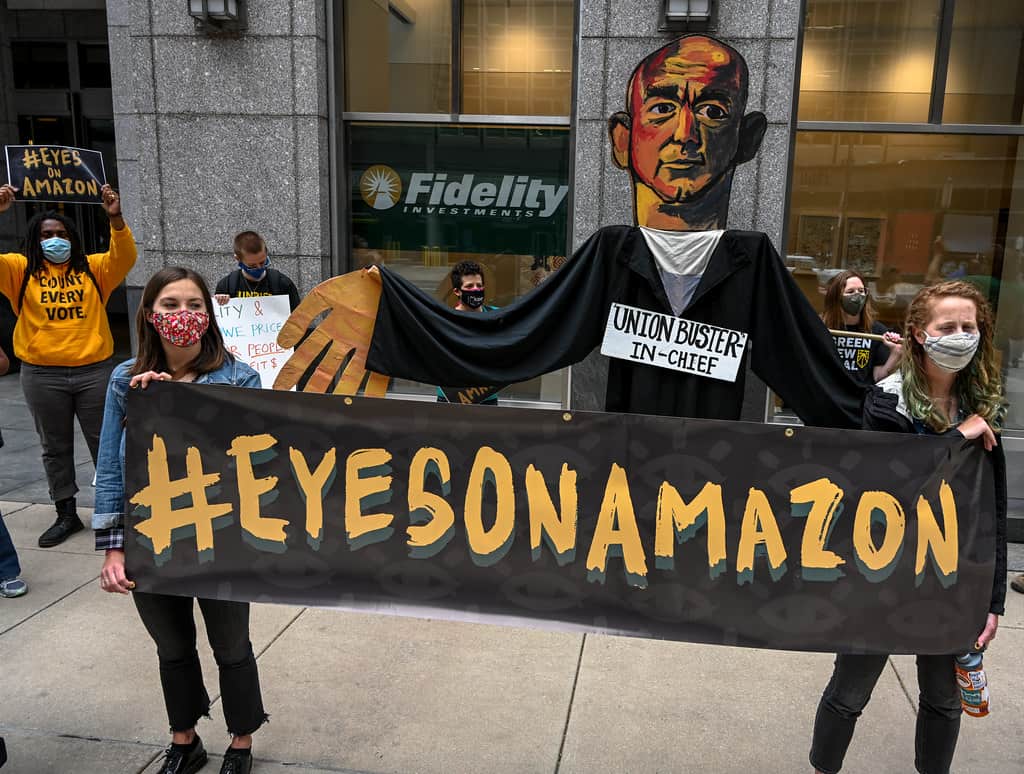
The National Labor Relations Board (NLRB) issued a complaint against Amazon on Monday alleging the company violated Section 8(a)(1) and (5) of the National Labor Relations Act by refusing to bargain collectively with the Teamsters after a majority of employees at a San Francisco Amazon warehouse designated the union as their exclusive representative last fall. The complaint, issued under Trump’s acting NLRB general counsel, rests on the Cemex Construction Materials Pacific precedent established during Biden Administration to request an order that compels Amazon recognize and bargain in good faith with the Teamsters as the exclusive bargaining agent for a reasonable period of time.
Delivery workers rallied outside of DoorDash’s New York City headquarters to protest the company’s alleged wage theft and exploitation. The organizing effort comes after the New York Attorney General’s office secured a $16.75 million settlement against DoorDash because the company was illegally using customer tips to offset a base pay rate that it already offered to workers. DoorDash did not acknowledge any wrongdoing and the settlement only covered the period from 2017 to 2019. According to Los Deliveristas Unidos nonpayment of earned wages, unjust use of pay algorithms, and abrupt deactivations of delivery worker’s access continue to be systemic issues. The workers and organizers of the rally are advocating for the passage of a City Council bill that would require third-party food delivery services and third-party courier services to provide food delivery workers with information on how they are calculating the workers’ pay.
In January 2024, the NLRB filed a complaint against SpaceX alleging the company illegally interrogated and fired employees over their involvement in an open letter criticizing Elon Musk. SpaceX responded by suing the NLRB, claiming that the agency’s structure is unconstitutional. Since then, an injunction has paused the NLRB’s case against the company as the constitutional challenge works its way through the court system. During the Biden Administration, the NLRB also rejected SpaceX’s argument that the agency has no jurisdiction over the company and that the allegations should instead be heard by the National Mediation Board, which oversees railways and airlines that transport passengers. On Wednesday, Trump’s acting NLRB general counsel reversed course and took a decisive step to drop the NLRB’s case against SpaceX by entering a joint court filing requesting that the Mediation Board consider whether the agency has jurisdiction rather than the NLRB.



Daily News & Commentary
Start your day with our roundup of the latest labor developments. See all
August 14
Hollywood unions diverge in response to the Paramount-Warner merger saga; Tesla defeats a years-long strike in Sweden, and labor scholars advocate for state sectoral bargaining policy innovation.
August 13
EEOC complaint process expected to harm federal workers; former UAW leaders endorse Fain challenger; Xbox employees protest layoffs.
August 12
Third Circuit affirms dismissal of driver’s bias and retaliation claims against CBS and Teamsters; employment litigation surges in Washington state; MIT Sloan professor argues the rise of “disposable workers” is transforming American employment.
August 11
Rideshare drivers nearing union certification in California; UFCW campaigns against electronic shelf labels; Teamsters support NYC delivery driver bill.
August 10
Employee sues for a fossil-fuel-free 401(k) plan as a religious accommodation; DHS submits a proposed rule eliminating 60-day grace period for H-1B workers; Eighth Circuit dismisses constitutional challenge to the FMSHRC.
August 7
Starbucks beats claims it denied shifts to union workers; Center for State Labor Innovation aims to address labor law shortcomings.