
Morgan Sperry is a student at Harvard Law School and also serves as OnLabor's Social Media Director.
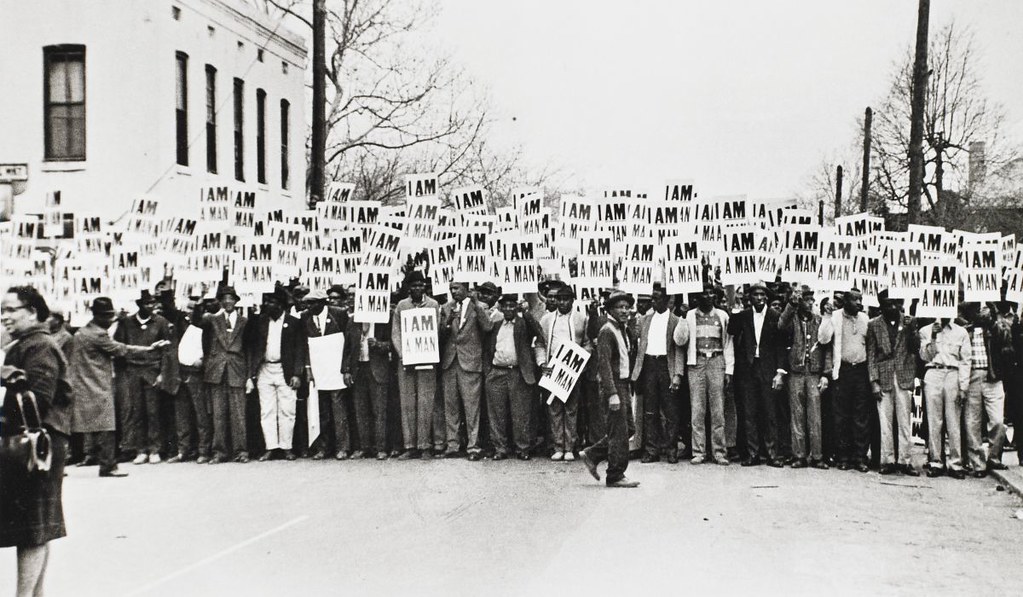
Today, the country honors Dr. Martin Luther King, Jr., who was assassinated nearly 56 years ago in Memphis, Tennessee, where he had traveled to join striking sanitation workers. Dr. King recognized that racial justice and economic justice are intertwined, and that labor unions are critical to mitigating the economic disparity between capital and labor. The striking AFSCME workers’ decision to carry signs reading “I AM A MAN” reflected the non-severable relationship between economic dignity and racial justice.
In a speech before the AFL-CIO several years before his death, Dr. King asserted that:
“In our glorious fight for civil rights, we must guard against being fooled by false slogans, such as ‘right to work.’ It is a law to rob us of our civil rights and job rights. It is supported by Southern segregationists who are trying to keep us from achieving our civil rights and our right of equal job opportunity. Its purpose is to destroy labor unions and the freedom of collective bargaining by which unions have improved wages and working conditions of everyone. Wherever these laws have been passed, wages are lower, job opportunities are fewer and there are no civil rights. We do not intend to let them do this to us. We demand this fraud be stopped. Our weapon is our vote.”
On what would have been his 95th birthday, we honor Dr. King by recommitting to advancing a labor movement that centers racial and economic dignity.

Daily News & Commentary
Start your day with our roundup of the latest labor developments. See all
June 29
In today’s News and Commentary, student-athletes file a class action suit challenging the NCAA’s new Age-Based Rule, a federal judge declines to issue a preliminary injunction against FEMA’s reduction in force but expedites proceedings, and Gavin Newsom opposes California’s proposed billionaire tax in favor of a federal approach. On Thursday, DeJuan Campbell, at basketball player […]
June 28
Philadelphia utility workers announce July 4 strike; national parks workers vote to unionize; Michigan considers “right to disconnect” bill.
June 26
Mamdani issues workplace heat protections order; Fifth Circuit denies enforcement of NLRB order against Starbucks; AFGE unlikely to secure injunction against FEMA layoffs.
June 25
NLRB orders Amazon to bargain with workers; federal judge blocks ICE agents from making arrests in courthouses.
June 24
NYC primary vies for union support; NLRB ruling tees up Cemex challenge; Sixth Circuit deals blow to NLRB policymaking.
June 23
The Supreme Court declines review of a taxpayer lawsuit against a teacher union's paid leave policy; Congressional Democrats oppose Labor Department's proposed joint employer rule.