Greg Volynsky is a student at Harvard Law School.
In Today’s News & Commentary, United Auto Workers strike against the Big Three.
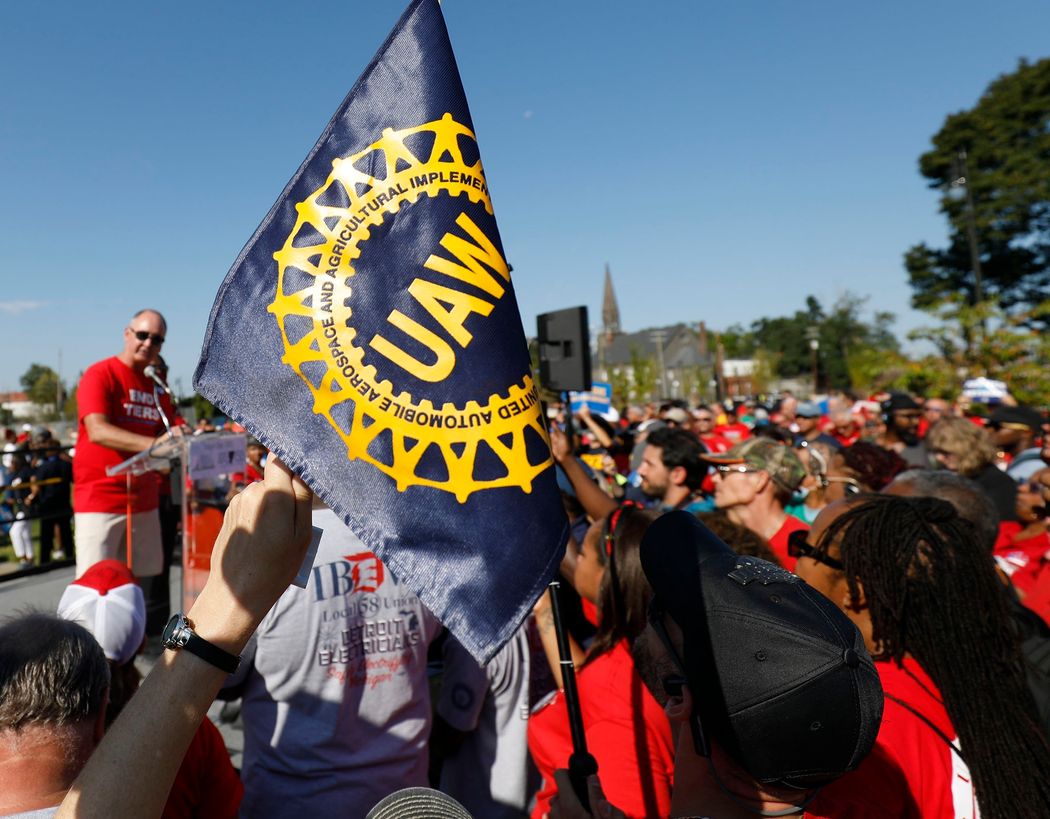
For the first time in its 88-year history, the United Auto Workers (UAW) union has called a strike against all three Detroit automakers simultaneously. On Friday, roughly 13,000 U.S. auto workers walked off the job, due to a significant divide between the union’s contract demands and the offers of Detroit’s three major car manufacturers. The UAW called the strike “our generation’s defining moment . . . across the entire working class”, while Reuters called it “the most ambitious U.S. industrial labor action in decades.”
In an “absolutely unprecedented” move, the UAW has engaged in a limited “Stand Up Strike”, involving—for now—fewer than 10 percent of the union’s nearly 150,000 members. The union explained that “[t]his is a strike that grows over time, giving our national negotiators maximum leverage and maximum flexibility.” By calling a limited strike and targeting plants producing vehicles with lower profit margins, the UAW is mounting pressure without cornering the companies or squeezing its own strike fund. Professor Marick Masters of Wayne State University in Detroit summarized, “You put an animal in the corner and it’s dangerous.”
The UAW is demanding a 36 percent wage increase over four years, having conceded the initial demand of a 46 percent raise. After initially proposing around 9 or 10 percent four-year raises, GM and Ford have proposed 20 percent, while Stellantis has offered a 17.5 percent. Beyond wage increases, the UAW is advocating for the restoration of cost-of-living pay raises, elimination of varying wage tiers, a 32-hour four-day workweek, pension boosts, and other benefits.
The strike comes four years after a 40-day GM strike, involving 48,000 workers, that cost the company $4 billion. Moody’s Analytics estimates a six-week strike could cost each of the companies $5.4 billion. When the companies said they cannot afford the wage increase the union demands, UAW President Shawn Fain responded, “The cost of labor that goes into a vehicle is 5%. They could double our wages, not raise prices of vehicles, and they would still make billions.” The three automakers reported a combined $250 billion in profits over the past decade.
The strike is led by Fain, who was an electrician and UAW member for two decades before being elected to lead the organization in late March of this year. As Swap reported, Fain advocated for a more aggressive negotiating strategy, running on a platform of “No corruption. No concessions. No tiers.”
Roughly 97 percent of union members voted to authorize a strike in late August. As I reported earlier this month, the UAW filed a labor complaint against GM and Stellantis, alleging they failed to bargain in good faith as the union contract neared expiration. Fain termed threats of plant closures “economic terrorism.”
President Biden is expected to deliver remarks on the strike. The White House said President Biden has been in touch with Fain and leaders of the auto companies. As Michelle reported yesterday, the Biden administration may take “economic measures” to protect the Big 3’s smaller supplier firms and prevent supply chain disruption.





Daily News & Commentary
Start your day with our roundup of the latest labor developments. See all
September 23
DoorDash settles delivery-worker pay claims; Philadelphia school workers win new contract; stock gains spur retirements.
September 22
Judge blocks ICE raids in Alabama; Chicago hotel workers vote to strike; AutoZone workers look to create first union
September 21
In today’s News and Commentary, the Seventh Circuit raises the bar for the NLRB to obtain preliminary injunctions, the California Primary Care Association sues SEIU-UHW for racketeering, and the Seventh Circuit finds that an employer group and think tank do not have standing to challenge an Illinois law banning captive audience meetings. On Friday, the […]
September 20
Culinary Workers Union members protests union leadership; lawsuit against OpenAI and Microsoft reveal internal concerns about the threat of AI training to human labor.
September 17
Unions push to block Google from buying Spirit Airlines employment records; U.S. Department of Labor sues Oklahoma coffee chain over alleged wage violations.
September 16
Trump nominates Catherine Eschbach as EEOC general counsel; NLRB declines to resolve union work-assignment dispute; Allina Health physicians begin four-day strike.