
Morgan Sperry is a student at Harvard Law School and also serves as OnLabor's Social Media Director.
In today’s News and Commentary, hot labor summer is in full force as Starbucks workers, actors, screenwriters, and UPS drivers remain locked in labor disputes.
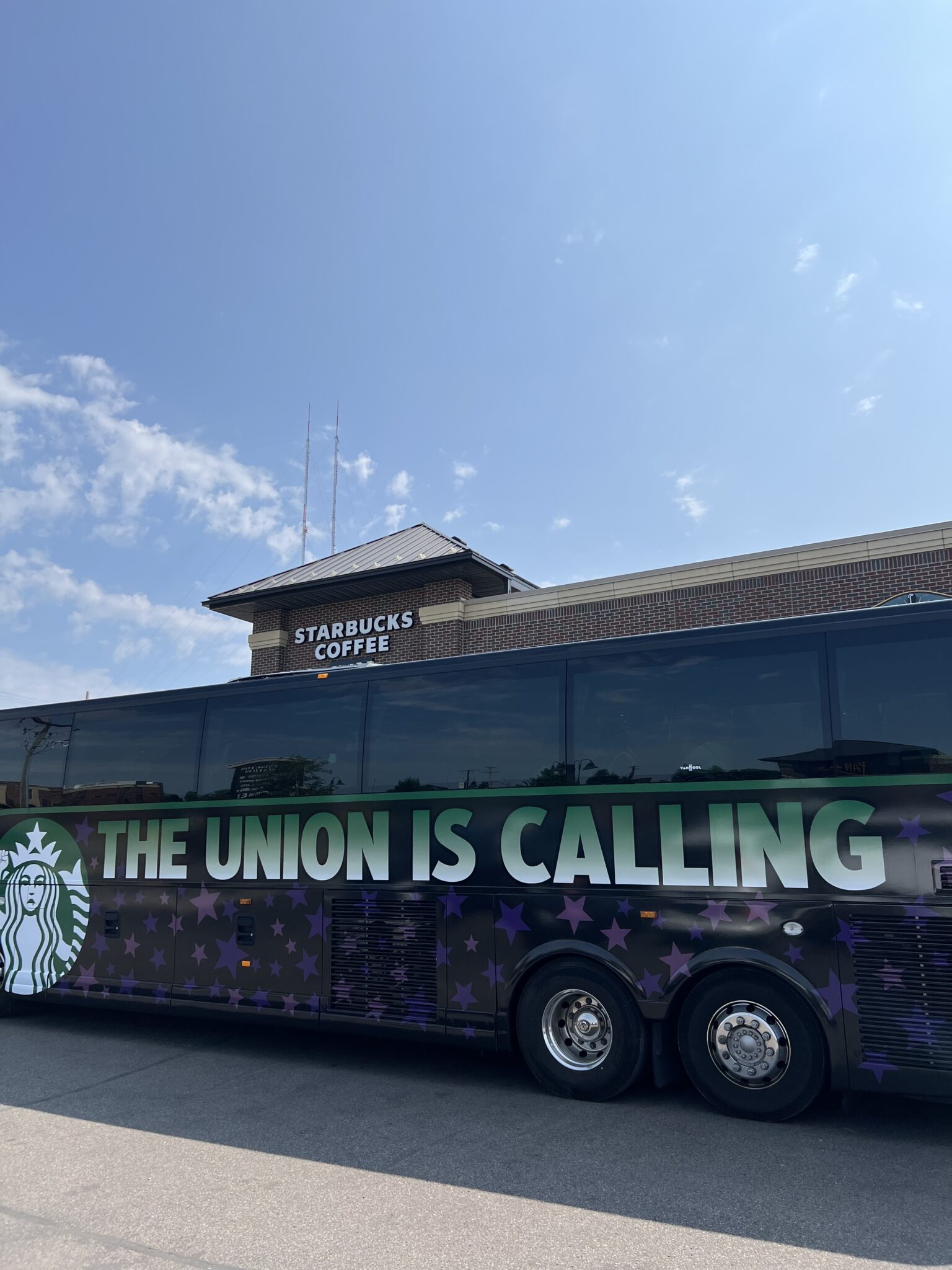
Starbucks Workers United is on a national bus tour to bring attention to Starbucks’ 2,000+ federal labor law violations and refusal to negotiate with unionized stores. The workers seek just cause employment protections, improved health and safety standards (including zero tolerance of sexual harassment), increased wages, predictable and regular scheduling, high quality healthcare, and expanded access to medical, parental, and personal leave (plus the right to take leave for union work).
Starbucks workers have also been sounding the alarm regarding some stores’ restriction of Pride month decorations amidst renewed attacks on the LGBTQ+ community. Currently, more than 300 Starbucks stores are unionized across 38 states and DC. Just this week, workers at the Chicago Roastery—the largest Starbucks store in the world—filed for an NLRB union election.
The entertainment industry continues to reel after movie and TV actors joined striking screenwriters on the picket lines Friday. The historic simultaneous SAG-AFTRA and WGA strikes have helped launch today’s labor movement into the zeitgeist as Hollywood’s biggest stars use their platforms to discuss exploitation, CEO overpay, the gig economy, the future of AI, and what work post-COVID should look like.
As Swap reported, 340,000 UPS workers are prepared to strike—and, on Sunday, Teamsters President Sean M. O’Brien asked the White House not to intervene. The union continues to push for air conditioning in trucks, ending the existing two-tier wage system, and wage increases for part-time workers. The strike would be one of the largest single-employer strikes in US history.



Daily News & Commentary
Start your day with our roundup of the latest labor developments. See all
October 13
Chicago hotel workers remain on strike; a coalition of Democratic states sues the Labor Department over canceled unemployment insurance grants; the Federal Labor Relations Authority establishes a new mediation framework for federal worker disputes.
October 12
Workers at the Obama Foundation begin organizing; MLB submits its latest collective bargaining agreement proposal; Brigham & Women's nurses postpone strike.
October 11
UAW President Shawn Fain succeeds in his reelection bid, and Spanish unions call for a general strike.
October 9
DHS proposes a $100k fee for the foreign grad employment program; Trump suspends tech company access to green card program; and private equity perpetuates poor working conditions for home care workers.
October 8
NLRB judge finds UPS unlawfully restricted union insignia; Harvard graduate workers authorize second strike; OSHA orders Union Pacific to pay $300,000 in damages in whistleblower case.
October 7
DOL scraps plan to remove decades-old wage-and-hour guidance from federal regulations; New York enacts personnel records access law; Starbucks loses bid to dismiss Workers United trademark suit.