
Morgan Sperry is a student at Harvard Law School and also serves as OnLabor's Social Media Director.
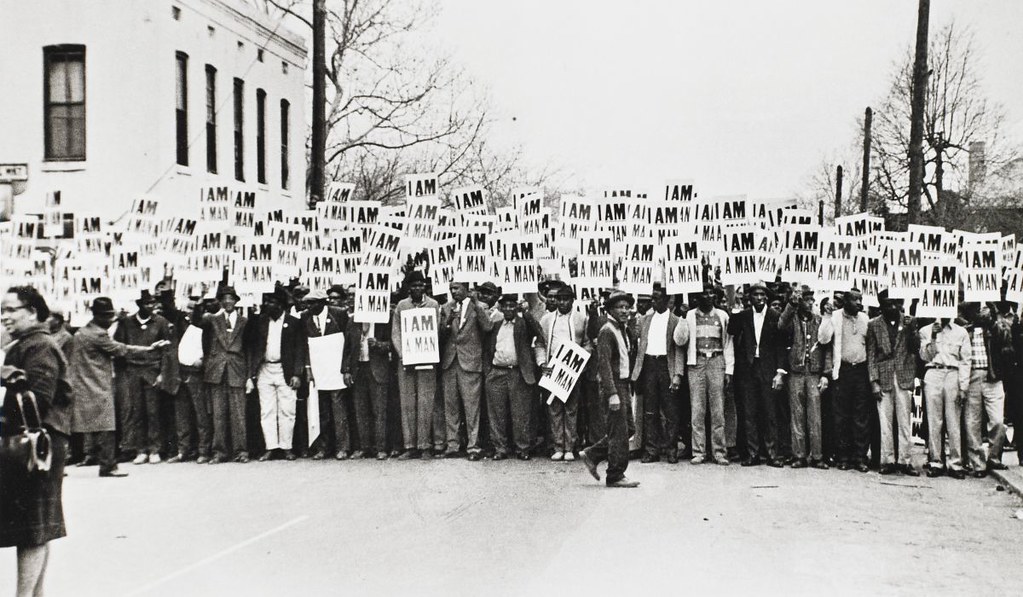
Today, the country honors Dr. Martin Luther King, Jr., who was assassinated nearly 56 years ago in Memphis, Tennessee, where he had traveled to join striking sanitation workers. Dr. King recognized that racial justice and economic justice are intertwined, and that labor unions are critical to mitigating the economic disparity between capital and labor. The striking AFSCME workers’ decision to carry signs reading “I AM A MAN” reflected the non-severable relationship between economic dignity and racial justice.
In a speech before the AFL-CIO several years before his death, Dr. King asserted that:
“In our glorious fight for civil rights, we must guard against being fooled by false slogans, such as ‘right to work.’ It is a law to rob us of our civil rights and job rights. It is supported by Southern segregationists who are trying to keep us from achieving our civil rights and our right of equal job opportunity. Its purpose is to destroy labor unions and the freedom of collective bargaining by which unions have improved wages and working conditions of everyone. Wherever these laws have been passed, wages are lower, job opportunities are fewer and there are no civil rights. We do not intend to let them do this to us. We demand this fraud be stopped. Our weapon is our vote.”
On what would have been his 95th birthday, we honor Dr. King by recommitting to advancing a labor movement that centers racial and economic dignity.





Daily News & Commentary
Start your day with our roundup of the latest labor developments. See all
October 18
Federal judge again halts cancellation of the Bureau of Prisons’ CBA; tabletop gaming workers face roadblocks in union recognition.
October 16
Department of Labor reduces wage-and-hour enforcement at unionized workplaces; Fain's victory poses question of federal monitor's extension.
October 15
New reporting examines the rollback of child labor protections; California tries to block a strike; NLRB charges Wisconsin mental health provider with firing workers during union drive.
October 14
Eleventh Circuit overturns ERISA exhaustion rule; DHS finalizes removal of automatic renewal for work permits; AFGE challenges SSA over flexible scheduling policy.
October 13
Chicago hotel workers remain on strike; a coalition of Democratic states sues the Labor Department over canceled unemployment insurance grants; the Federal Labor Relations Authority establishes a new mediation framework for federal worker disputes.
October 12
Workers at the Obama Foundation begin organizing; MLB submits its latest collective bargaining agreement proposal; Brigham & Women's nurses postpone strike.