
Fran Swanson is a student at Harvard Law School.
After an eight-week strike, a group of Chicago-area auto mechanics has won a four-year contract, the Chicago Tribune reports. Over 800 mechanics, represented by IAM Mechanics’ Local 701, began the strike after their previous contract expired, shutting down service at 56 car dealerships after rejecting a contract offer from the New Car Dealer Committee. That offer included cuts to base pay and higher health care costs for workers. The agreement reached yesterday covers 35 dealerships where 600 mechanics remained on strike, after 21 dealerships broke with the New Car Dealer Committee to sign their own agreements with their striking workers.
The absence of “right to return” laws is harming hotel workers in Columbia, Maryland, the Washington Post reports. Approximately 100 people who worked at Merriweather Lakehouse were laid off in spring of 2020 and have yet to hear from the hotel about their old jobs, despite the fact that the hotel’s parent company received over $2 million in Paycheck Protection Program funds to help offset payroll. Unite Here Local 7, which represents the workers, has requested an audit of how the company spent the funds. The union decided not push for statewide right to return legislation after the hotel industry lobbied so aggressively over Baltimore’s right to return ordinance, which did go into effect. Now, the union and workers are calling for a boycott of the hotel. Angela Carillo, who worked at the hotel for 24 years, was able to send money back to her mother in Guatemala with her paycheck from her full-time work in banquet services and additional housekeeping work at another hotel. She explained that now, “I not only have to worry about my family but also me.”
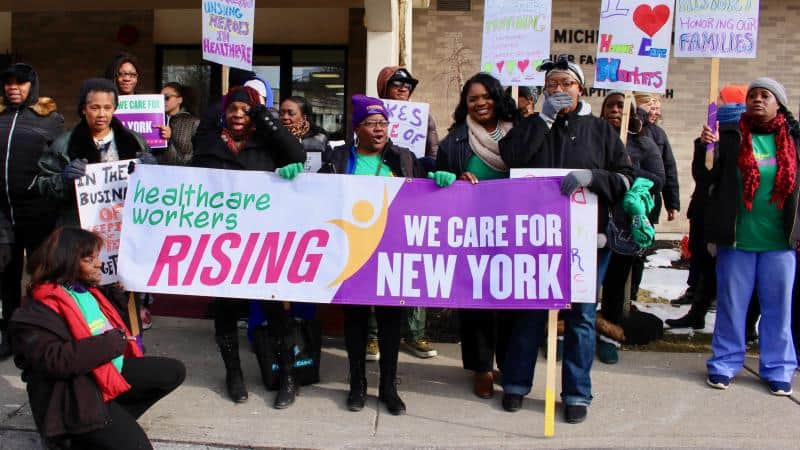
Finally, a New York Times investigation into the home care industry underscored the need for greater protections for workers, especially as the pandemic continues. Almost one in five aides—who are overwhelmingly women of color and immigrants—live below the poverty line, with median pay increasing only $1.75 over the last decade. And, with states and the federal government sharing the cost of Medicaid, they are left unprotected by a patchwork of laws. They are often underpaid, paid late, and saddled with unaffordable benefits and chronic injuries. Even in places, like New York City, where they qualify for paid sick leave, many workers interviewed by the Times felt that they could not actually take that time off. Indeed, many home care workers feel pressure to take on every case offered to them in order to ensure a stable schedule. Dany St. Laurent, whose mother, Yvette Dessin, died of COVID-19 after her home care employer did not provide her with PPE, said that the feeling was that, “[w]hen you tell [your employer] ‘no,’ you are going to pay for that ‘no.’ You’re going to feel that ‘no.’”



Daily News & Commentary
Start your day with our roundup of the latest labor developments. See all
July 24
EEOC drops request for UPenn's Jewish staff; Starbucks defeats mail-in ballots; and Mamdani appoints Lina Khan.
July 23
Ninth Circuit affirms ban of transphobic books in school; leading demographer warns of impending labor shortage.
July 22
EDNY strikes down state labor board law; D.C. Circuit applies Loper Bright to NLRB; Joint employer bill reaches the House floor.
July 21
Fifth Circuit transfers an Anheuser-Busch NLRB case to the Eleventh Circuit; a new report makes the case for tripling union membership.
July 20
New York City weighs banning horse carriages despite union opposition; public defenders go on strike; cinema workers stage walkout.
July 17
Canadian wildfires endanger rail workers; 26 Meta employees allege targeted layoffs for those on paid leave; FIFPRO pushes for more rigorous heat protections for players.