
Maxwell Ulin is a student at Harvard Law School.
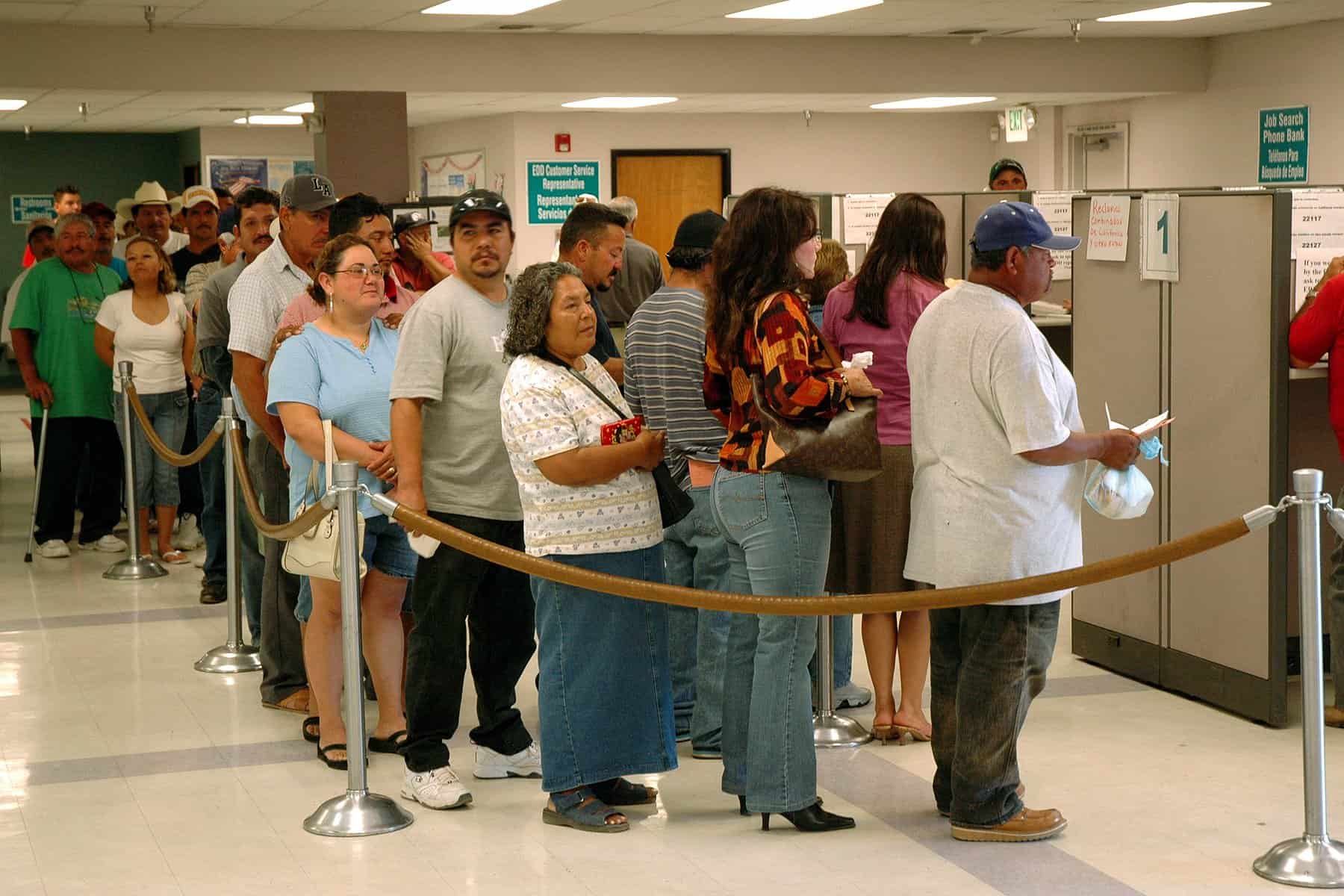
Another 2.1 million unemployment claims have been filed in the U.S. since last Thursday, bringing total jobless to a whopping 40.7 million people—roughly one in every four American workers. As the New York Times speculates, some of the latest claims may reflect not only fresh layoffs but also much earlier filings, as state unemployment systems make their way slowly through the deluge of claims received over the last few months. On the heels of the jobless report, the Trump administration also announced that it would break with precedent in refusing to revise its economic forecast this summer, presumably to avoid revealing the extent of the downturn.
As the national economic outlook worsens, businesses have taken further steps to cut staff and tighten belts. Multinational energy giant Chevron has unveiled plans to cut 10-15% of its workforce this year, largely in response to a steep decline in energy demand over the past few months, but also as part of a broader program of belt-tightening already underway. Meanwhile, Boeing announced 6,770 involuntary job cuts this week, in addition to another 5,500 voluntary layoffs. Justifying its decision, aerospace firm projected that the company would unlikely reach 2019 profitability levels for another three years. While most employers have chosen to lower payroll through categorical layoffs, some have taken a different approach, cutting hours across the board rather than firing individual employees.
On Capitol Hill, lawmakers planned to move forward this week with loosening loan restrictions for small businesses under the Paycheck Protection Program (PPP) but found stiff resistance from workers’ rights advocates. In the House, a bipartisan bill proposed to eliminate the requirement that 75% of all loans be allocated toward maintaining payroll. In response, UNITE HERE President D. Taylor submitted a letter along with 16 other unions decrying the proposal. Absent union support, Democrats lacked confidence that the legislation would muster enough votes for passage and now are going back to the drawing board. Hill watchers now expect an amended draft to reduce PPP’s required payroll allocation to 60%, as opposed to fully eliminating it.
Uber, Lyft, and other rideshare companies won a major victory in California this week, obtaining spot on the November ballot for a proposal to repeal Assembly Bill 5 (AB5), a measure signed into law last year codifying a new employee standard that would include most rideshare and gig economy workers. Already, Uber, Lyft, and Doordash have begun running ads as part of a $110 million initiative campaign. High as that may seem, rideshare companies are likely to reap mightily from the investment: according to a study by the UC Berkeley Labor Center, Uber and Lyft alone will be on the hook to pay $413 million in payroll taxes to California should their drivers be reclassified. Rideshare companies face similar fights elsewhere, however; as Leigh reported yesterday, Uber and Lyft drivers in New York filed a lawsuit this Monday against the state asserting their employee status to in hopes of obtaining unemployment benefits. Meanwhile, in Massachusetts, U.S. District Court Judge Indira Talwani denied preliminary injunctive relief last Friday to four Lyft drivers in a lawsuit seeking employee reclassification but noted that the plaintiffs were likely ultimately to succeed on the merits.
While coronavirus has fueled increasing controversy over AB5 in California, it has done quite the opposite for paid leave. A poll released earlier this month of 42 swing House districts and 11 Senate battlegrounds found that an overwhelming 94% of voters supported the idea of requiring employers to provide paid sick days. The issue also turned out to be decisive to many voters: information on different candidates’ positions on paid family and medical leave resulted in a 16-point shift toward Democratic House candidates and 20-point swing toward Senate Democrats among voters in the battleground areas polled. Among undecided voters, the move was starker, with a 34-point swing in favor of Democratic House candidates and 32-46-point shift favoring Democratic Senate candidates. It is hard to divorce these finding from the severe impact coronavirus has had on Americans’ view of health and employees’ power in the workplace, as Steve Greenhouse and others have noted.




Daily News & Commentary
Start your day with our roundup of the latest labor developments. See all
October 21
DOL withdraws tipped-worker rule; Instacart settles hiring-bias claims; Phillips 66 locks out New Jersey refinery workers.
October 20
Korean unions oppose labor exemption bill; Portland city workers prepare for strike; UPenn grad student union looks to dismiss university filing
October 19
FDA reverses course on policy prohibiting off-duty union activity; FAA and NATCA reach deal to secure pay increase for air traffic controllers.
October 18
Federal judge again halts cancellation of the Bureau of Prisons’ CBA; tabletop gaming workers face roadblocks in union recognition.
October 16
Department of Labor reduces wage-and-hour enforcement at unionized workplaces; Fain's victory poses question of federal monitor's extension.
October 15
New reporting examines the rollback of child labor protections; California tries to block a strike; NLRB charges Wisconsin mental health provider with firing workers during union drive.