
Zachary Boullt is a student at Harvard Law School.
A United Airlines worker has asked the Supreme Court to strike down the Railway Labor Act’s opt-out system for union dues for railway and airline workers. Under the Railway Labor Act, employees who are not union members but are represented must affirmatively opt out of paying full union dues. The petitioner, Arthur Baisley, is arguing that the reasoning of Janus supports a baseline exemption for nonmembers from having to pay full union fees, not an affirmative opt-out system. Baisley is represented by the National Right to Work Legal Defense Foundation, and the case is another push to attempt to extend the logic of Janus into the private sector. The Fifth Circuit recently threw out Baisley’s lawsuit, saying that Janus was meant to apply only to the public sector.
More than 4,000 SEIU Healthcare Pa. workers are expected to picket today outside of nursing homes and other healthcare facilities. The workers are protesting Pennsylvania’s nursing home regulations, which have not been updated for decades. Proposals for new regulations include increasing the minimum staffing requirement for resident care and protections for long-term care facility residents when the facilities are sold or undergo an ownership change. The members are also pushing for better union contracts to aid staff retention and staff training and increase health equity for people of color.
Lawmakers in Illinois are pushing for a resolution to amend the state constitution to enshrine labor protections for Illinois’s public employees. The amendment to the state’s Bill of Rights would add “the fundamental right of Illinois employees to organize and bargain collectively.” The amendment would prevent state and local laws from conditioning employment on whether or not an employee joins a union. The resolution to amend the constitution has already passed the Senate. If it passes the House, then Illinois voters will vote on the proposed amendment in November 2022.
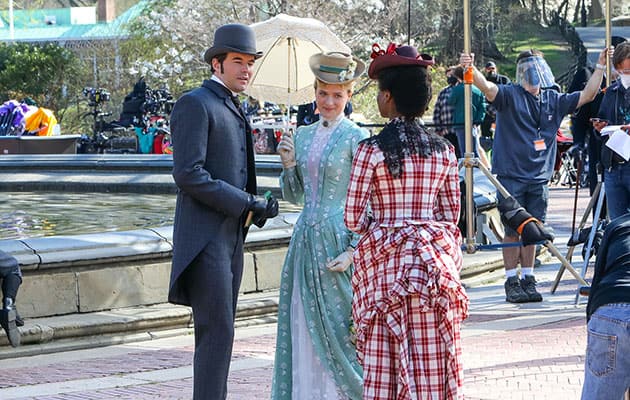
A labor dispute has been brewing between a group of musicians and HBO. Musicians hired for HBO’s series “The Gilded Age” unionized in response to poor working conditions and wages. The musicians were being paid below union standards for filming days that would reach up to 14 hours. After the musicians unionized, HBO told the musicians it would recast them. This prompted the American Federation of Musicians to file an unfair labor practice charge. Since the ULP filing, HBO has stated that it would rehire the musicians under union status, but the agreement is only tentative so far.

Daily News & Commentary
Start your day with our roundup of the latest labor developments. See all
April 6
Trump to shrink but not eliminate CFPB, 9th Circuit nixes use of issue preclusion to invalidate arbitration agreements.
April 5
Trump proposes DOL budget cuts; NLRB rules in favor of cannabis employees; Florida warehouse workers unanimously authorize strike.
April 3
NLRB says Amazon failed to bargain with union; Harvard graduate workers authorize strike, and states move to preempt local employment law.
April 2
Sheridan, Colorado educators go on strike; Maryland graduate student workers are one step closer to collective bargaining rights.
April 1
DOL proposes 401(k) rule; Starbucks investors reelect controversial board members; Washington passes workplace immigration warning requirement.
March 31
In today’s news and commentary, the Supreme Court hears a case about Federal Court jurisdiction over arbitration, a UPS heat inspection lawsuit against OSHA is dismissed, and federal worker unions and NGOs call on the EPA to cease laying off its environmental justice staffers. A majority of Supreme Court justices signaled support for allowing federal […]