
Alexandra Butler is a student at Harvard Law School.
The number of initial state unemployment claims decreased by 34,000 last week, resulting in a weekly adjusted total of 473,000 claims. Despite this sign that the labor market is beginning to heal, economists are nonetheless worried. For certain industries, job applications are down and hiring has stalled. Politico provides several explanations for this state of affairs, such as workers’ concerns about safety and the inability to find adequate childcare.
A recent paper authored by Dr. Lawrence Mishel and Dr. Josh Bivens at the Economic Policy Institute (EPI) examines the relationship between middle-class wage suppression and policymaking. Specifically, it highlights and criticizes policy preferences that have favored employers over employees and labor unions. These policies include the government’s willingness to accept higher than normal unemployment rates and the “eros[ion of] collective bargaining.” As a result, the authors argue that the current average hourly wage is ten dollars less than what the expected wage, in light of current worker productivity, should be. As the New York Times highlights, this thesis rebuts other common explanations for wage suppression, namely the rise of technology and the subsequent premium placed on college degrees. Rather, under Dr. Mishel and Dr. Bivens’ approach, it is government intervention that will most adequately address the current state of affairs.
Yesterday, the Metropolitan Opera’s stagehands, musicians and designers protested outside of New York City’s Lincoln Center in response to a contract dispute with its employer. As Maxwell reported yesterday, contract negotiations between the performing arts institution and the two unions that represent these workers have been largely unsuccessful. While the Met argues that a new contract must include wage cuts in order to reopen its doors, the unions argue that the cuts are unnecessary and that “[t]he Met is the only place that continues to try to destroy its workers’ contracts.”
On Thursday, the Coalition for Workplace Innovation, whose members include Uber and Lyft, challenged the legality of a recent Biden administration rule rescission. The previous administration’s now rescinded rule allowed for a what appeared to be a more flexible approach in determining who was an employee under the Fair Labor Standards Act (FLSA). Yet, many criticized the rule as allowing employers to overuse the label of independent contractor and avoid adhering to “the protections of the [FLSA].” In the amended complaint, the Coalition contests the rescission as a violation of the Administrative Procedure Act (APA).
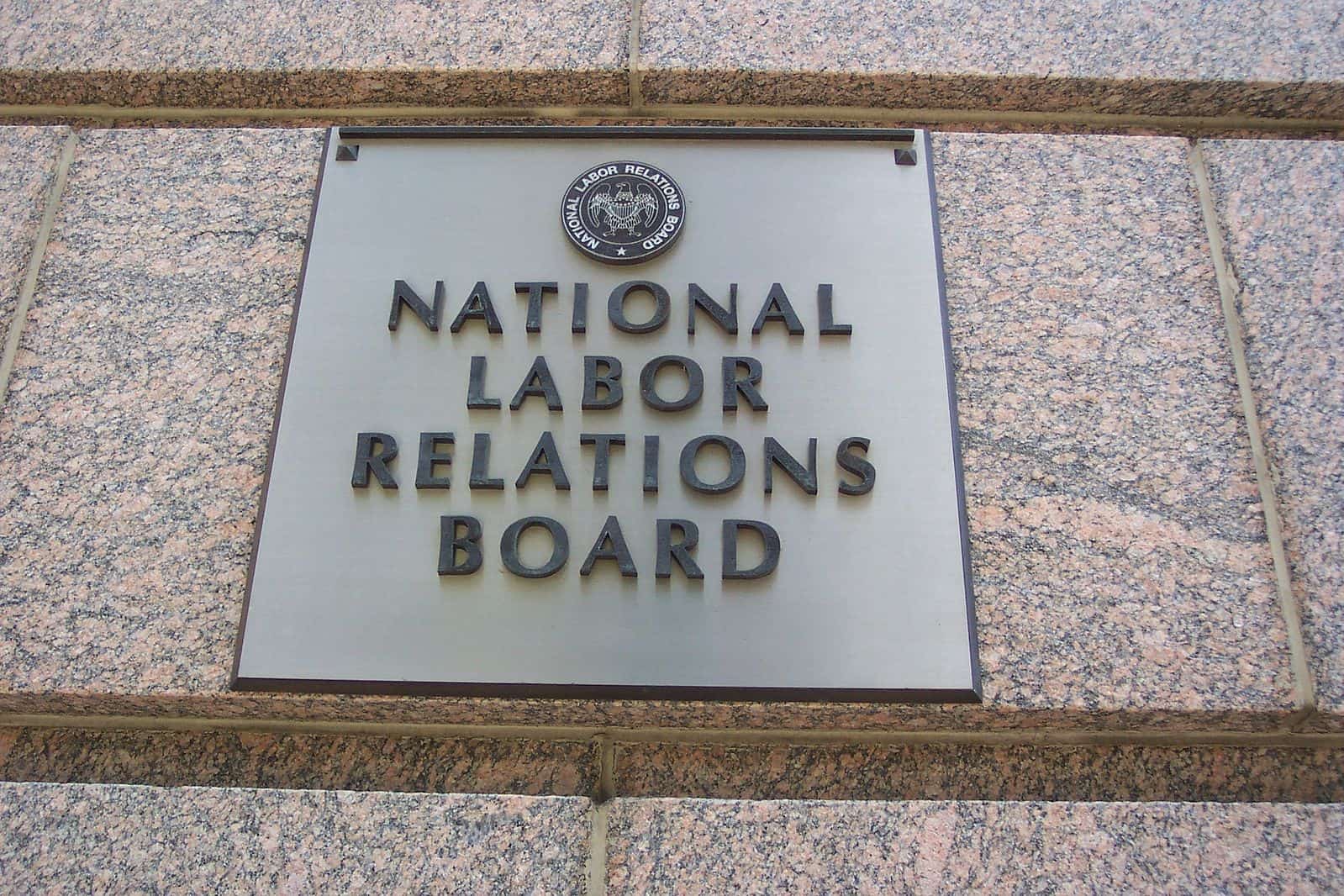
Today, the U.S. Court of Appeals for the D.C. Circuit will hear the AFL-CIO’s challenge to a series of union election rules promulgated by the National Labor Relations Board (NLRB). Oral arguments will center on whether it was necessary for the NLRB to engage in notice-and-comment under the APA. While the NLRB maintains that the election rules are procedural in nature and thus, under the APA, did not require notice-and-comment, the AFL-CIO argues that the rules “substantive[ly] . . . alter the rights and interests of parties.” How the Court resolves this dispute could have a significant impact on the efficacy of union elections moving forward. Some view the rules as “insert[ing] unnecessary delays at every step of the election process,” which will ultimately undermine workers’ efforts to organize.





Daily News & Commentary
Start your day with our roundup of the latest labor developments. See all
October 15
New reporting examines the rollback of child labor protections; California tries to block a strike; NLRB charges Wisconsin mental health provider with firing workers during union drive.
October 14
Eleventh Circuit overturns ERISA exhaustion rule; DHS finalizes removal of automatic renewal for work permits; AFGE challenges SSA over flexible scheduling policy.
October 13
Chicago hotel workers remain on strike; a coalition of Democratic states sues the Labor Department over canceled unemployment insurance grants; the Federal Labor Relations Authority establishes a new mediation framework for federal worker disputes.
October 12
Workers at the Obama Foundation begin organizing; MLB submits its latest collective bargaining agreement proposal; Brigham & Women's nurses postpone strike.
October 11
UAW President Shawn Fain succeeds in his reelection bid, and Spanish unions call for a general strike.
October 9
DHS proposes a $100k fee for the foreign grad employment program; Trump suspends tech company access to green card program; and private equity perpetuates poor working conditions for home care workers.