
Iman Masmoudi is a student at Harvard Law School.
Following months of litigation in front of the NLRB, Google has settled its case with four former Google engineers over claims it fired them for union organizing. The terms of the settlement are undisclosed, but over the past months the administrative law judge had ordered Google to produce over 1,500 documents it had previously sought to protect as privileged. One of the fired engineers, Kathryn Spiers, expressed qualified joy at the victory, expressing that, “this is not what worker power looks,” and adding, “Google can fire whoever they want if they’re willing to put up a fight in court. There is no real recourse.”
Over the past four years, Google has experienced significant employee activism and organizing around labor issues as well as sexual harassment, immigration enforcement, and the company’s billion dollar contract with the Israeli Defense Forces. As the internal documents reveal, Google spent significant company time and resources monitoring these efforts and creating materials for distribution to discourage unionization and other worker organizing. For their part, Alphabet Workers Union also settled privately with the employees, who felt that both AWU and the Communication Workers of America, mishandled their cases as union members and did not fully support their litigation costs.
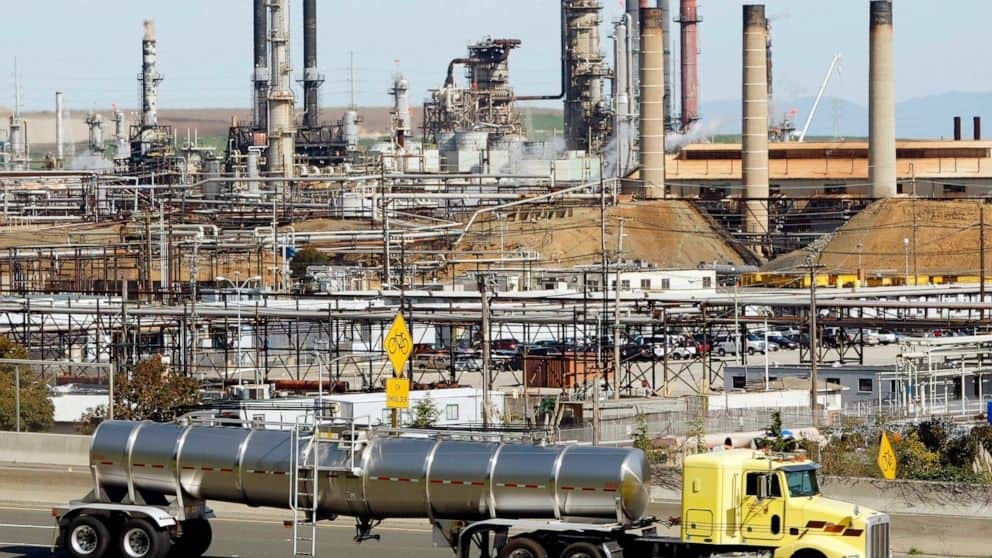
Yesterday morning, over 500 workers at a Chevron-owned oil refinery in the San Francisco Bay Area went on strike after stalled negotiations with USW Local 5, ABC reports. United Steel Workers negotiated a national contract, but about 200 individual bargaining units have yet to negotiate over local issues. Workers were asking for increased hiring to lessen burdens on individual workers and higher pay. Local reps stated that the cost of living in the Bay Area, particularly for blue-collar workers, was uniquely burdensome, and workers were coming in for up to 70 hours a week just “to make ends meet.” Chevron claims the contract it offered was reasonable and in line with other USW contracts. The company offered a 2.5% pay increase, but the union had asked for 5% to keep up with inflation and Bay Area living, “We asked for a 5% bump to help us out a little bit with our medical at Kaiser, which went up 23% last year,” B.K. White, a refinery operator who has worked for the company for 29 years, said.
Chevron has already brought in over 100 replacement workers who are receiving on-job training, amid safety concerns. Chevron states that the employees operating the refinery during the strike have received the necessary training and the refinery will continue to run without expected supply chain delays. The refinery is one of the largest in the State of California and processes 240,000 barrels of crude oil a day.





Daily News & Commentary
Start your day with our roundup of the latest labor developments. See all
October 14
Eleventh Circuit overturns ERISA exhaustion rule; DHS finalizes removal of automatic renewal for work permits; AFGE challenges SSA over flexible scheduling policy.
October 13
Chicago hotel workers remain on strike; a coalition of Democratic states sues the Labor Department over canceled unemployment insurance grants; the Federal Labor Relations Authority establishes a new mediation framework for federal worker disputes.
October 12
Workers at the Obama Foundation begin organizing; MLB submits its latest collective bargaining agreement proposal; Brigham & Women's nurses postpone strike.
October 11
UAW President Shawn Fain succeeds in his reelection bid, and Spanish unions call for a general strike.
October 9
DHS proposes a $100k fee for the foreign grad employment program; Trump suspends tech company access to green card program; and private equity perpetuates poor working conditions for home care workers.
October 8
NLRB judge finds UPS unlawfully restricted union insignia; Harvard graduate workers authorize second strike; OSHA orders Union Pacific to pay $300,000 in damages in whistleblower case.