
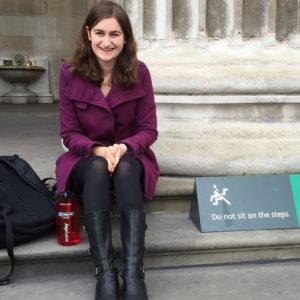
Rachel Sandalow-Ash is a student at Harvard Law School and a member of the Labor and Employment Lab.
The Seattle City Council unanimously passed a Domestic Workers’ Bill of Rights guaranteeing minimum wages, rest breaks, and related protections for nannies, house cleaners, cooks, gardeners, and other domestic workers. Seattle Mayor Jenny Durkan said she will sign the ordinance, which Seattle Councilmember Teresa Mosqueda introduced in response to a campaign led by the Seattle Domestic Workers Alliance. In addition to setting minimum legal standards, the ordinance also creates a panel of workers and employers who will jointly set industry standards on “wages, retirement benefits, training, workers’ compensation, sick leave, and other issues.” As Jen Soriano wrote in Crosscut, given that 58 percent of domestic workers in Seattle earn less than the federal poverty line and 94 percent make less than a living wage; so this ordinance will substantially improve the lives of over 30,000 of Seattle’s most vulnerable workers.
The Economic Policy Institute released a new report on local “Fair Workweek” laws, which protect workers against unfair scheduling practices. The report describes how an increasing number of employers, particularly in the retail and fast food sectors, notify workers of their schedules no more than a day or two (or even an hour or two) before they must be at work and regularly vary employees’ hours. These irregular schedules leave workers with volatile incomes; prevent workers from obtaining a second job if they need one; make it extremely difficult to arrange for childcare; and sometimes leave workers without adequate time to sleep between shifts. New York City, Oregon, San Jose, Seattle, San Francisco, and Emeryville, California have all passed comprehensive fair workweek laws, at least for certain sectors of the economy; such laws now cover more than 1.8 million people nationwide. Cities such as Philadelphia and Chicago are considering adopting such legislation, and several states and cities have adopted partial measures. Unions and activist groups — such as the Alliance of Californians for Community Empowerment — are advocating for the expansion of “fair workweek” legislation.
Vox reports that wages have fallen by almost two percent since the enactment of the Republican tax cut bill. While Republicans promised that the tax cuts — which overwhelmingly benefited corporations, stockholders, and the wealthy — would produce trickle-down benefits for workers, American companies are not using this new windfall to increase their employees’ pay. Instead, they are returning huge profits to their shareholders.
Andrea Flynn of the Roosevelt Institute writes in the Washington Post, “The Supreme Court’s war on women is also a war on workers.” In this piece, Flynn examines the interplay between anti-union attacks (such as the Janus decision), which particularly harm women and even more so harm women of color; and restrictions on contraception and abortion access, which adversely impact women’s economic opportunities. Flynn writes, “Reproductive health and economic security — and, by extension, reproductive rights and labor rights — are becoming increasingly inextricable in Trump’s America.”





Daily News & Commentary
Start your day with our roundup of the latest labor developments. See all
October 18
Federal judge again halts cancellation of the Bureau of Prisons’ CBA; tabletop gaming workers face roadblocks in union recognition.
October 16
Department of Labor reduces wage-and-hour enforcement at unionized workplaces; Fain's victory poses question of federal monitor's extension.
October 15
New reporting examines the rollback of child labor protections; California tries to block a strike; NLRB charges Wisconsin mental health provider with firing workers during union drive.
October 14
Eleventh Circuit overturns ERISA exhaustion rule; DHS finalizes removal of automatic renewal for work permits; AFGE challenges SSA over flexible scheduling policy.
October 13
Chicago hotel workers remain on strike; a coalition of Democratic states sues the Labor Department over canceled unemployment insurance grants; the Federal Labor Relations Authority establishes a new mediation framework for federal worker disputes.
October 12
Workers at the Obama Foundation begin organizing; MLB submits its latest collective bargaining agreement proposal; Brigham & Women's nurses postpone strike.