
Zachary Boullt is a student at Harvard Law School.
Lack of clarity on employees’ ability to use intermittent paid leave at their discretion is back in the limelight as schools begin to reopen. Though a Southern District of New York judge in early August struck down a Trump administration requirement that employees get employer consent to take leave under the coronavirus relief bill, questions remain regarding the ruling’s scope. The judge did not state the scope of the order striking down the restriction, and it could potentially apply nationally, just in New York, or just the Southern District of New York. The Department of Labor could appeal the ruling and ask for a temporary suspension, which would reinstate it, or issue new regulations. As the intermittent leave is necessary for many families struggling to figure out how to manage child care and schooling amidst the pandemic, the uncertainty is exposing employees and employers both to heightened risk.
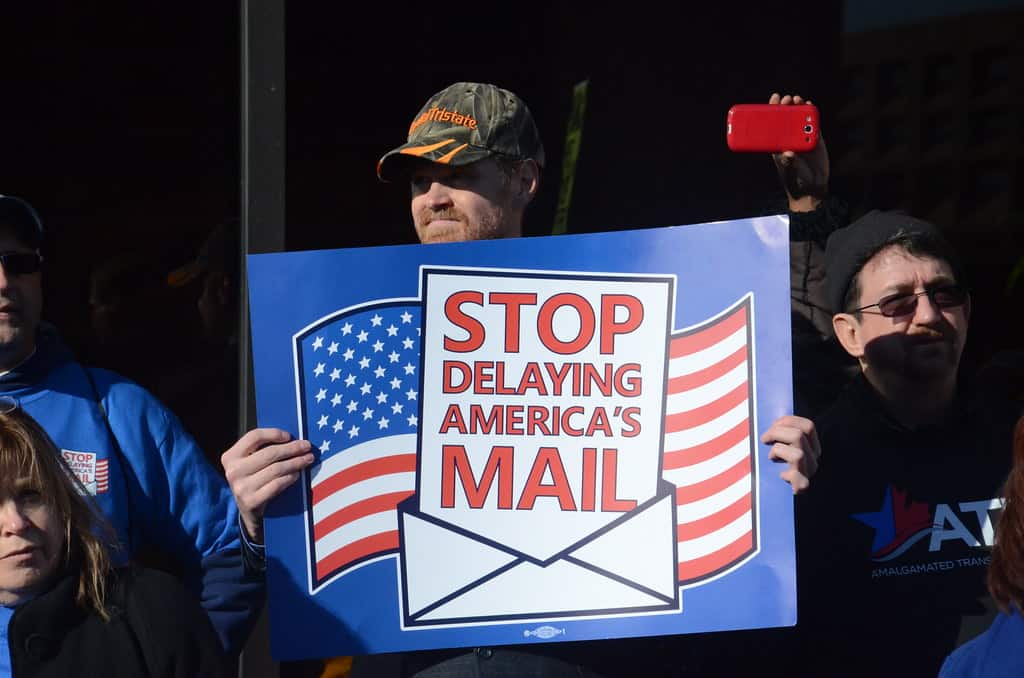
The Democratic National Convention Labor Council met Monday to discuss hardships facing essential workers and the Trump administration’s missteps toward addressing employment issues. The meeting heavily focused on postal workers, partly influenced by President Trump’s postal service cutbacks and obstruction. Postal worker union representatives highlighted a quadrupling of postal service worker quarantines and a tripling of postal service workers sick with COVID-19 in recent weeks. However, the discussion was primarily focused on President Trump’s admittance of targeting the postal service to disrupt voting by mail. Apart from postal workers’ issues, the DNC Labor Council addressed a $15 minimum wage, stricter OSHA pandemic standards, and an across-the-board right to organize.
The Southern Poverty Law Center has sued Arkansas company Lowry Farms Inc. for allegedly committing wage theft against more than 2,000 seasonal Mexican workers. The lawsuit alleges that Lowry Farms exploited the guest worker program to pay workers less than the federal minimum wage and did not provide promised reimbursement for travel, lodging, and visa and border crossing fees. The lawsuit also alleges that the company unilaterally changed the contractual pay rate from pay-by-acre-planted to pay-by-piece-of-sugar-cane-planted. Lowry Farms maintains that it did no wrongdoing.
A coalition of labor unions in Nevada have begun a “Right to Return” campaign urging the Clark County Board of Commissioners to require employers to allow furloughed or laid off employees to return to work when businesses reopen. The coalition includes unions representing bartenders, culinary workers, theatrical stage employees, nurses, auto workers, and operating engineers, as well as SEIU and the Teamsters. A collective 87,000 Nevada workers are represented by the coalition. The coalition is arguing that these employees lost their jobs through no fault of their own and are pressuring county commissioners to consider an ordinance creating a right to return at a September 1 board meeting.
The United Association of Union Plumbers and Pipefitters has endorsed Joe Biden for president. The endorsement has been considered surprising to some given the union’s support for the Keystone XL pipeline, as the Biden campaign has stated that he would rescind permits authorizing the pipeline. However, the union’s support for Biden is grounded in the Biden campaign’s promises to invest in water infrastructure projects, replace lead pipes, and upgrade water treatment plants to stop water pollution, which would employ union workers. The union criticized the Trump administration for promising infrastructure projects and failing to deliver.
Tennessee has joined almost a dozen other states in passing a pandemic liability shield law. The law protects businesses, health-care providers, schools, churches, and nonprofits from lawsuits related to COVID-19 exposure. In order to survive a motion to dismiss, plaintiffs have to show the defendant acted with gross negligence or willful misconduct. Plaintiffs also need a statement from a doctor attesting belief that the defendant’s actions caused virus exposure.


Daily News & Commentary
Start your day with our roundup of the latest labor developments. See all
May 15
SEIU 32BJ pioneers new health insurance model; LIRR unions approach a strike; and Starbucks prevails against NRLB in Fifth Circuit.
May 14
MLB begins negotiating; Westchester passes a new wage act; USDA employees sue the Agriculture Secretary.
May 13
House Republicans push for vote on the SCORE Act; Wells Fargo wins 401(k) forfeiture appeal; Georgia passes portable benefits bill.
May 12
Trump administration proposes expanding fertility care benefits; Connecticut passes employment legislation; NFL referees ratify new collective bargaining agreement.
May 11
NLRB Judge finds UPS violated federal labor law; Tennessee bans certain noncompetes; and Colorado passes a bill restricting AI price- and wage-setting
May 10
Workers at the Long Island Rail Road threaten to strike, and referees at the National Football League reach a collective bargaining agreement.