

Lauren Godles is a student at Harvard Law School.
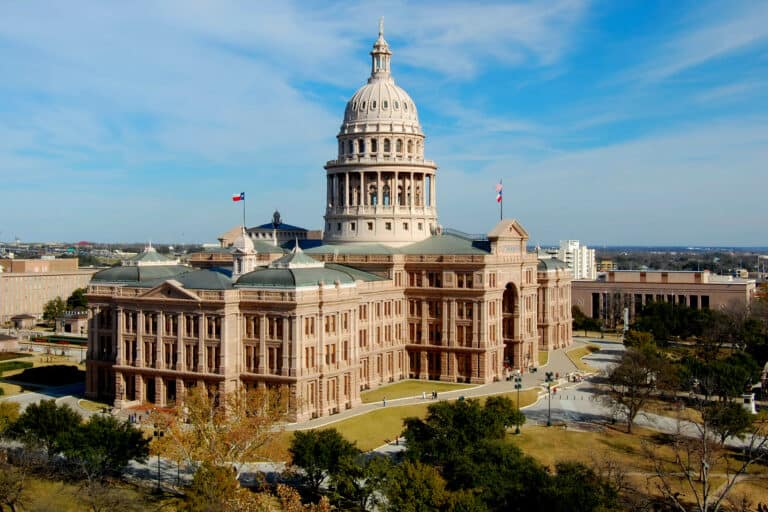
Yesterday, the Texas Senate voted preliminarily to approve a bill that would exempt state officials who object to gay marriage on religious grounds from being required to sign marriage licenses for same-sex couples. The bill would also exempt judges who object from performing marriage ceremonies for the couples. All the Democratic state senators, with the exception of Sen. Eddie Lucio Jr. of Brownsville, voted against the bill. They questioned why such a bill is necessary when clerks and judges can already recuse themselves if they appoint a deputy or another employee to take over their responsibilities. They also pointed out that the legislation would impermissibly allow government employees to discriminate against same-sex couples, whose right to marry has been interpreted to be protected under the 14th Amendment. In response, the Republican sponsor of the bill accepted an amendment “saying no couple can be burdened by a county clerk’s refusal to certify their marriage license.” The final vote takes place today, after which it will be sent to the House. U.S. News predicts that, if approved, “it will almost certainly be challenged as unconstitutional by federal lawsuits.”
The $75 billion dollar video game industry considers hiring workers a last resort, according to the Wall Street Journal. Psyonix Inc., the company that just released the long-awaited “Rocket League,” has just 81 employees, despite the staggering 29 million players it has accumulated in the last two years. Chief Executive Dave Hagewood says, “The smaller we can be, the better.” Like Hollywood studios, video game companies tend to hire temporary workers to help create a game, but have “few long-term obligations after its release.” However, the key difference between Hollywood and the gaming industry is that unions in Hollywood provide a safety net for workers, whereas gamers are largely non-unionized. Casey O’Donnell, a game-studies professor at Michigan State University, says the gaming industry “is a decade ahead” of where other sectors are headed.
The District Court for the District of Columbia recently certified three classes of African-American employees and applicants alleging that the criminal background check policy of Washington D.C.’s Metro Transit Authority (WMATA) has a disparate impact on African-Americans — despite the fact that 75% of WMATA employees are African-American, compared with 52% of D.C. residents. The plaintiffs allege that the background check policy was “inconsistently applied” and affected African-American applicants more than those of other races. Seyfarth Shaw summarizes the potential implications of the case, stating that “the Little ruling puts employers on notice that even if their workforce is predominately made up by one protected class, their criminal background policies can still be challenged as having a disparate impact on that class for purposes of class certification.”




Daily News & Commentary
Start your day with our roundup of the latest labor developments. See all
October 25
Dallas Cowboys Cheerleaders unionize; Bureau of Prisons again pushes for union contract cancellation; CSU faculty votes on strike authorization.
October 23
Employers increasingly shift health care costs onto workers and NYC proposes placing restrictions on fully automated customer service.
October 22
SCOTUS declines Wilcox appeal; Penn State research assistants win bargaining rights; SEIU sued over military leave firing.
October 21
DOL withdraws tipped-worker rule; Instacart settles hiring-bias claims; Phillips 66 locks out New Jersey refinery workers.
October 20
Korean unions oppose labor exemption bill; Portland city workers prepare for strike; UPenn grad student union looks to dismiss university filing
October 19
FDA reverses course on policy prohibiting off-duty union activity; FAA and NATCA reach deal to secure pay increase for air traffic controllers.