
Miriam Shestack is a student at Harvard Law School.
In today’s News and Commentary: the NLRB challenges an Amazon rule, Amazon promotes a former private prison exec to run its warehouse training program, continued delays for the Equal Rights Amendment, and no rehearing on workers’ ERISA claim against Oshkosh Corp.
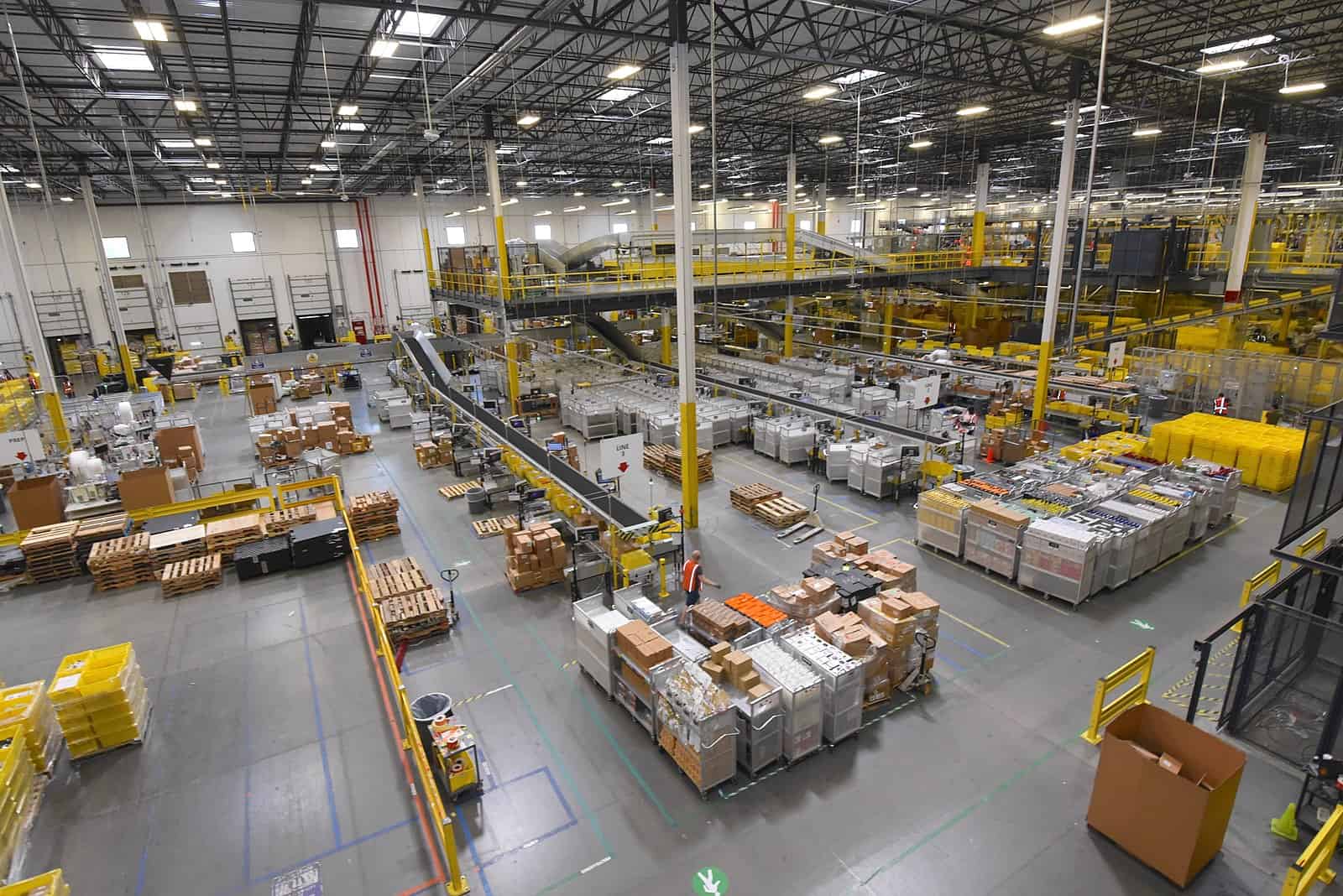
A complaint issued by the National Labor Relations Board’s Brooklyn office on Tuesday said that Amazon illegally singled out union supporters in enforcing a rule regarding employee use of nonwork areas. The rule applied to distributing materials and solicitation activities. As the New York Times reports, the complaint alleges that the rule was discriminatorily applied to employees who were engaging in union activity when it was used to prohibit workers from posting a pro-union sign in a non-work area at one of the Staten Island warehouses, known as LDJ5. Amazon threatened discipline if the workers posted the sign or did not remove the sign, according to the complaint, which also claims that at least one worker was disciplined under the solicitation policy. The complaint indicates a finding of merit in a charge brought by the Amazon Labor Union, and could force Amazon to abandon the solicitation rule if successful. The case will be litigated before an administrative law judge unless settled. Amazon could appeal an adverse ruling to the national labor board in Washington.
In other Amazon news, Matt Stoller, a writer and public voice on the effects of monopolization on the economy and society, noted that Amazon has recently promoted an ex-executive of a private prison company to run its warehouse worker training program. Dayna Howard started her career at Corrections Corporation of America, since renamed CoreCivic as part of a brand rehabilitation effort, which is a large private prison company. Ms. Howard went on to join Amazon as the head of their global security group, running the company’s loss prevention efforts. She has now been promoted to run Amazon’s learning and development team, which is the internal training program for all warehouse workers.
Colleen Shogan, President Biden’s nominee to be the next US archivist, stated in a Senate hearing on Wednesday that she would need federal court of congressional confirmation that the Equal Rights Amendment (ERA) is fully ratified before she would publish the means as part of the Constitution. Bloomberg explains that as part of the long-running dispute over the Equal Rights Amendment, the previous archivist David Ferriero faced pressure from ERA advocates to publish and certify it as the 28th Amendment to the US Constitution. He declined, deferring to the Justice Department’s Office of Legal Counsel that deemed in a January 2020 legal memo the amendment’s ratification period to be long expired. Congress first sent the ERA to states in 1972 with a seven-year deadline for three-fourths of states to ratify. The final three state approvals to reach that threshold came in Nevada, Illinois, and Virginia in 2017, 2018, and 2020. ERA supporters argue that the Act can still be ratified in spite of the past deadline because the amendment process laid out in the Constitution doesn’t authorize Congress to set deadlines. However, the Justice Department memo and a federal district court decision from March 2021 disagree, finding the deadline to be valid and the final state ratifications to be too late.
Oshkosh Corp.’s Seventh Circuit victory over allegations of 401(k) mismanagement will stand after the court on Wednesday denied a petition for rehearing filed by Oshkosh Corp. workers who said the court’s prior decision “overlooked or misapprehended” certain facts and points of law. The court’s August opinion affirmed the dismissal of their Employee Retirement Income Security Act (ERISA) claims. in their petition for rehearing workers said that the earlier decision overlooked a court ruling suggesting that plan fiduciaries may be required to choose higher-cost share classes in some instances, and it incorrectly treated a common concept—that retirement plan fiduciaries should consider the amount of money rebated to plan participants by service providers—as novel, when in reality it is “the industry norm.” Bloomberg reports that the Seventh Circuit’s decision has caused ripple effects throughout the circuit. Both Faith Technologies Inc. and Prevea Clinic Inc. have sought reconsideration of adverse decisions in light of Oshkosh, and a federal judge in Chicago allowed Northshore University HealthSystem workers challenging their retirement plan fees to file an amended complaint to reflect the development. Two employers facing 401(k) fee challenges within the circuit—Kerry Inc. and Aurora Health Care Inc.—have announced class settlements in the weeks since Oshkosh.





Daily News & Commentary
Start your day with our roundup of the latest labor developments. See all
October 9
DHS proposes a $100k fee for the foreign grad employment program; Trump suspends tech company access to green card program; and private equity perpetuates poor working conditions for home care workers.
October 8
NLRB judge finds UPS unlawfully restricted union insignia; Harvard graduate workers authorize second strike; OSHA orders Union Pacific to pay $300,000 in damages in whistleblower case.
October 7
DOL scraps plan to remove decades-old wage-and-hour guidance from federal regulations; New York enacts personnel records access law; Starbucks loses bid to dismiss Workers United trademark suit.
October 6
Protect College Sports Act dampens athlete unionization outlook; Stanford RA union decides to withdraw petition
October 5
Delaware bans captive audience meetings; EEOC settles remote work national origin discrimination claim; First Circuit stays enforcement order in VA's dispute with AFGE.
October 4
Boston nurses announce open-ended strike; federal judge restores federal prison workers' union protections; St. Louis workers form the first movie theater union in Missouri.