
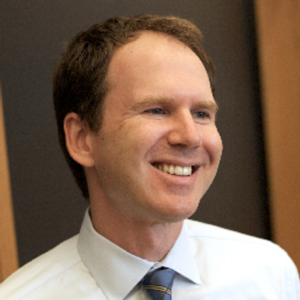
Benjamin Sachs is the Kestnbaum Professor of Labor and Industry at Harvard Law School and a leading expert in the field of labor law and labor relations. He is also faculty director of the Center for Labor and a Just Economy. Professor Sachs teaches courses in labor law, employment law, and law and social change, and his writing focuses on union organizing and unions in American politics. Prior to joining the Harvard faculty in 2008, Professor Sachs was the Joseph Goldstein Fellow at Yale Law School. From 2002-2006, he served as Assistant General Counsel of the Service Employees International Union (SEIU) in Washington, D.C. Professor Sachs graduated from Yale Law School in 1998, and served as a judicial law clerk to the Honorable Stephen Reinhardt of the United States Court of Appeals for the Ninth Circuit. His writing has appeared in the Harvard Law Review, the Yale Law Journal, the Columbia Law Review, the New York Times and elsewhere. Professor Sachs received the Yale Law School teaching award in 2007 and in 2013 received the Sacks-Freund Award for Teaching Excellence at Harvard Law School. He can be reached at [email protected].
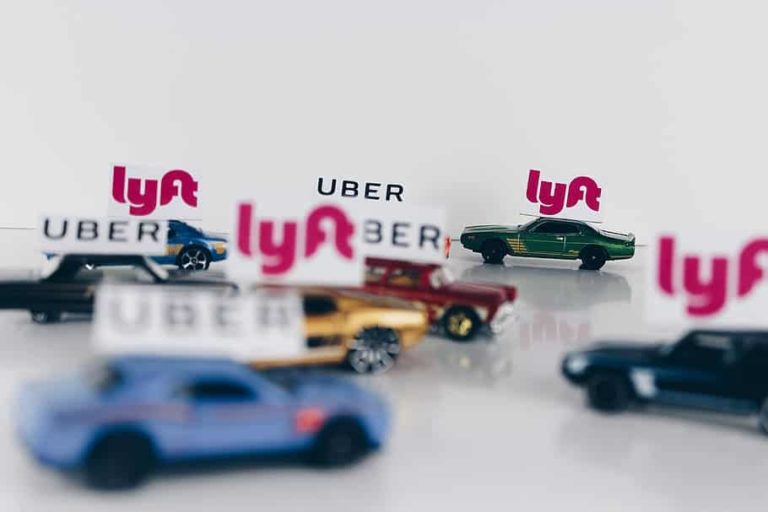
I thought readers would appreciate the opening paragraph of a new article on regulating ridesharing platforms:
In 1933, Elizabeth Rhone called Try Me Cab Company’s advertised phone number to order a cab. The company dispatched a vehicle bearing its logo. Unfortunately, the driver negligently operated the cab and injured Ms. Rhone. She sued the company for her injuries, but the company responded by saying it is not “engaged in carrying passengers for hire.” Rather, the company characterized itself as “a nonprofit-sharing corporation, incorporated under the laws of the District of Columbia for the purpose of furnishing its members a telephone service and the advantages offered by use of the corporate name, while the company did not own this or any other cab.” Although Try Me Cab Company held the license to operate the cabs, it maintained that drivers were the passengers’ independent contractors and claimed it was not vicariously liable for Ms. Rhone’s harm.
Is it still “disruptive innovation” if it has been going on since 1933?




Daily News & Commentary
Start your day with our roundup of the latest labor developments. See all
October 25
Dallas Cowboys Cheerleaders unionize; Bureau of Prisons again pushes for union contract cancellation; CSU faculty votes on strike authorization.
October 23
Employers increasingly shift health care costs onto workers and NYC proposes placing restrictions on fully automated customer service.
October 22
SCOTUS declines Wilcox appeal; Penn State research assistants win bargaining rights; SEIU sued over military leave firing.
October 21
DOL withdraws tipped-worker rule; Instacart settles hiring-bias claims; Phillips 66 locks out New Jersey refinery workers.
October 20
Korean unions oppose labor exemption bill; Portland city workers prepare for strike; UPenn grad student union looks to dismiss university filing
October 19
FDA reverses course on policy prohibiting off-duty union activity; FAA and NATCA reach deal to secure pay increase for air traffic controllers.