
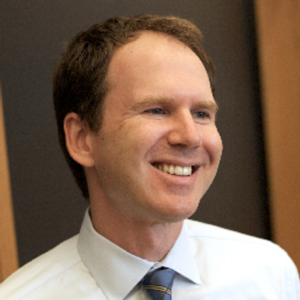
Benjamin Sachs is the Kestnbaum Professor of Labor and Industry at Harvard Law School and a leading expert in the field of labor law and labor relations. He is also faculty director of the Center for Labor and a Just Economy. Professor Sachs teaches courses in labor law, employment law, and law and social change, and his writing focuses on union organizing and unions in American politics. Prior to joining the Harvard faculty in 2008, Professor Sachs was the Joseph Goldstein Fellow at Yale Law School. From 2002-2006, he served as Assistant General Counsel of the Service Employees International Union (SEIU) in Washington, D.C. Professor Sachs graduated from Yale Law School in 1998, and served as a judicial law clerk to the Honorable Stephen Reinhardt of the United States Court of Appeals for the Ninth Circuit. His writing has appeared in the Harvard Law Review, the Yale Law Journal, the Columbia Law Review, the New York Times and elsewhere. Professor Sachs received the Yale Law School teaching award in 2007 and in 2013 received the Sacks-Freund Award for Teaching Excellence at Harvard Law School. He can be reached at [email protected].
A consistent theme for the past, what, ten years has been the labor movement’s inability to capture the public’s attention, or the public’s imagination, or the public’s support. The words “labor” and “union” likely bring to mind various images of decline. But the fast food strikes, ramping up now and predicted for about fifty cities across the country today, provides decent evidence that the dynamic may be shifting. There is much to debate about the demands the strikers are making, including the effects that a major increase in the minimum wage would have. But that these strikes, and the broader organizing efforts among fast food workers, are resonating with the public seems beyond debate. Stay tuned.


Daily News & Commentary
Start your day with our roundup of the latest labor developments. See all
July 14
DOJ opens investigation of UAW president; LIUNA protests Pfizer building collapse; national park workers unionize
July 13
New York Times files retaliation suit against the EEOC; US government pushes back TPS designation termination for Haiti; federal judge grants preliminary injunction to federal workers seeking reasonable telework accommodations.
July 12
Postal workers demand investigation into Atlanta distribution center conditions following deaths; University of Chicago Press Workers vote to unionize.
July 10
Brigham and Women’s Hospital locks out 4,000 nurses after one-day strike; appeal filed challenging agency-shop agreements.
July 9
The Second Circuit declines to vacate an arbitration award over a nursing union dispute; federal workers sue the Department of Defense for termination of union contracts; New York City announces settlement with companies for violating New York work laws.
July 8
DOL plans to make changes to the PERM immigration program; three-day hearing on proposed forced-labor tariffs is underway; Mamdani recovers $2.3M in corporate settlements.