
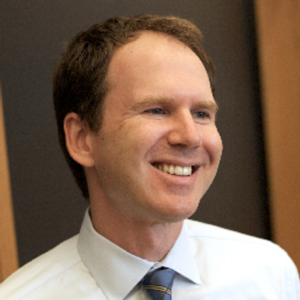
Benjamin Sachs is the Kestnbaum Professor of Labor and Industry at Harvard Law School and a leading expert in the field of labor law and labor relations. He is also faculty director of the Center for Labor and a Just Economy. Professor Sachs teaches courses in labor law, employment law, and law and social change, and his writing focuses on union organizing and unions in American politics. Prior to joining the Harvard faculty in 2008, Professor Sachs was the Joseph Goldstein Fellow at Yale Law School. From 2002-2006, he served as Assistant General Counsel of the Service Employees International Union (SEIU) in Washington, D.C. Professor Sachs graduated from Yale Law School in 1998, and served as a judicial law clerk to the Honorable Stephen Reinhardt of the United States Court of Appeals for the Ninth Circuit. His writing has appeared in the Harvard Law Review, the Yale Law Journal, the Columbia Law Review, the New York Times and elsewhere. Professor Sachs received the Yale Law School teaching award in 2007 and in 2013 received the Sacks-Freund Award for Teaching Excellence at Harvard Law School. He can be reached at [email protected].
As Sophie covered in the News and Commentary today, Noam Scheiber has a superb piece up at the NYT on mounting dissatisfaction among, and protest by, workers in the gig economy. The article is rich with interviews of gig workers, including Uber drivers. And it provides more and more evidence of what has seemed fairly clear for some time now: Uber drivers are employees within the meaning of existing labor and employment law. Here are some relevant excerpts:
Last September, Dallas-area drivers for UberBlack, the company’s high-end car service, received an email informing them that they would be expected to start picking up passengers on UberX, its low-cost option.
Employers tell their employees what work they have to do, the kind of customers they have to transport, and what they can charge. Independent contractors make those decisions for themselves. If drivers were independent contractors they would be able to make a business judgment about whether they wanted to pick up passengers on UberX. No such independence exists for Uber drivers.
“We started realizing we’re not contractors, we’re more like employees,” said Berhane Alemayoh, one of the UberBlack drivers in Dallas. “They tell us what kind of car to drive. They kick you out if a customer accused you of not having a clean car.
More evidence of control. According to this driver, Uber is imposing control over the type of cars drivers can use and – presumably through customer reviews – imposing cleanliness standards. This is completely legitimate and expectable conduct for an employer. But it is inconsistent with the claim that drivers are independent.
Unlike sellers on eBay or Etsy, Uber drivers cannot set the prices they charge. They are also constrained by the all-important rating system — maintain an average of around 4.6 out of 5 stars from customers in many cities or risk being deactivated — to behave a certain way, like not marketing other businesses to passengers.
Rate setting is done by Uber. Control is exercised through the star rating system. Discharge decisions are made by Uber, according to standards determined by Uber. We’ve covered this before, and noted why all these factors suggest employee status.


Daily News & Commentary
Start your day with our roundup of the latest labor developments. See all
October 27
Some California union locals defy their statewide leadership to back the state’s billionaire tax proposal; a Brown University technology center releases a map of the hidden global workforce behind AI; the National Women's Soccer League and its players union settle six grievances.
October 26
Harvard dining workers authorize strike; New York City bans horse carriages; Brooklyn nurses rally in support of colleague.
October 25
Dallas Cowboys Cheerleaders unionize; Bureau of Prisons again pushes for union contract cancellation; CSU faculty votes on strike authorization.
October 23
Employers increasingly shift health care costs onto workers and NYC proposes placing restrictions on fully automated customer service.
October 22
SCOTUS declines Wilcox appeal; Penn State research assistants win bargaining rights; SEIU sued over military leave firing.
October 21
DOL withdraws tipped-worker rule; Instacart settles hiring-bias claims; Phillips 66 locks out New Jersey refinery workers.